Gorontalo and the Agropolitan
Stories from three villages
Gorontalo and the Agropolitan
Stories from three villages
March 1, 2026
LEAF Indonesia, funded by the Global Centre on Biodiversity for Climate (GCBC), is a transdisciplinary research partnership between the University of Sussex, Monash University, Universitas Negeri Gorontalo, Universitas Papua, and Universitas Mulawarman.
You are viewing a Storymap which introduces the results of our first phase of work with Indonesian farming communities, government agencies, NGOs, and conservation organizations to find ways to balance Indonesia’s food security goals with environmental protection, climate resilience, and the well-being of local communities.
Scroll down to reveal the story. You can navigate to any part of the story using the dropdown table of contents at the top right of the screen.



Introduction
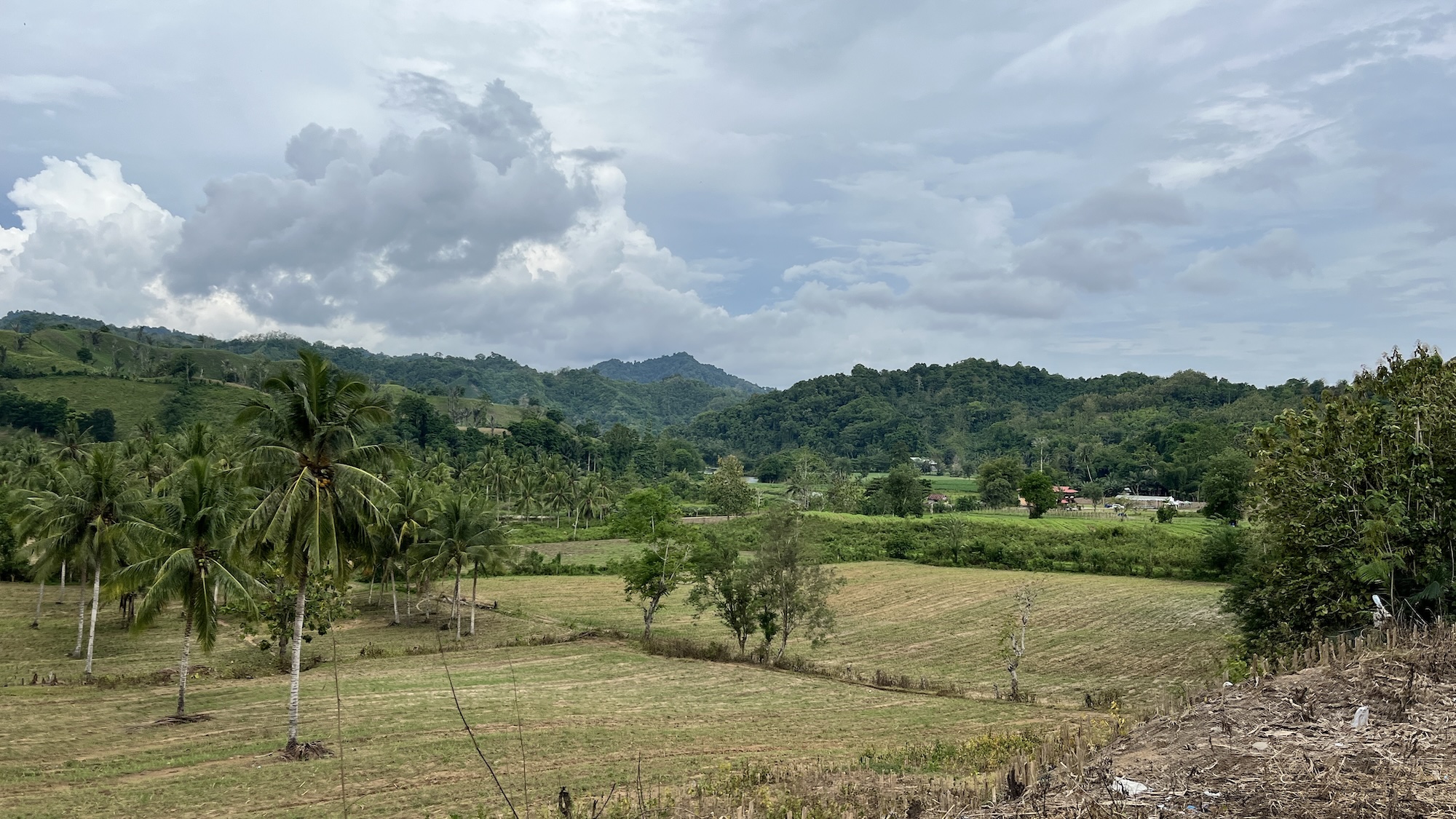
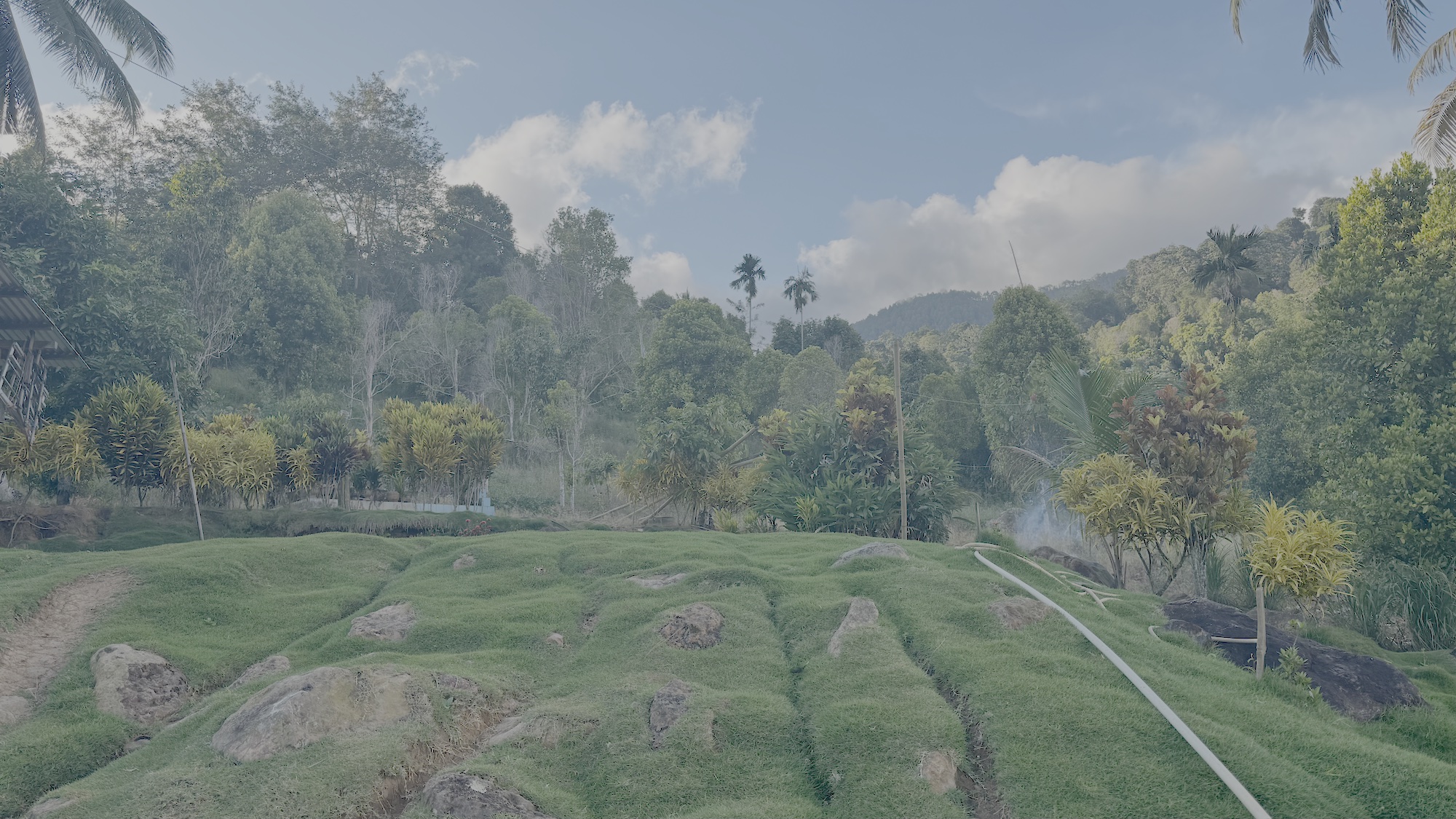
Gorontalo is a province on the northern arm of Sulawesi Island located in the tropics very close to the equator. It is a thickly forested humid land with some mountains and many low hills criss-crossed by numerous rivers. 66% of its population of around 1.2 million live in rural areas and agriculture is the main pillar of the economy (citypopulation.de).
In the early 2000s the provincial government sought to address the high levels of rural poverty by introducing an agricultural development program called the ‘Agropolitan’. It was initiated as part of the National Agropolitan Area Development program implemented in 2002 and led to a doubling of corn production in its first two years to 270,000 tonnes. By 2020, it had raised output to more than 640,000 tonnes and reduced poverty significantly throughout the province as corn became the main source of income in many districts.
The improvement in poverty indicators and production numbers, however, do not tell the whole story. From the perspective of rural farmers the long term effects of the Agropolitan have been somewhat more ambiguous and complex. Their stories are the topic of this storymap in which we will visit three villages that our team at the Universitas Negeri Gorontalo are engaged with. Their stories are central to our understanding of how land use interventions going forward can address the goals for increased food security, whilst supporting rural livelihoods, biodiversity and climate resilience in the long term.
First we explain a bit more about the Agropolitan program and then we take you on a tour of each village to meet some of the people involved in the program and hear their stories.
The Agropolitan
The Agropolitan was designed as a Master Plan for the development of the agricultural economy in Gorontalo with nine pillars including among others:
- providing farmers with machinery, seeds, fertilisers, pesticides and herbicides;
- guaranteeing minimum prices for farmers sales of corn;
- building irrigation infrastructure and access roads.
These measures were designed to encourage farmers to shift from their traditional mixed farming systems to intensive monoculture corn production for export as animal feed. The idea was that this would simultaneously improve food self-sufficiency while increasing farmers incomes. Food security and poverty reduction rolled into one large-scale intervention.
So what does the Agropolitan look like on the ground?
The three villages are in Gorontalo province. Modelidu, Dulamayo Selatan in Gorontalo Regency and Tupa in the Bone Bolango Regency.
In the following three sections we will look at each village in turn and meet some of the farmers whose livelihoods have been influenced by the Agropolitan.
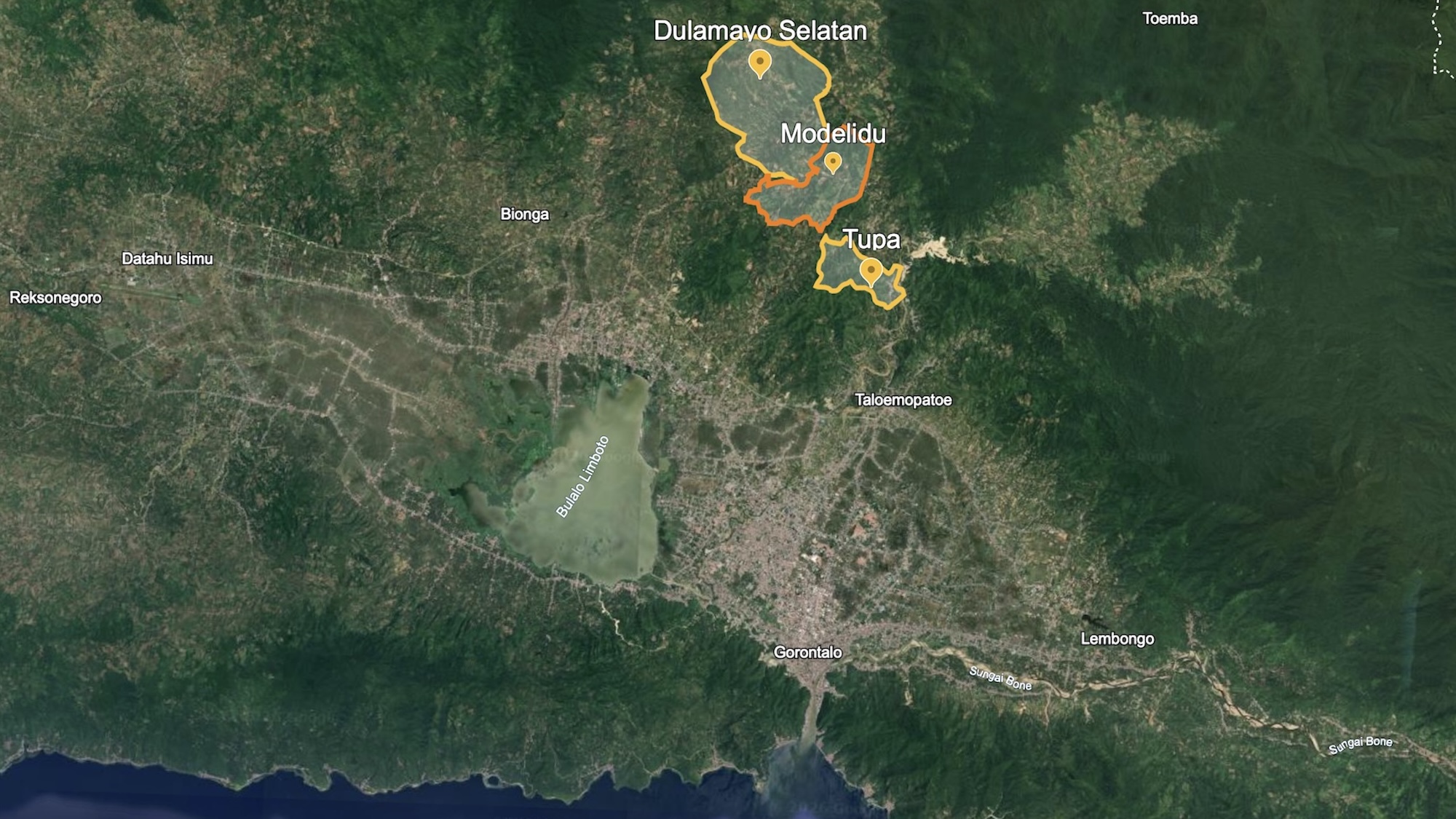
Modelidu
Agricultural transition
The majority of farmers in Modelidu’s five farming groups are corn farmers, 260 in total. They have been growing corn for generations, using local varieties such as binde kiki and momala for household consumption, mixed with rice in a traditional dish called beras milu. These varieties were grown without the use of chemical fertilisers and, when the Agropolitan programme promoted hybrid seeds and fertiliser packages, many farmers initially resisted.
Prior to the Agropolitan, multiple native varieties of corn were cultivated as part of a mixed farming system including other crops such as cocoa, coffee, candlenut, palm sugar, coconut, vegetables and a small numbers of cows.
This great diversity of crops and varieties made livelihoods resilient because, if one crop failed or one corn variety became diseased, the other crops would make up for the loss.
The combination of perennial crops like coffee and cacao with coconut, candlenut and sugar palm trees protected soils from erosion in heavy rains and slowed down run-off into the river, thus helping to prevent flooding and landslides.
When the Agropolitan policies came in, farmers were offered high yielding hybrid seeds which came as a package requiring agrochemicals to achieve the promised yields.
Motivated by the expectation of gaining a higher and more consistent income, many farmers cleared their fields of cacao and coffee and removed shade trees to create a suitable setting for the new hybrid corn to thrive.
To make this new farming system work, they needed enough cash to purchase inputs and to employ labourers to spray fields and process the harvest.
They also needed to find someone to purchase their corn so the government coordinated intermediaries (pengepul) who provided the connection between farmers and the national and global markets.
Once all these hurdles had been overcome, farmers could earn enough income to purchase food to make up for the replacement of local food crops with the cash crop of corn for animal feed.
At first the transition from subsistence to commercial agriculture seemed to work very well but over time, problems began to emerge.
Hybrid corn monocultures required heavy application of fertilisers, herbicides and pesticides to maintain yields. This meant a higher demand for labour and declining natural soil fertility.
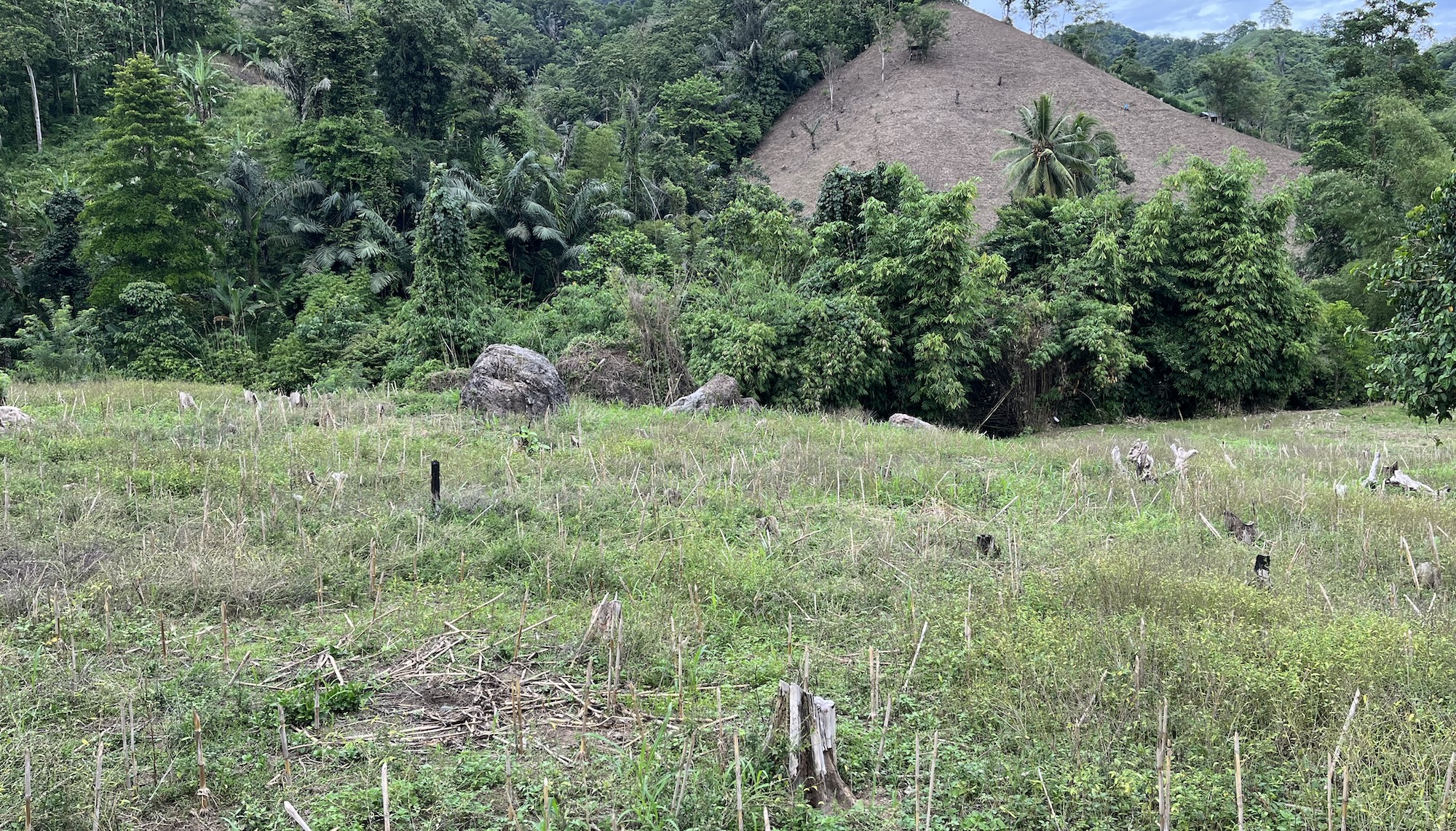
Farmers also removed tree cover to give the corn more sunlight which made soils more vulnerable to erosion and raised ambient temperatures placing a higher burden on those working in the fields.
As soil fertility declined farmers began to apply more agrochemicals to maintain yields which further worsened the problem.
Some also began to clear other nearby land that was still fertile to open it up for corn production. That land was often on the steeper forested slopes of the surrounding hills which were more vulnerable to soil erosion and were also high risk areas for landslides.
Sediment washed off the hills has led to sedimentation in the river and, as rainfall has become more erratic due to climate change, the river now dries up and floods more frequently.
Heavier rains on eroded slopes has also led to more frequent landslides.
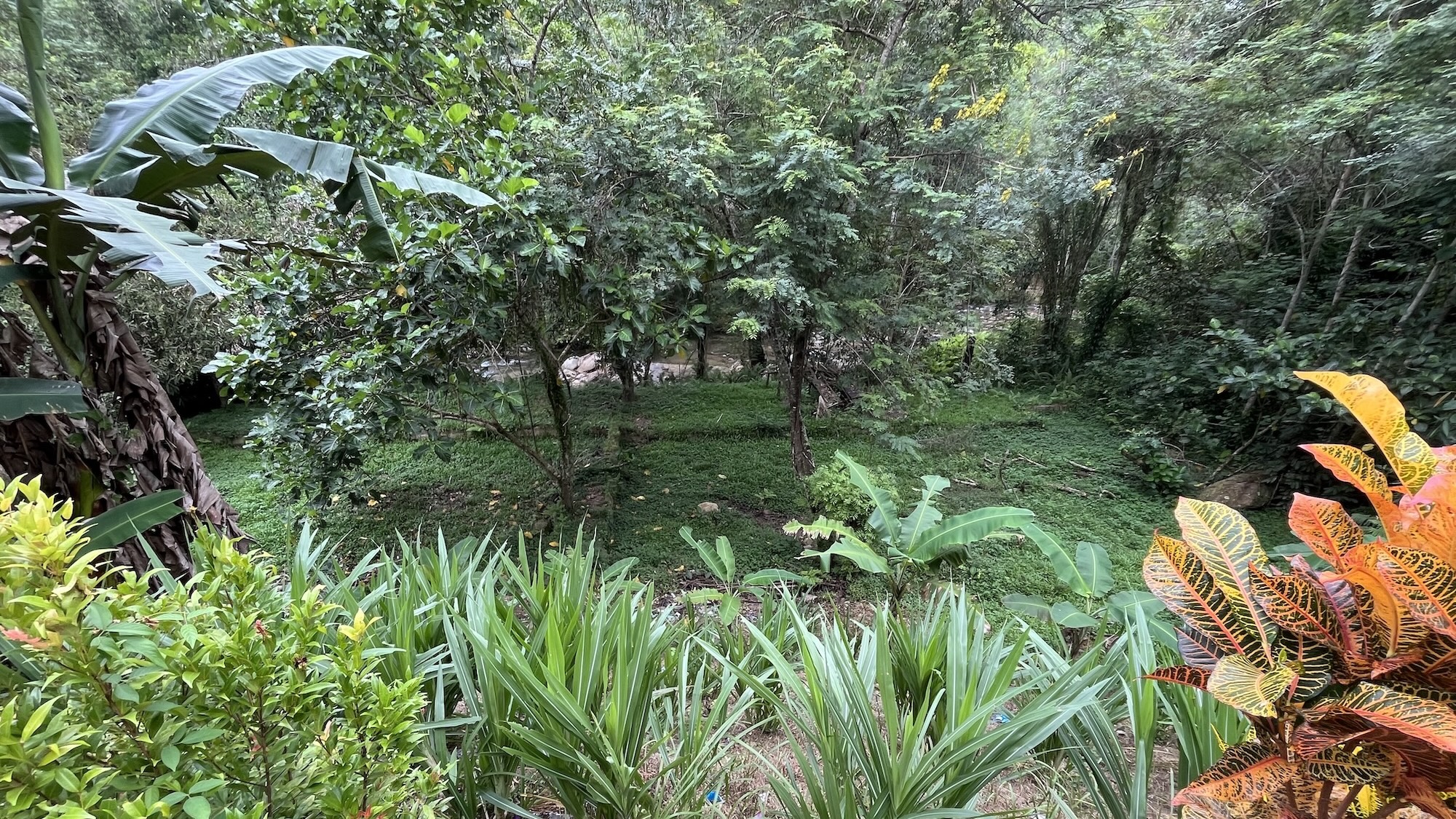
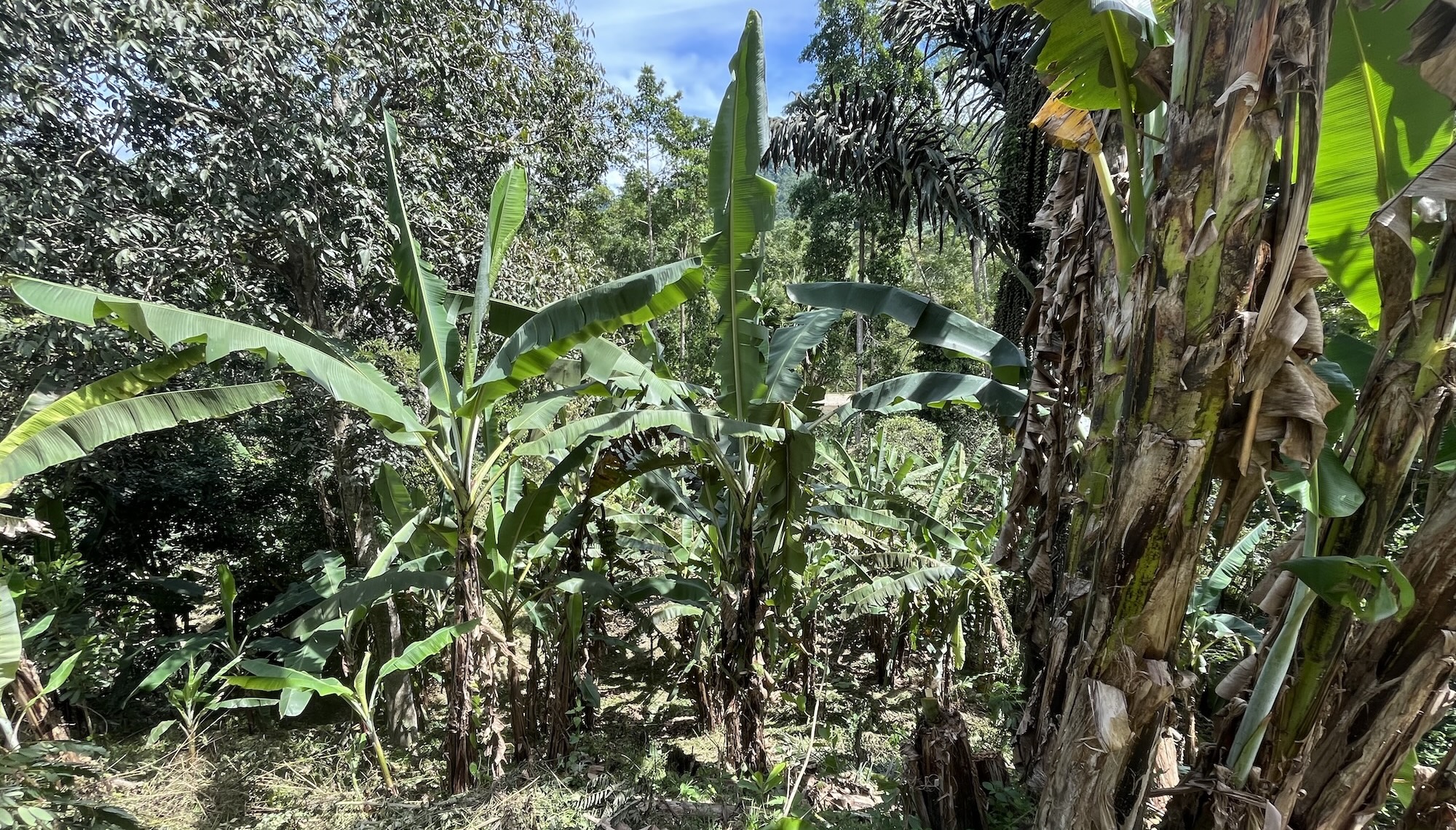
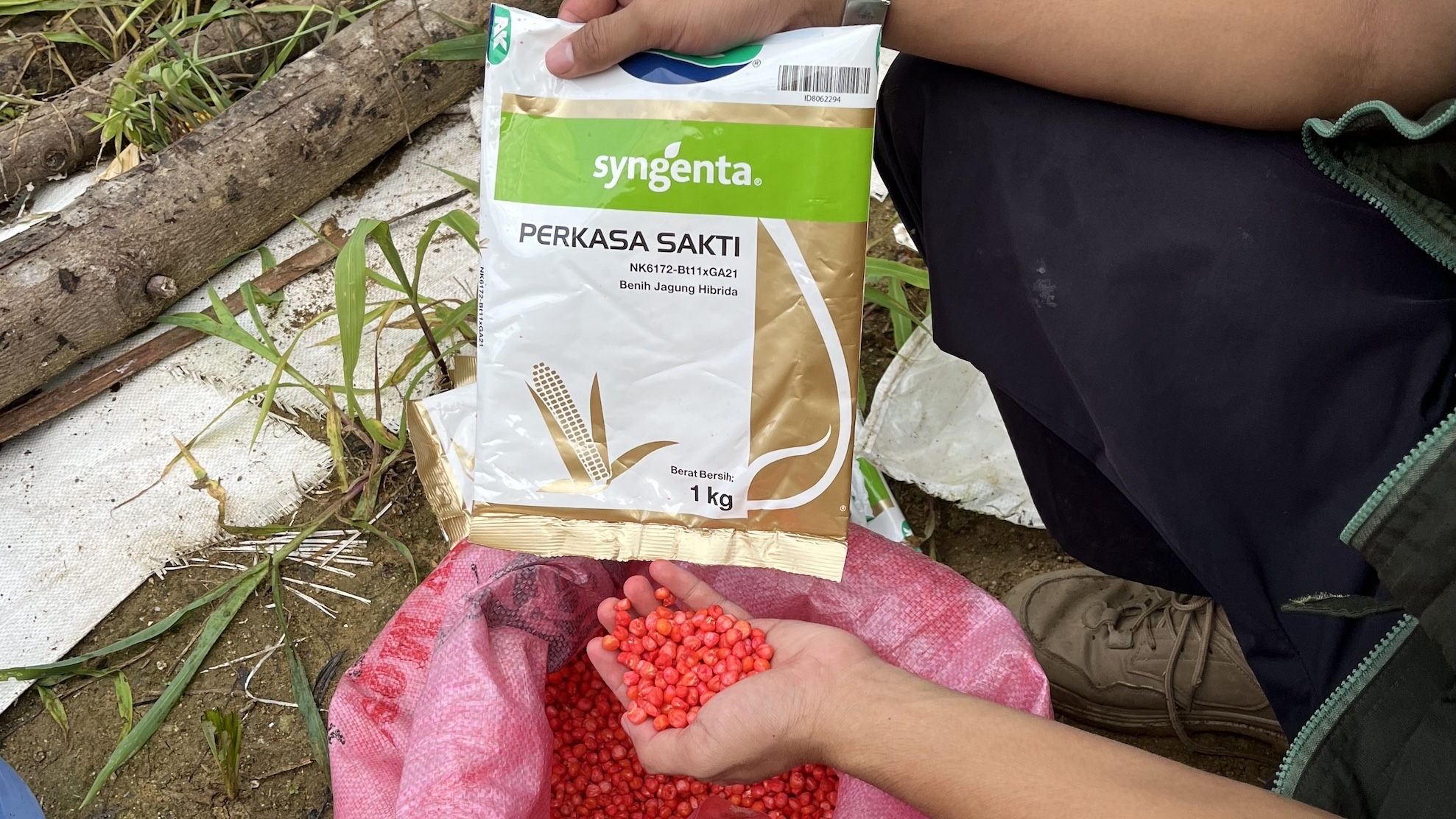
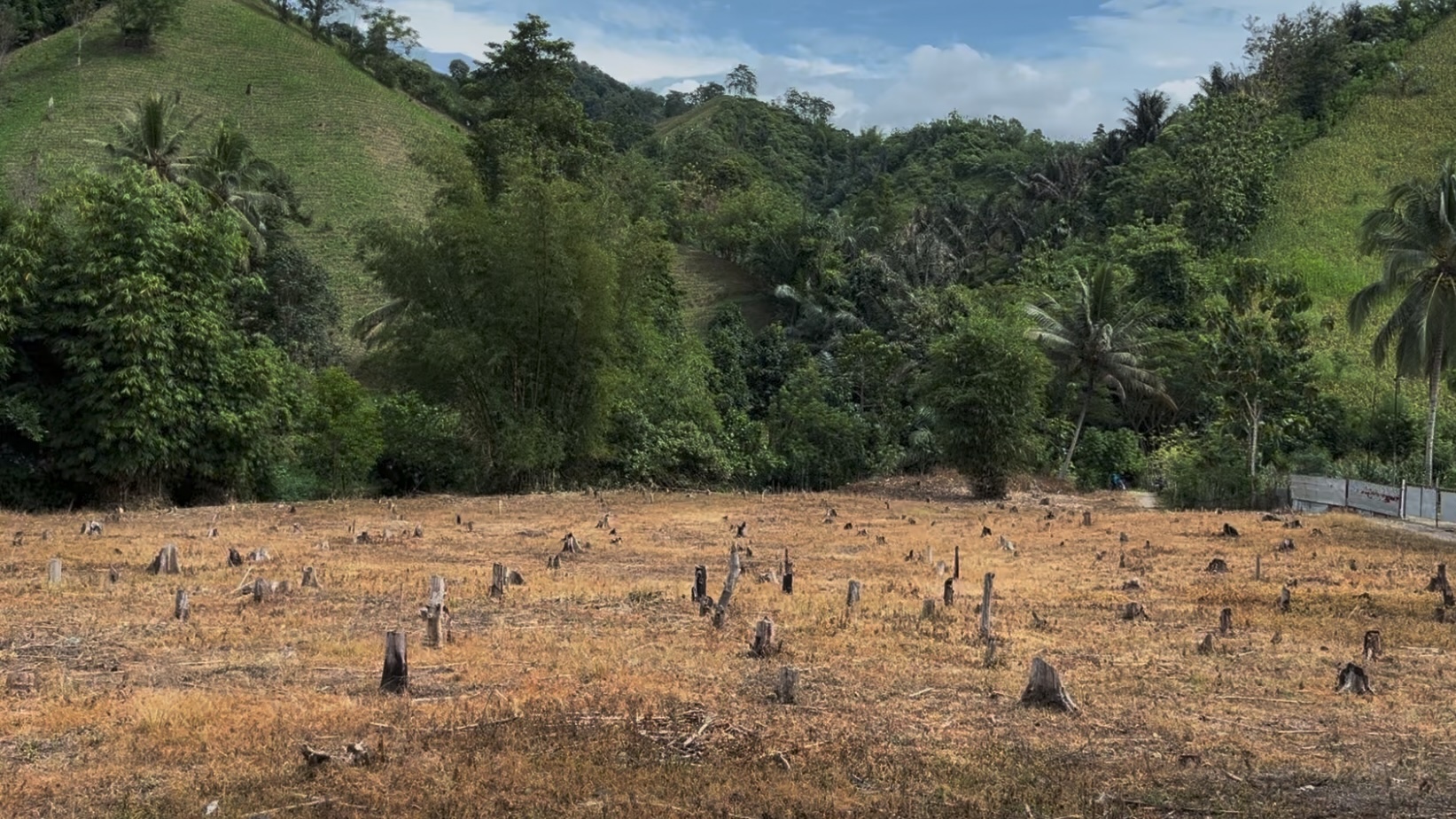
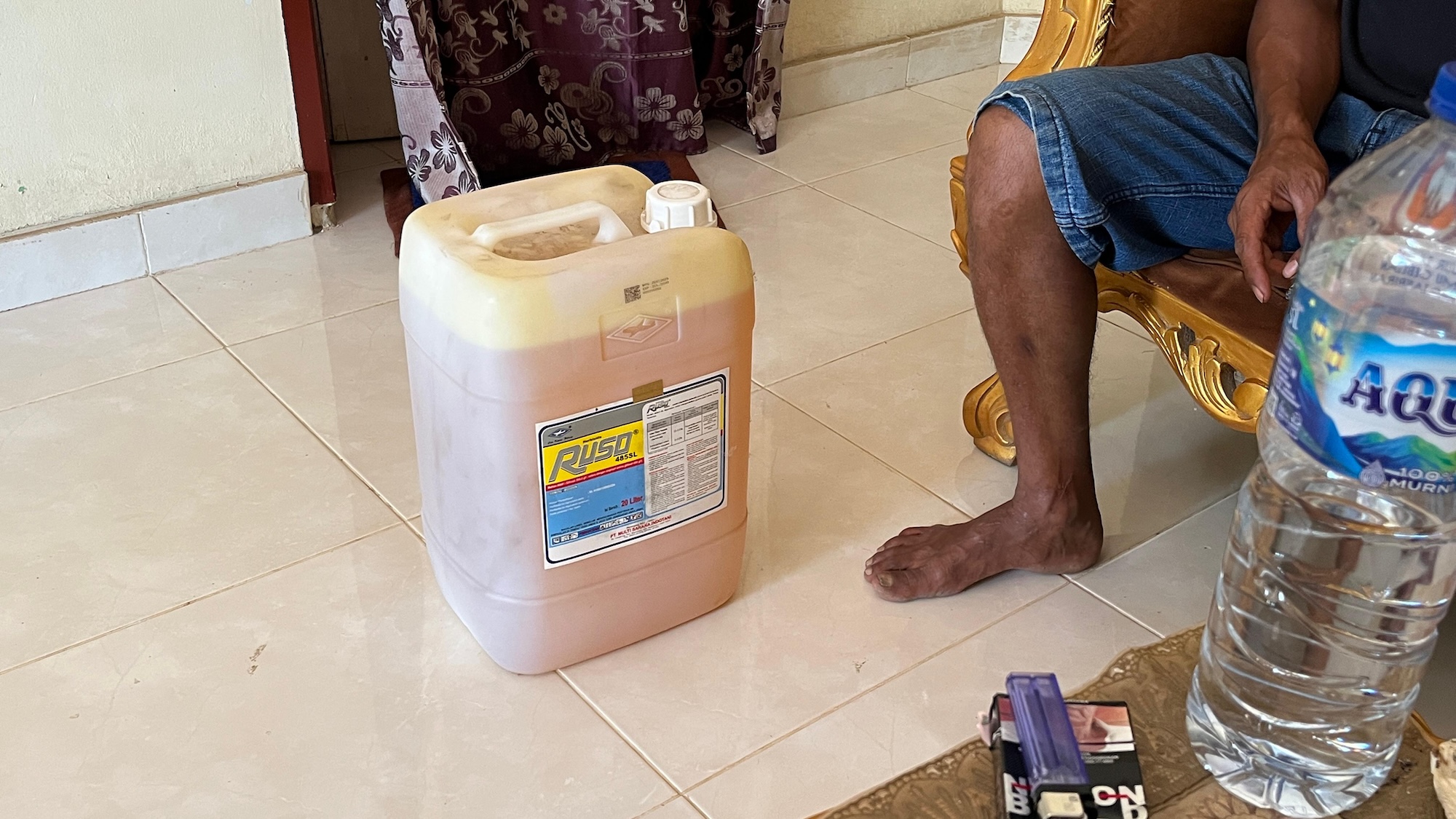
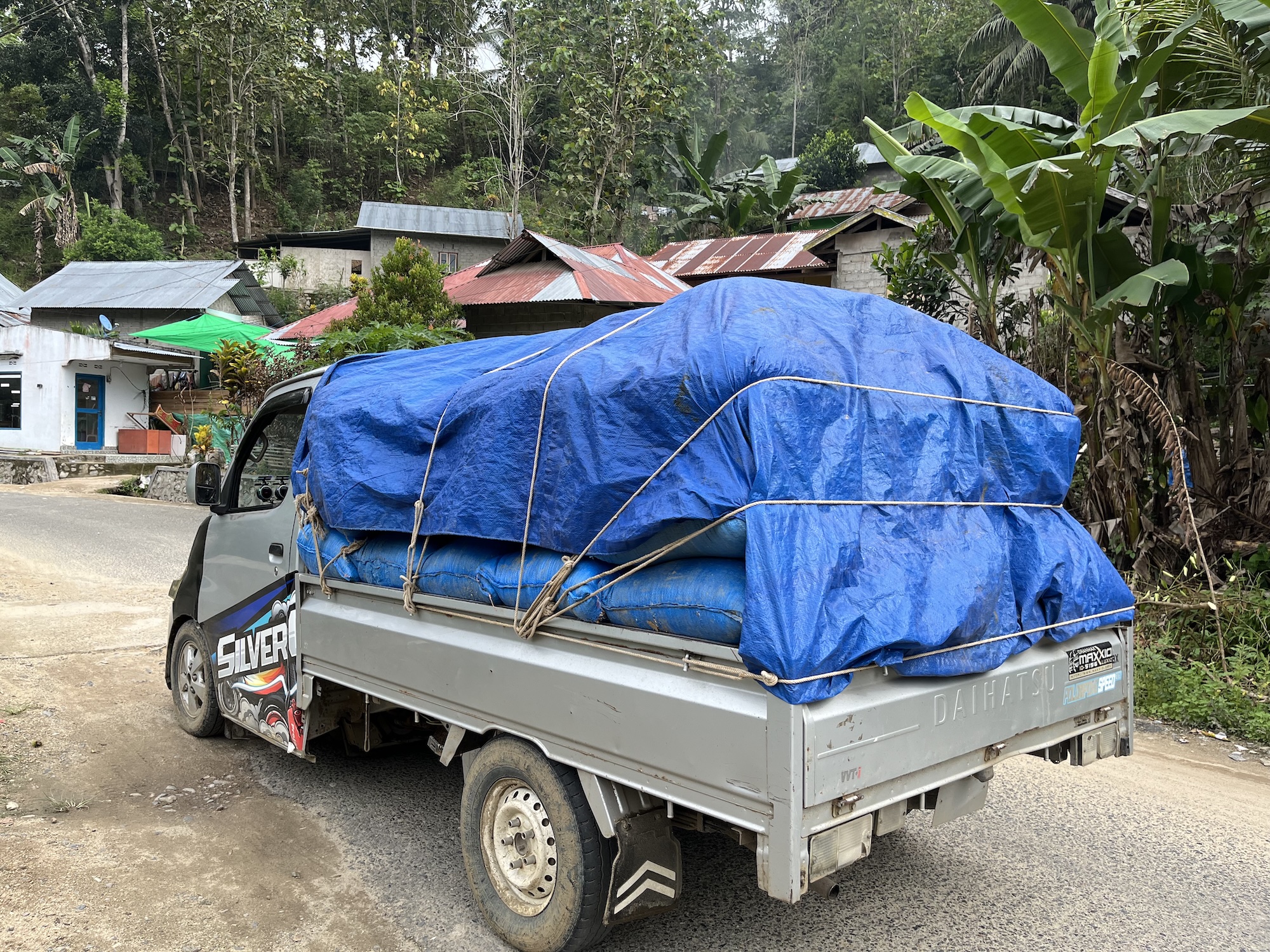
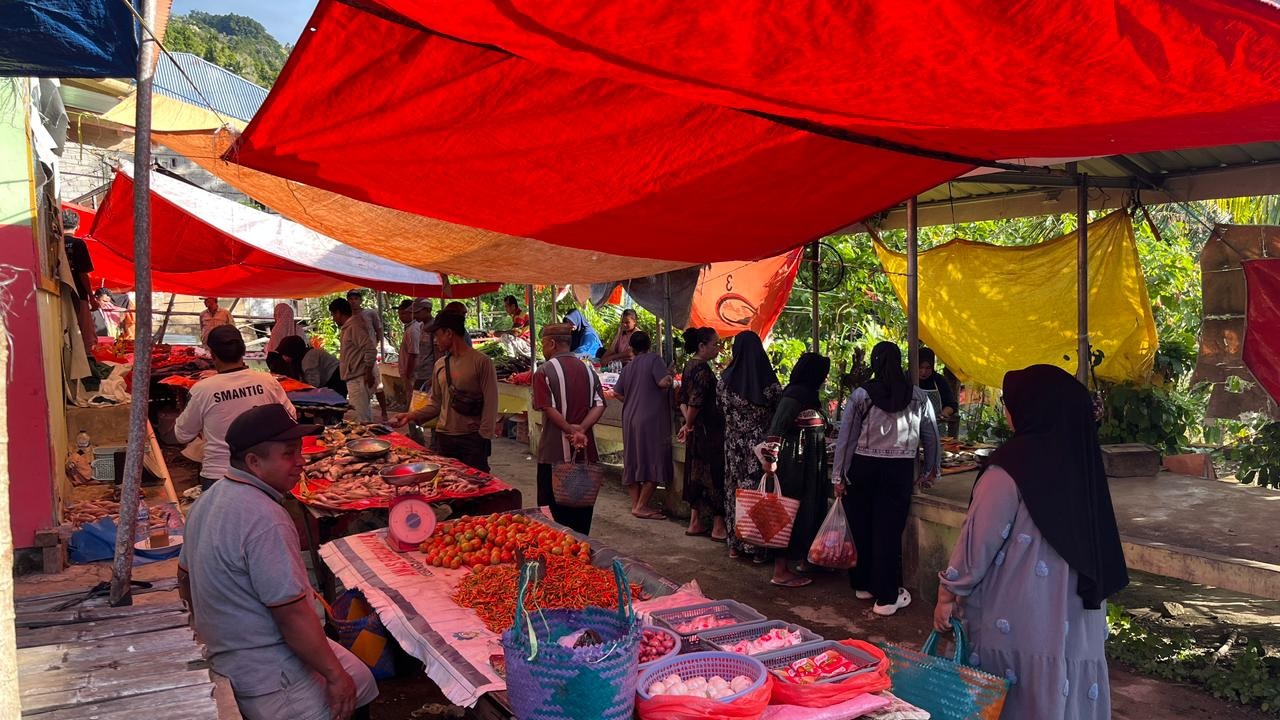
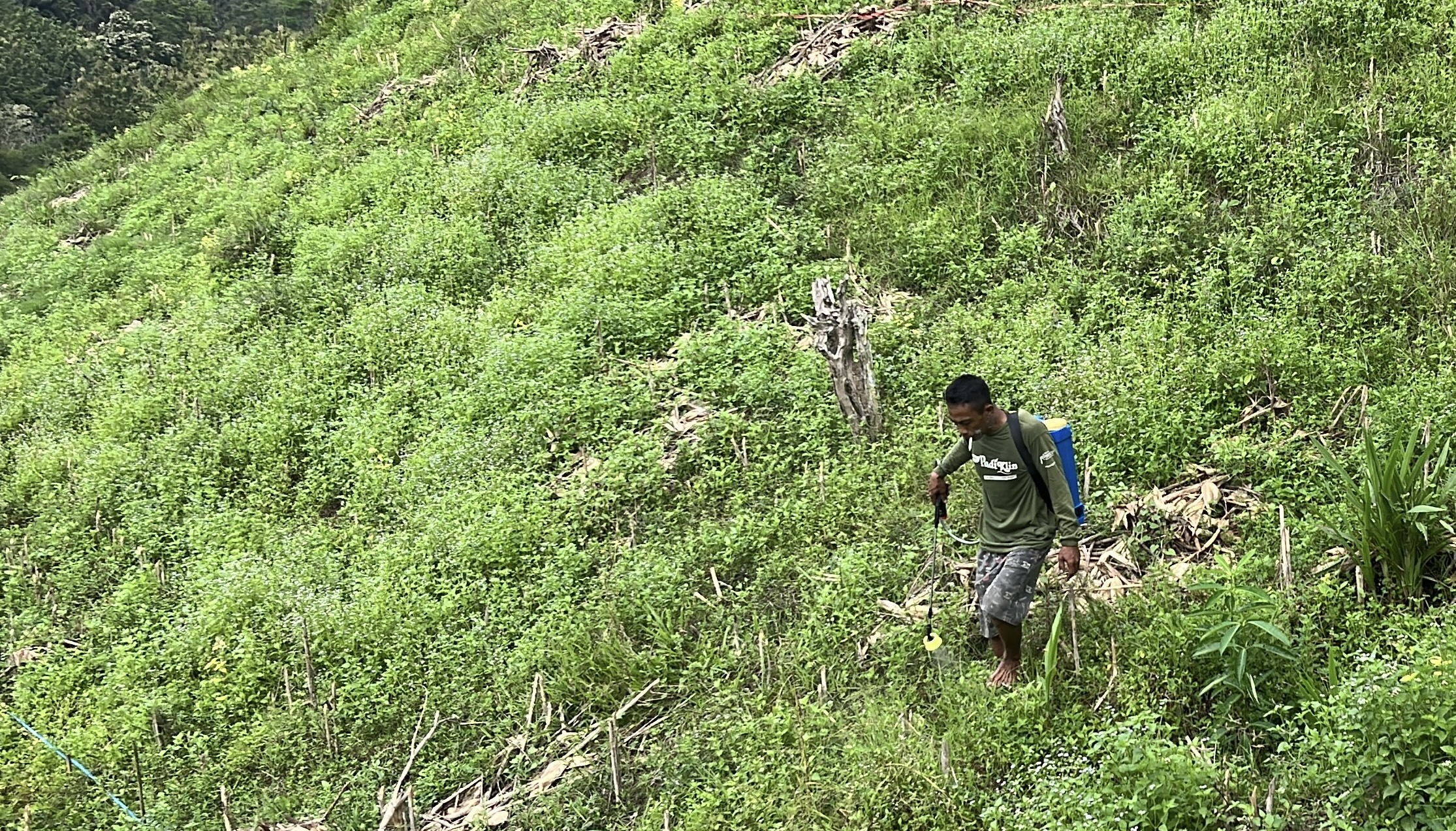
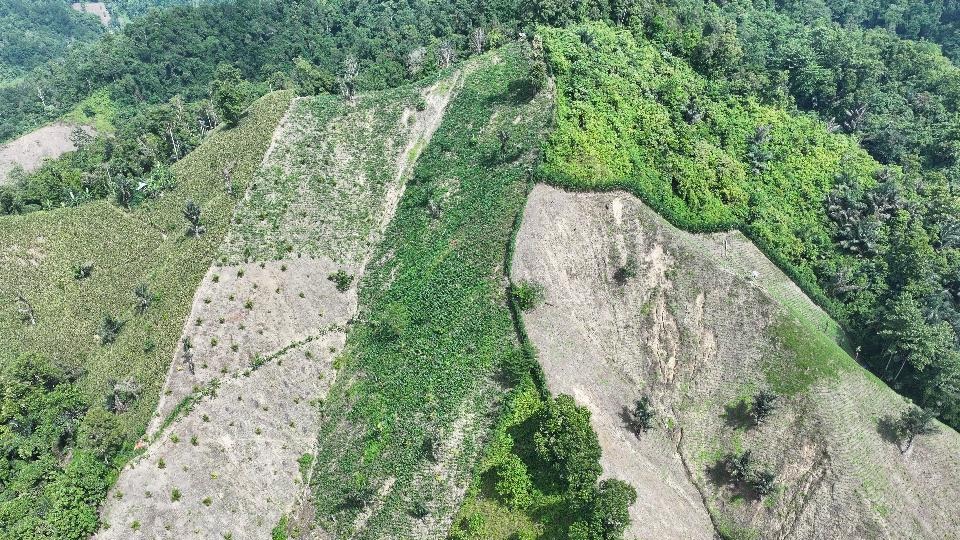
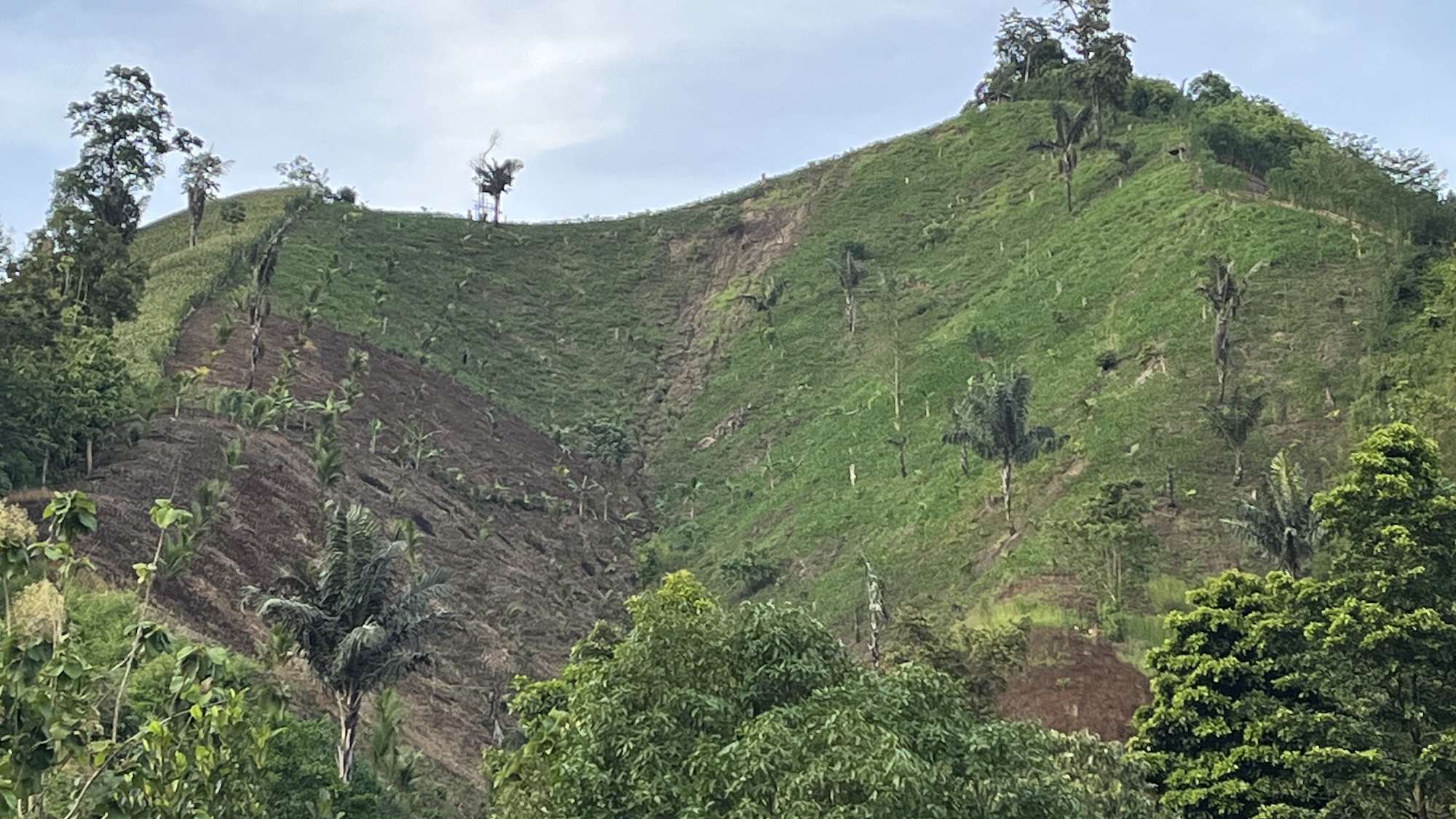
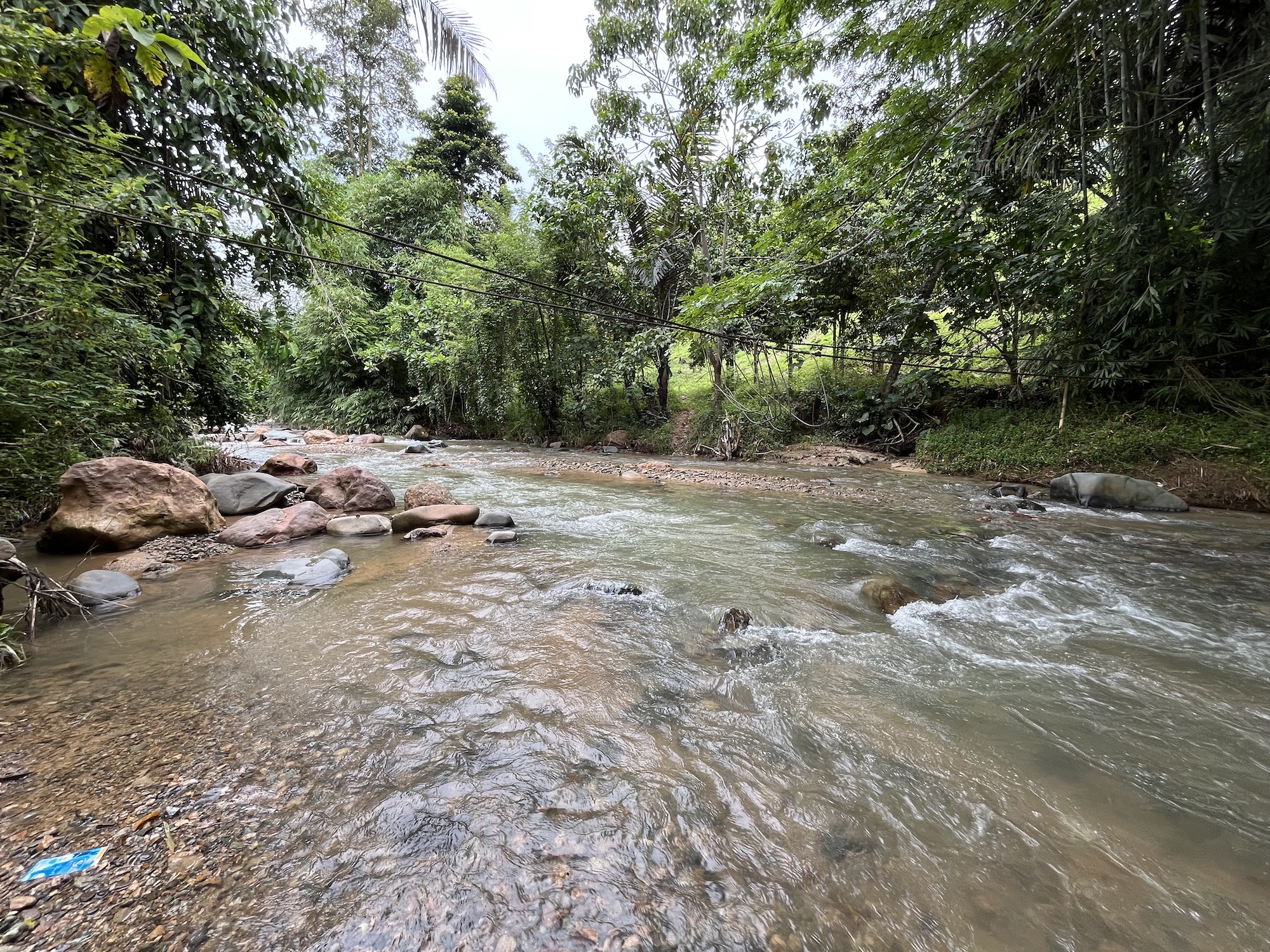
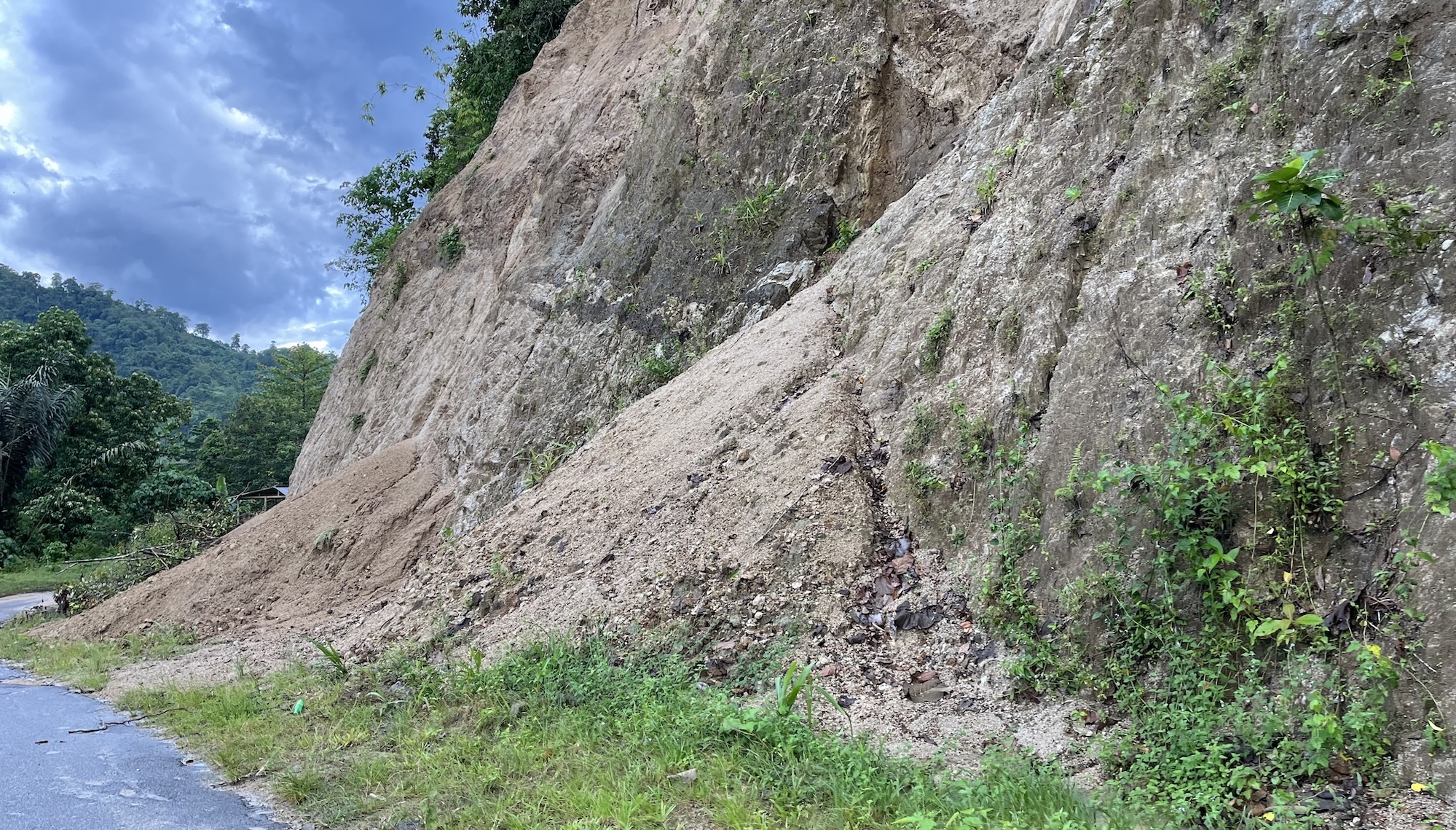
In addition to increasing vulnerability to these environmental shocks, corn farmers have to deal with the growing uncertainty and variability of corn prices and input costs. When high input costs are not compensated for by high sale prices farmers are in danger of making a loss and may find it necessary to take on temporary off-farm work.
Over the years the cost of corn production has increased and yields have decreased while vulnerability to environmental and economic shocks has also worsened so that some farmers could no longer cover their costs and went into debt.
Corn farmer
One household (A1_11) we interviewed told their own story of how their livelihood has changed in response to changing opportunities, environmental conditions and the policies of the Agropolitan Programme.
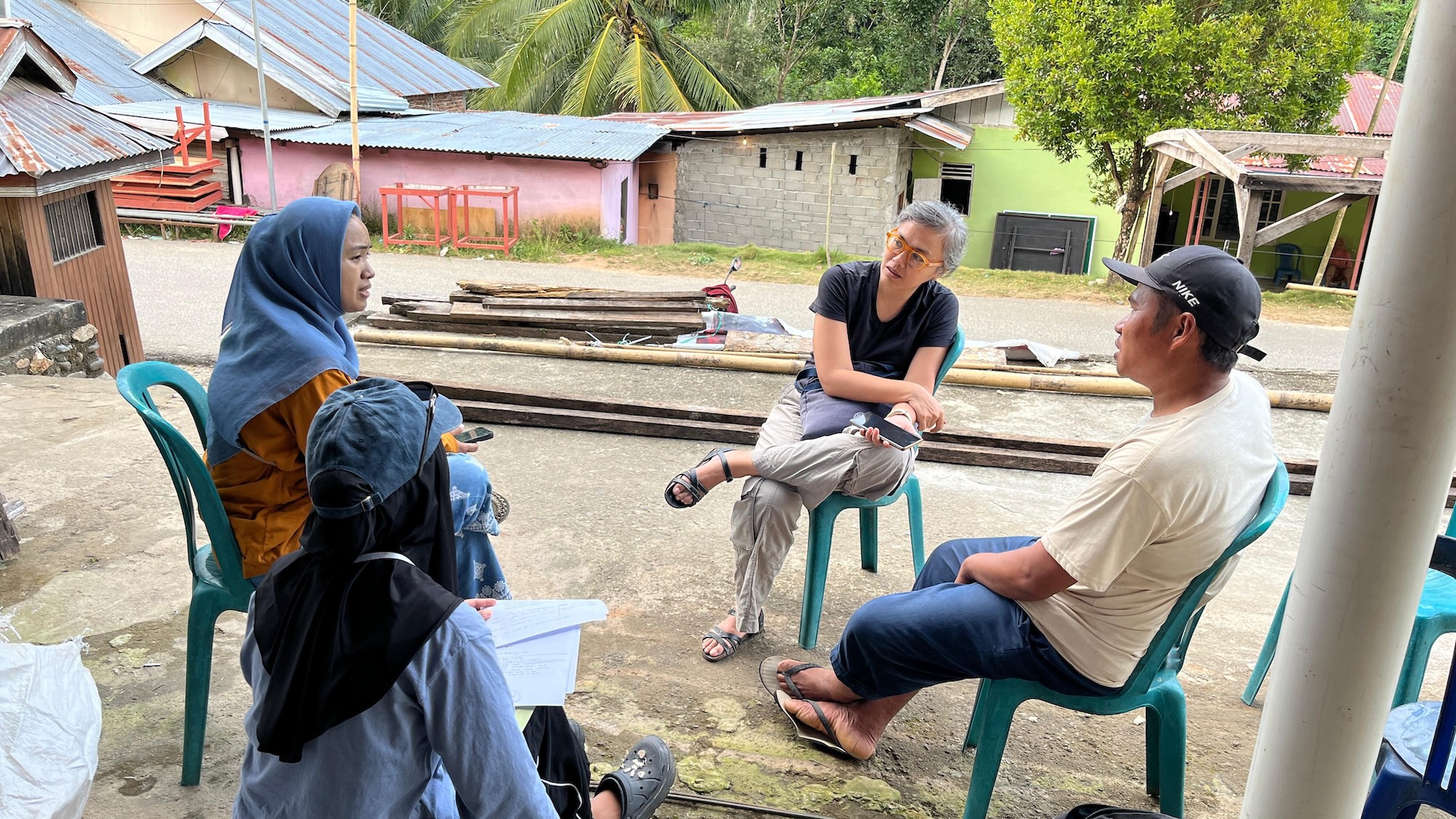
They described how, in the early 2000s, teak was introduced to the village as commodity which was supposed to increase significantly in value over time. As a result he and some farmers planted teak among their cocoa groves. Over the course of the 15-20 years it took for the teak trees to mature, they noticed their cocoa yields declining and the cocoa plants began to die.
It turned out that teak is not suitable for intercropping because it competes with other crops for nutrients, water and sunlight and their leaves, when dropped, secrete compounds that inhibit the growth of surrounding vegetation.
So farmers cut down their dead and dying cocoa plants so that, when the teak was finally harvested, the fields were left empty, making them suitable for conversion to corn monoculture.
And so, from 2015 onwards, large scale corn monoculture began to spread more widely, partly prompted by the sudden availability of empty land following the teak harvests, but also driven by the policies of the Agropolitan Programme.
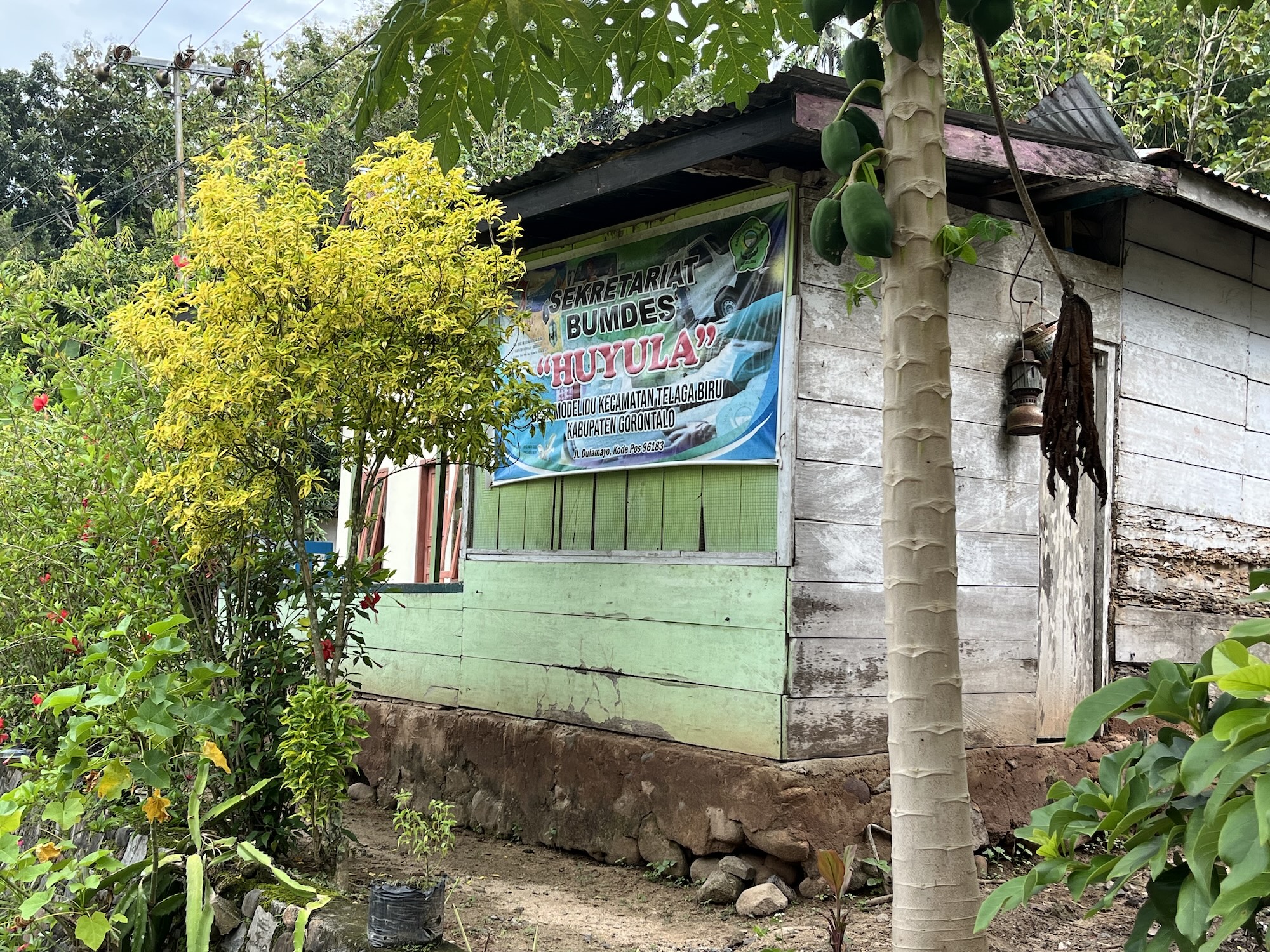
To cover the costs of corn production he borrows money from the BUMDES (village-owned enterprise) rather than moneylenders who demand much higher interest.
In addition to farming, he works as a day labourer, though his work opportunities are unpredictable so that some months he has plenty of work and other months none at all.
Landless farm labourer
Another farmer (A1_9), a widow in her early 40s, described her livelihood as a landless farm labourer. She lives with her two children, her mother and step-father, and her sister and niece.
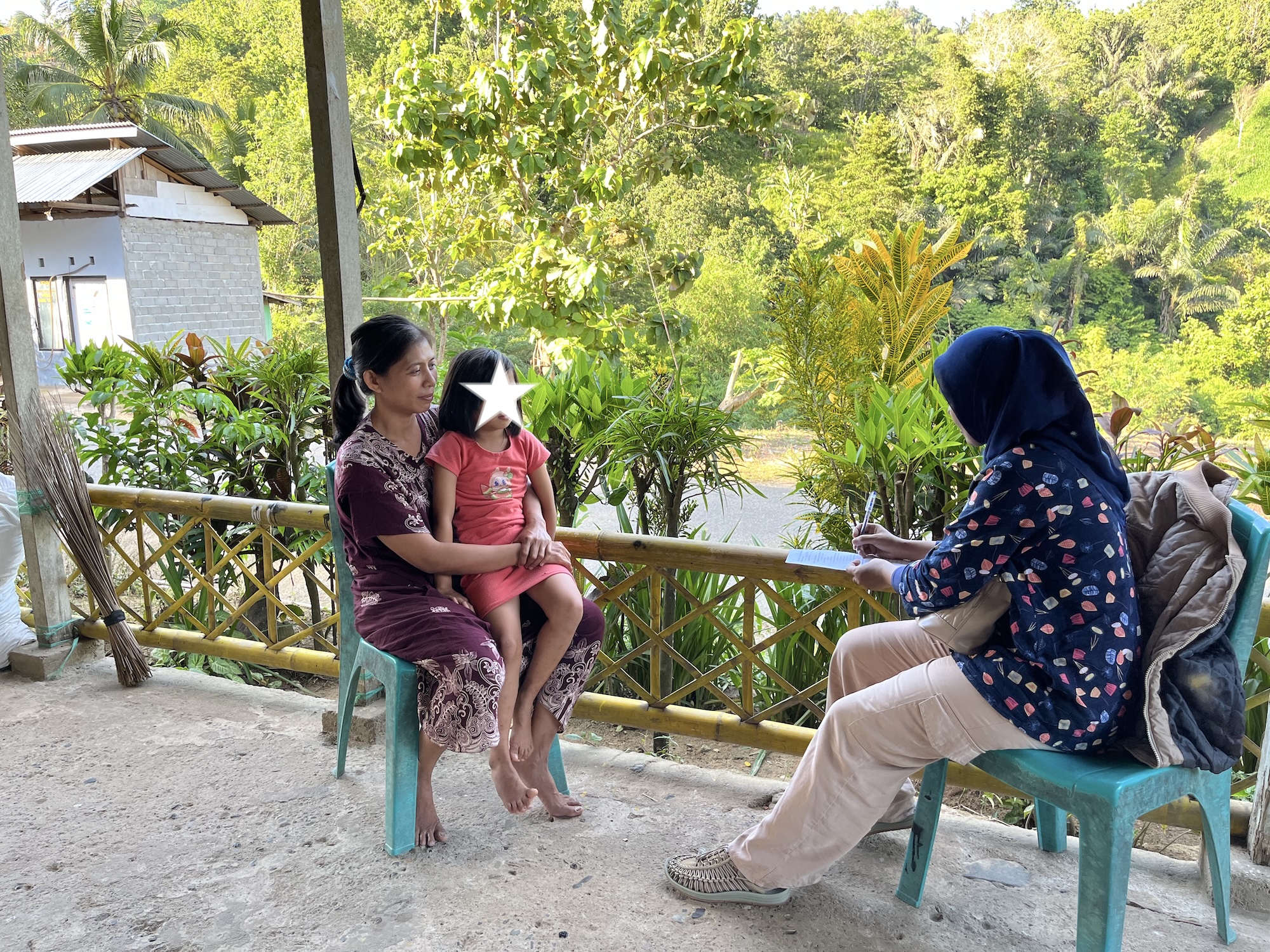
To make her contribution to the household, she works for wages hired by other local farmers to help with planting and harvesting corn.
Planting work consists of half-days from 7am to 12pm for 60,000 IDR over a period of around two months, although calls for work are not daily.
Harvesting takes place around four months later and provides work for more than one month during which she can receive continuous calls for work.
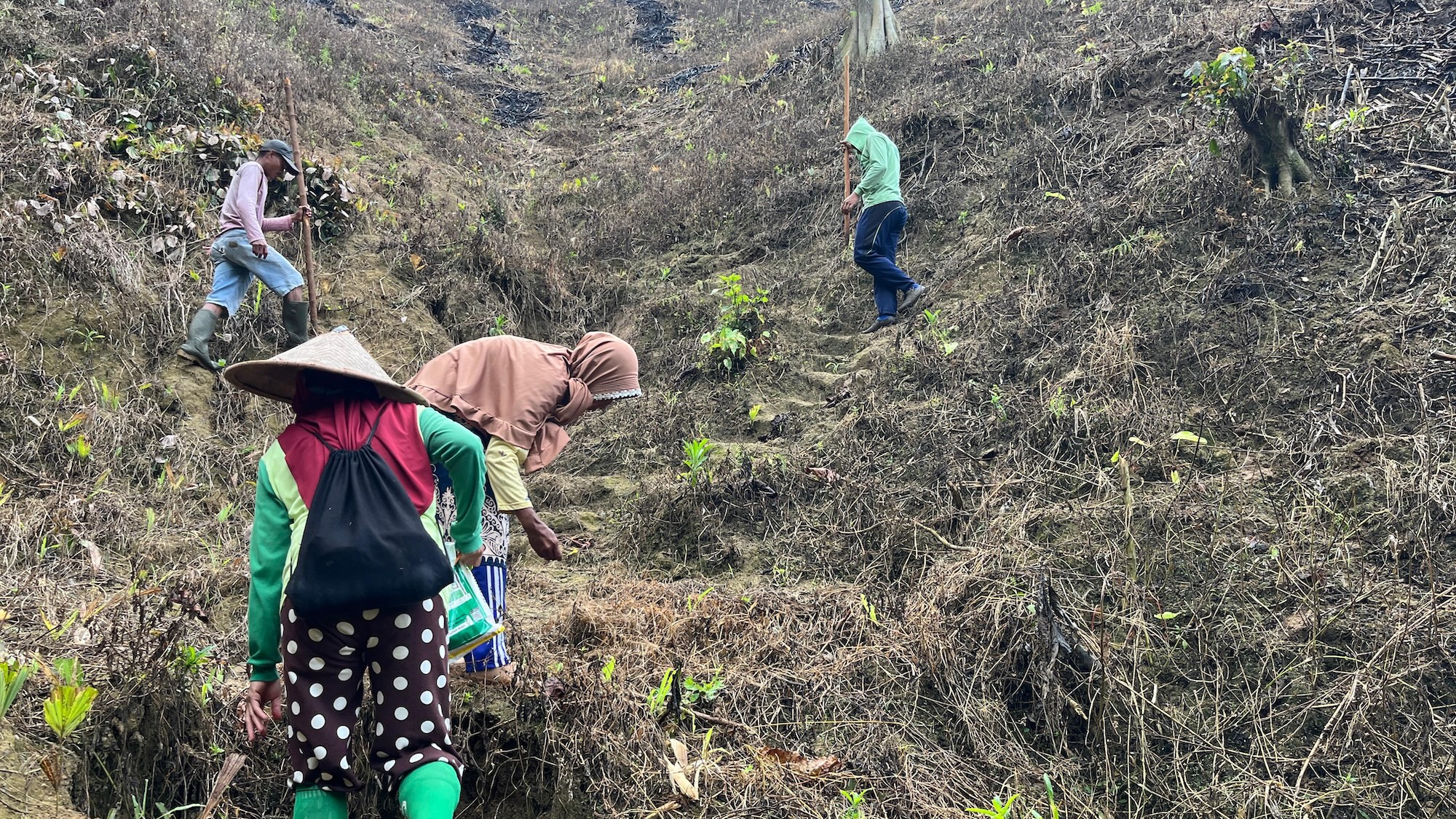
During this time, she will shuck corn for 7,000 IDR per sack at a maximum of 15 sacks per day if she can stand to keep working into the heat of the afternoon.
She also takes work fertilising corn fields for 60,000 IDR per half-day.
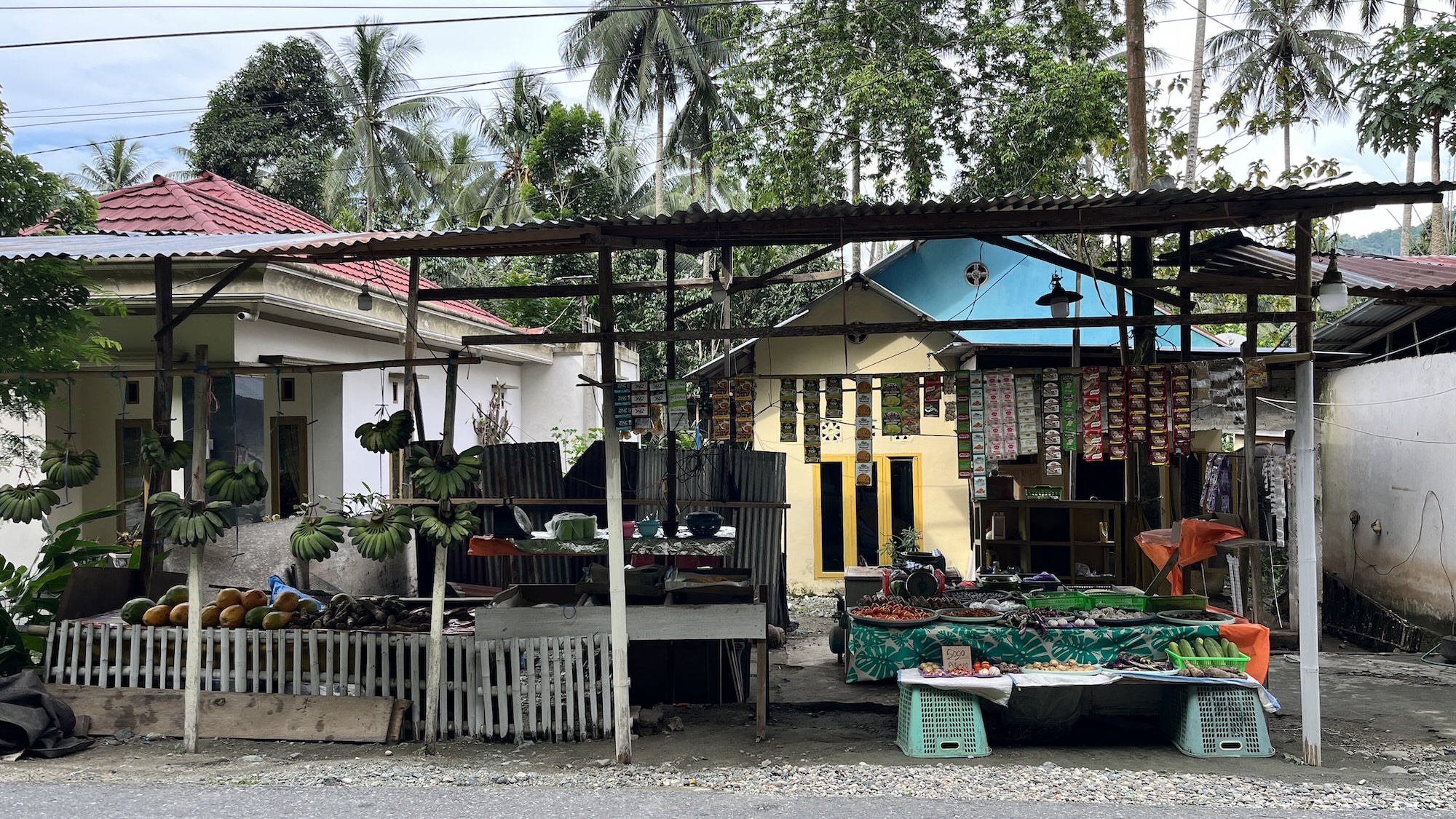
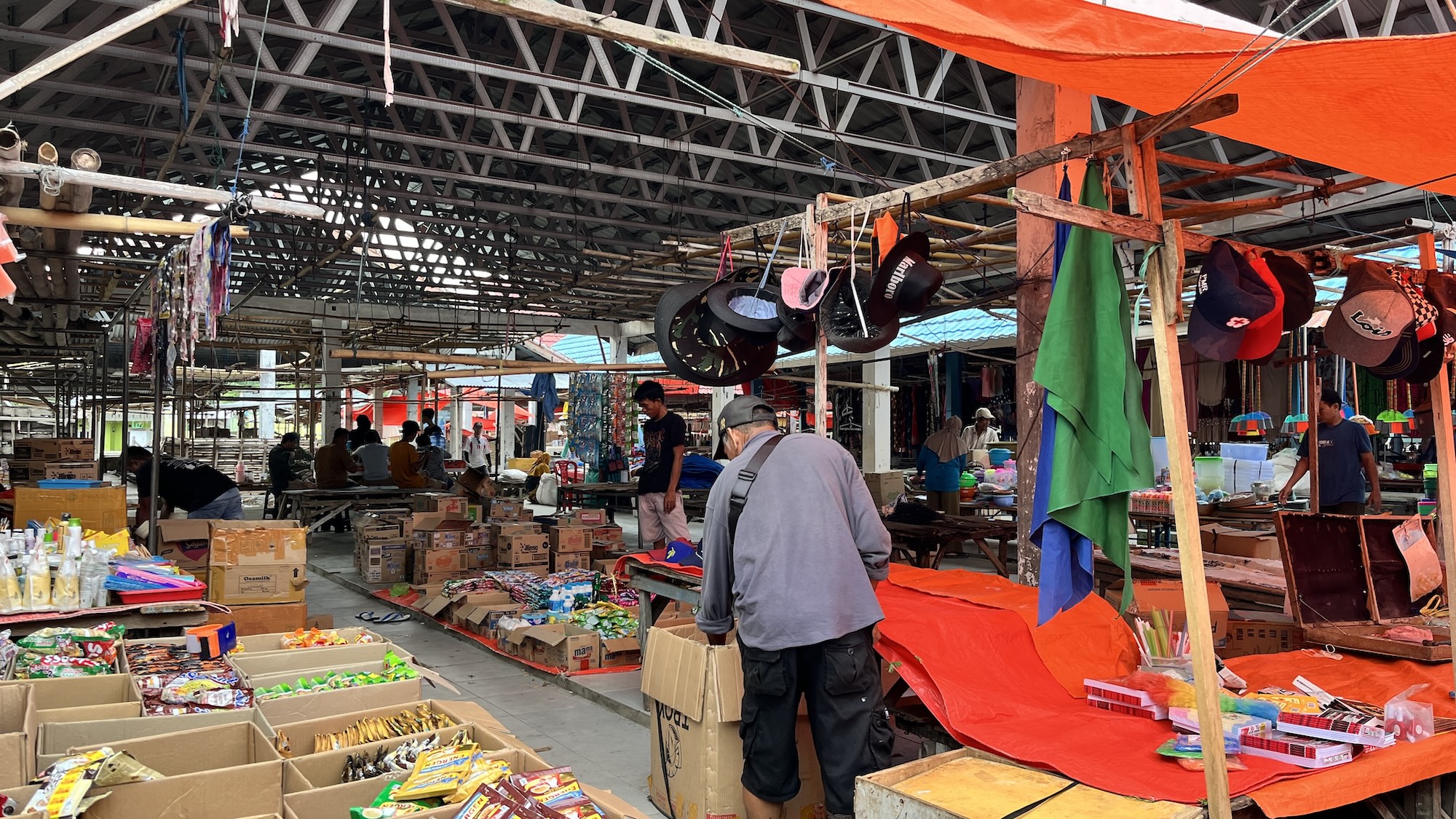
Travel to the city is expensive so her and her mother purchase food from local street vendors and the weekly market at Tapa and travel to the city market just to buy children’s clothes and shoes.
The household’s water comes from a local spring which supplies clean water except during the rainy season when it gets dirty. So they rely on purchased water for their drinking water needs.
She also observed that, since 20 years ago, there has been an increase in the frequency of floods and landslides in the village along the roadside and in the maize fields every time it rains for three or four days. The river has also changed, becoming dirtier so that now the fish which used to be plentiful have become scarce. Rainfall has become more unpredictable and the temperature feels hotter since many of the trees have been removed.
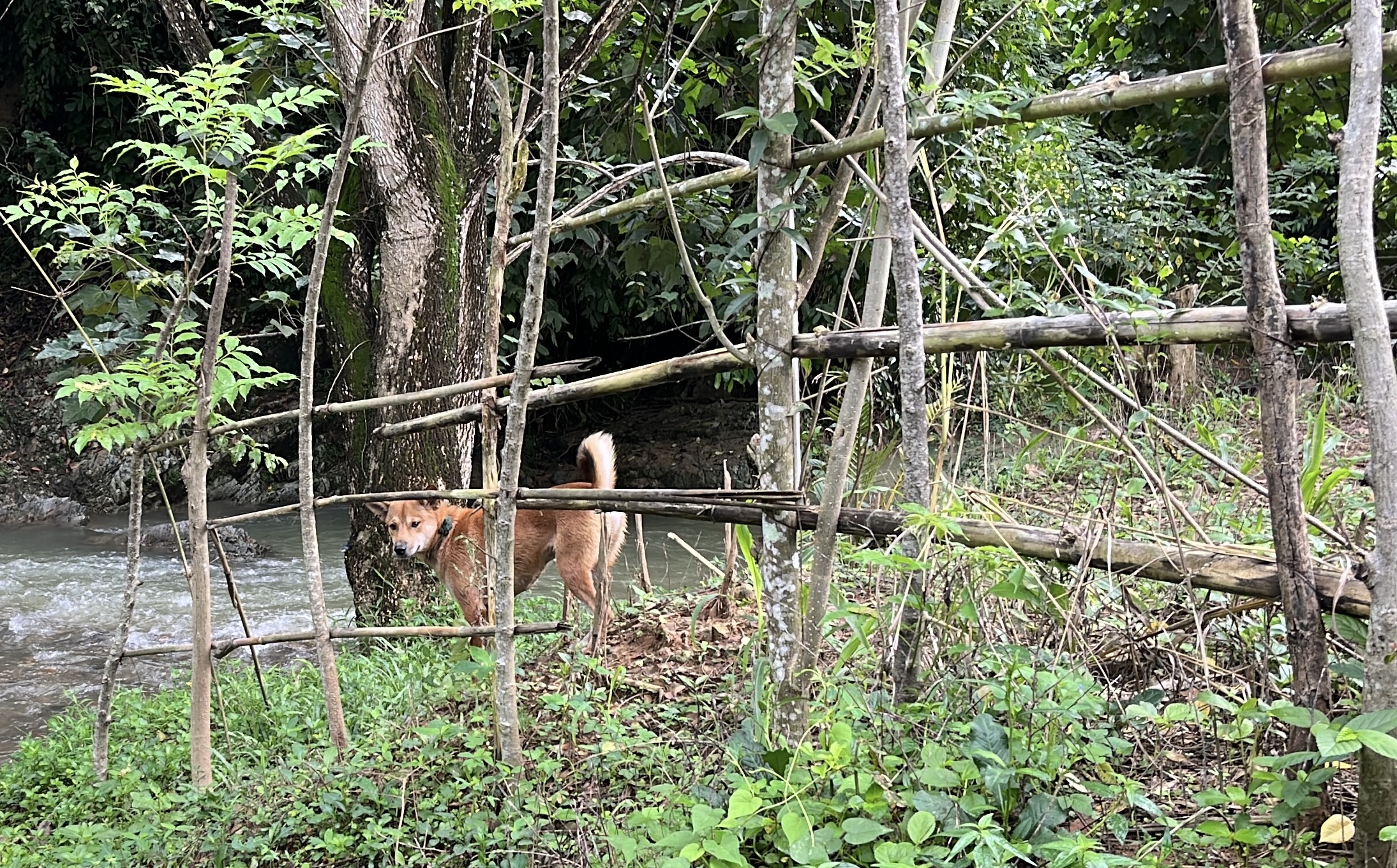
They also now suffer from crop damage by wild boar and monkeys which they scare away with dogs and firecrackers.
Agroforestry farmer
A third farmer (A1_3) has been farming since the Agropolitan began, cultivating two plots of land inherited from his parents on sloping areas near the river.
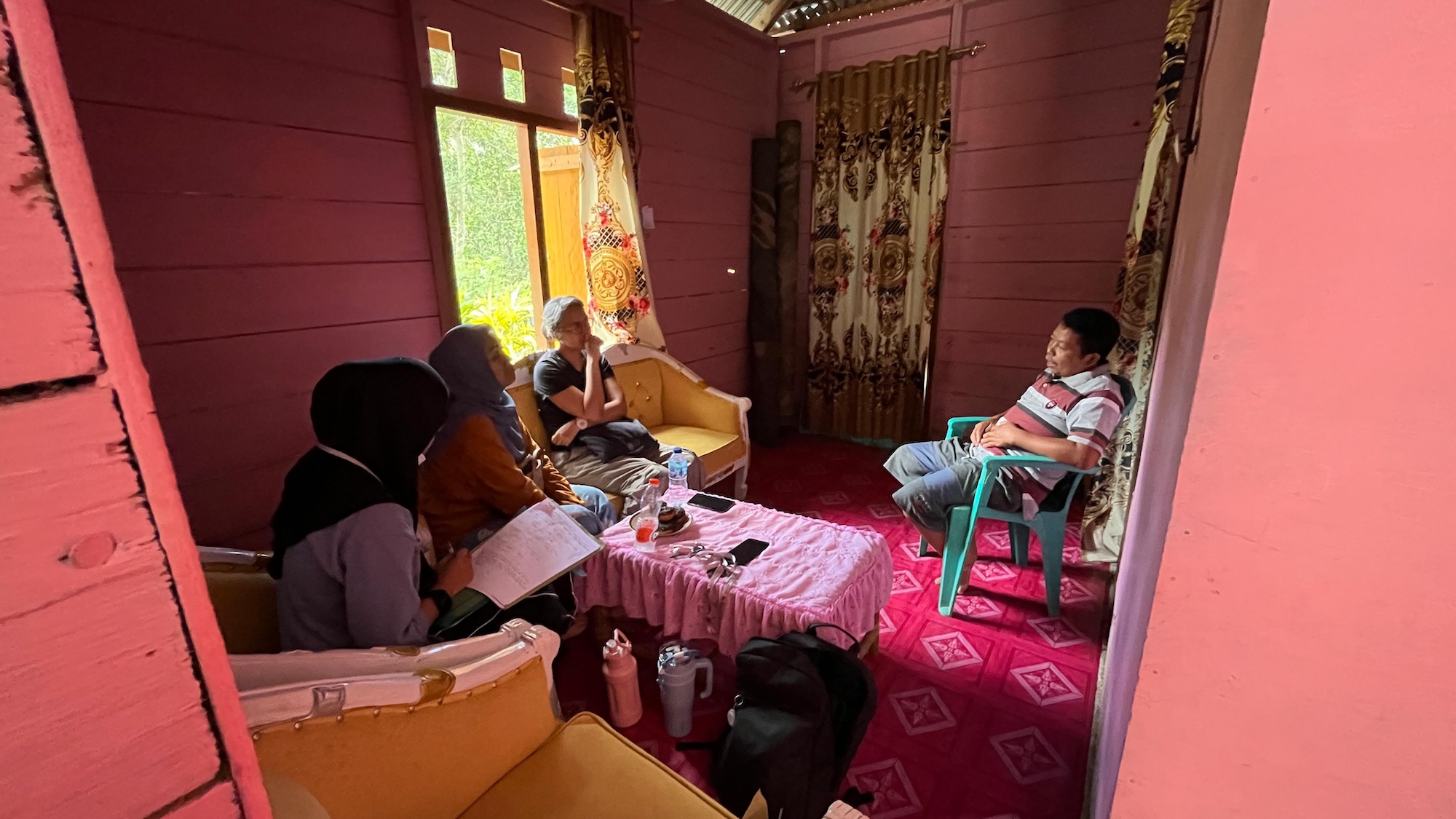
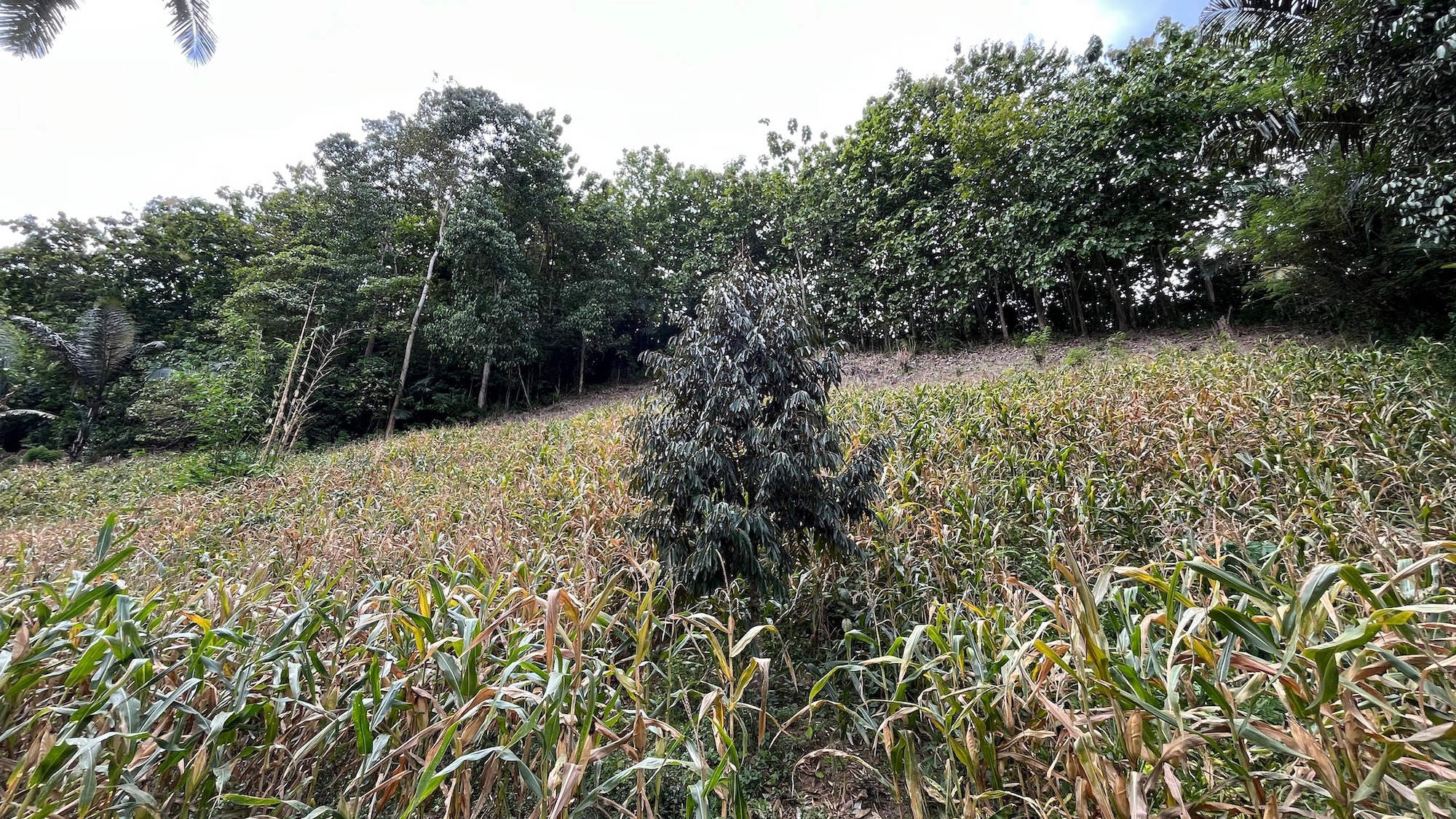
On a 1 hectare plot he grows hybrid corn (Sumo Sakti) and on the other plot he plants corn as an intercrop with durian, nutmeg (Pala), as well as trees for timber: nyato, mahogany, candlenut and teak.
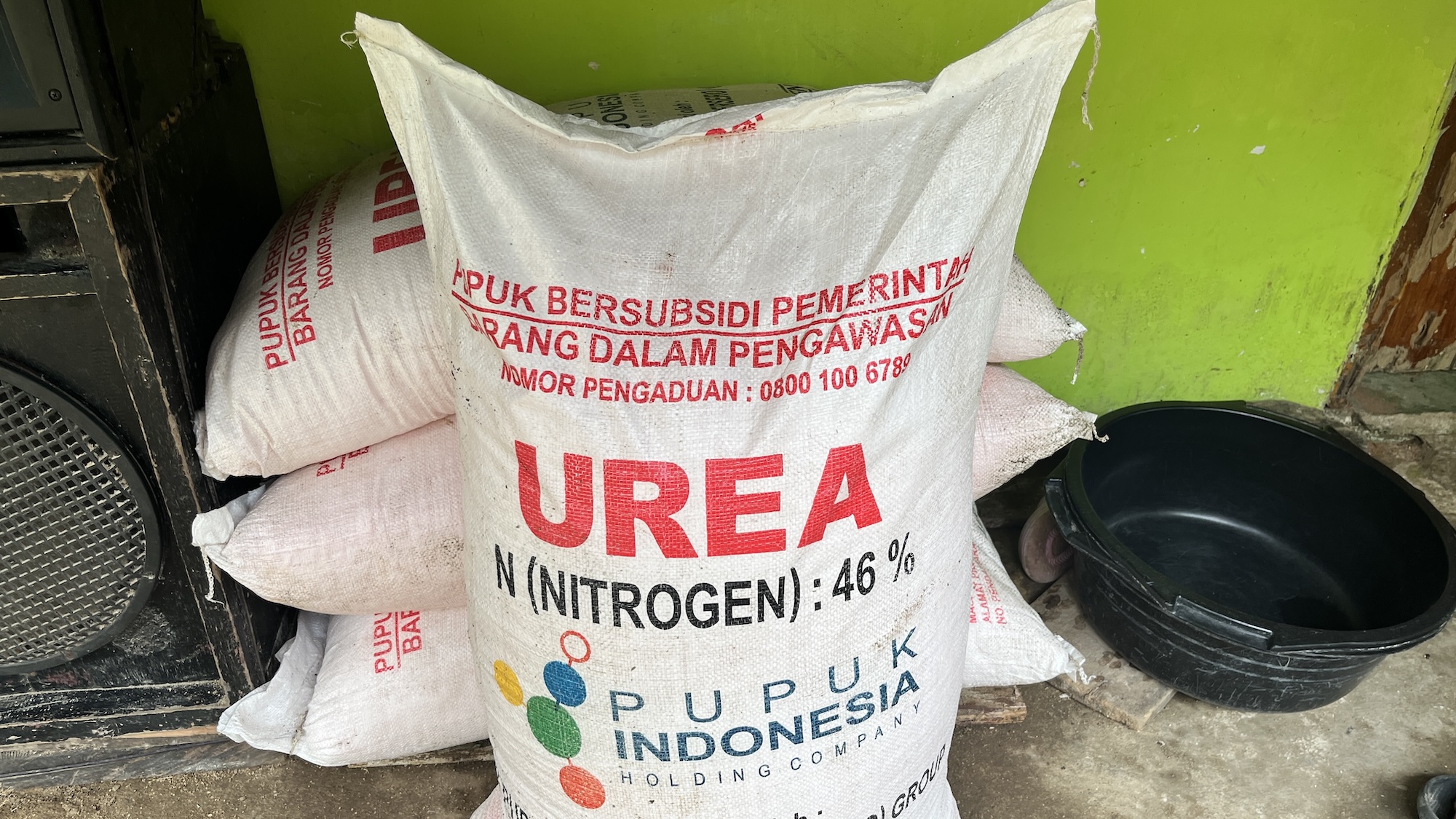
Per hectare of corn he uses around 100 kg of urea and 50 kg of Phonska fertiliser and uses Noxone herbicide2 for land clearance and he hires wage labourers to help with spraying, planting and harvesting, paying around 125,000 Rp per day. To cover the upfront production costs he relies on credit from middlemen.
These high input costs make corn cultivation vulnerable to volatile corn prices. In the past, he even stopped growing corn altogether for several years because the price crashed.
By diversifying his farming system to include agroforestry he is able to reduce this vulnerability.
However, he does not rely entirely on agriculture but combines it with other sources of income from his civic roles in the village and his wife’s work.
The family purchase food from the local Tapa market but have found that prices are increasing while the availability of local river fish for protein has been declining.
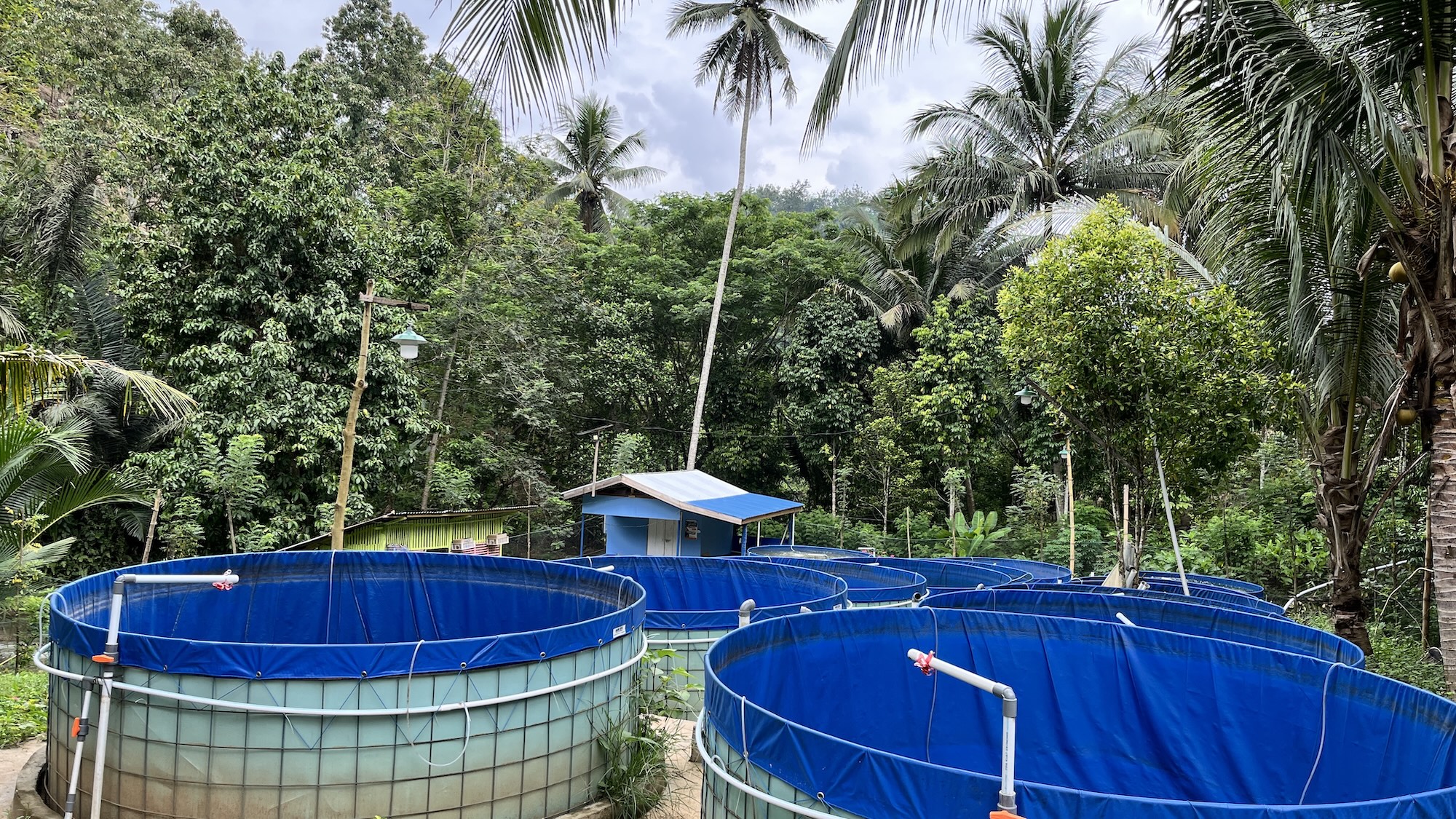
In response, the BUMDES (local village enterprise) is attempting to set up tilapia cultivation ponds in the village to provide a more accessible source of protein for the community.
Huyula (mutual aid)
One of the distinctive features of Modelidu is that, while wage labour is slowly becoming the norm, the traditional form of cooperation known as huyula is still practised by corn farmers in which members take turns helping each other out with clearing, planting and harvesting.
While this practise continues, it does provide some farmers with a buffer against the rising labour costs associated with corn cultivation. Although, as explained by an interviewee, membership of the huyula depends on ownership of land and landless farmers would only participate if they are hired to substitute for a landholding member.
Dulamayo Selatan
In the village of Dulamayo Selatan, a somewhat different story has unfolded which stands in contrast to the experience of Modelidu.
Rather than making the transition to hybrid corn monocropping, farmers here have maintained a much more mixed farming system which combines corn cultivation with agroforestry with a wide diversity of crops, each with multiple uses such as for building materials, in rituals, for food and for market.
In response to the environmental and economic consequences of clearing large areas of steeply sloping hills over past decades for monocrop corn cultivation, the government and local farmers have begun to promote conservation agroforestry as an alternative to corn.
The Indonesian government’s program to promote agroforestry systems is commonly referred to as community forestry. This initiative has been implemented since 2007, following the issuance of Minister of Forestry Decree No. 37/Kpts-II/2007 on the Estabilishment for Community Forests.
The perception that land clearance for corn cultivation has led to rising local temperatures, diminished river water quality and increasingly damaging seasonal landslides while trapping farmers in debt has led many farmers to advocate agroforestry as a more environmentally friendly and economically stable alternative.
Diverse agroforestry
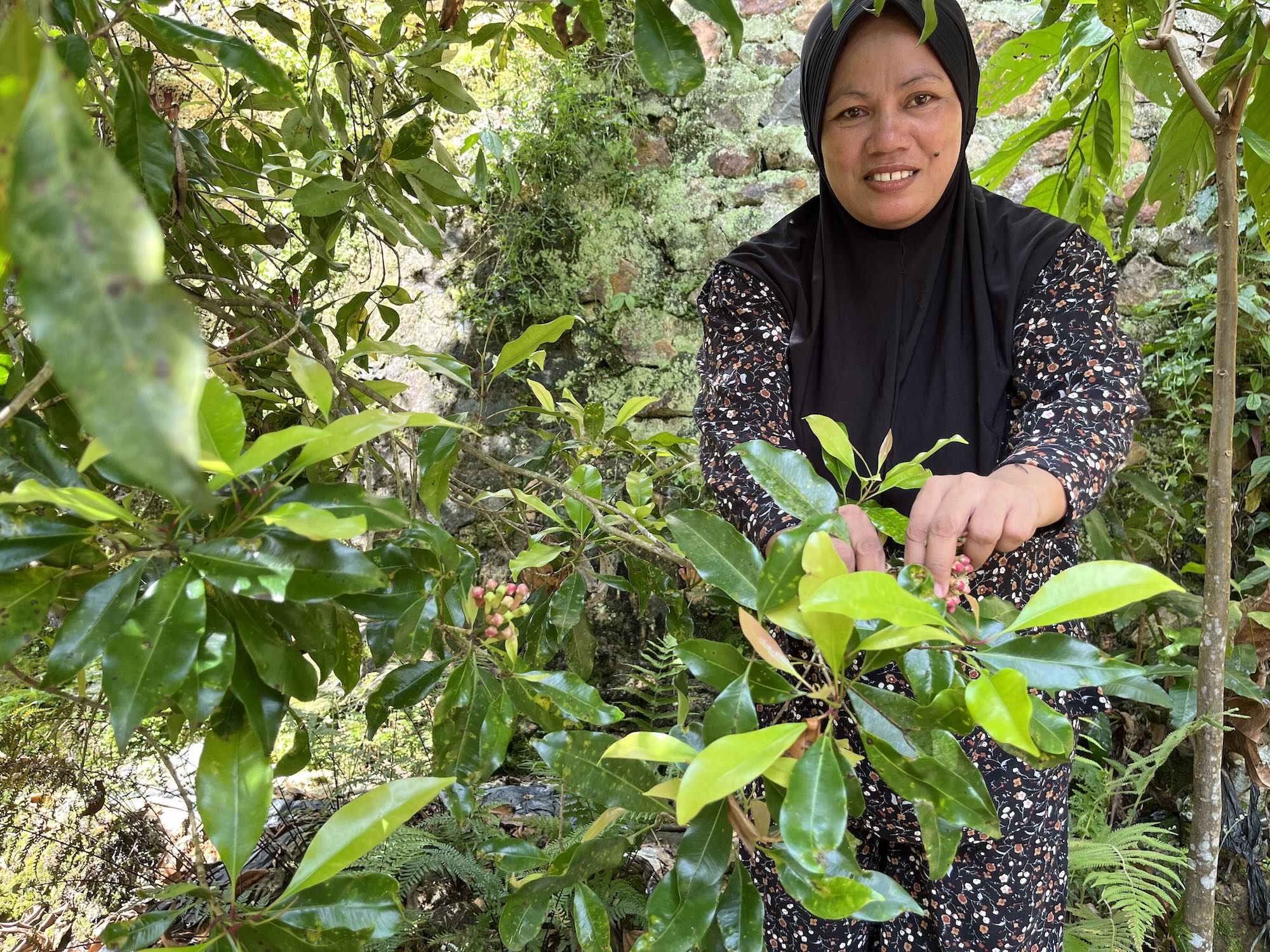
Farmer A2_8 supports himself and his two youngest children on 4 hectares of land by cultivating a large diversity of tree crops including Banana (pisang gapi), candlenut (kemiri), nutmeg (pala), cloves, langsat, and durian along with goats, cows and chickens. Corn features as part of his farming system as a home-grown feed for his own chickens rather than as a cash crop.
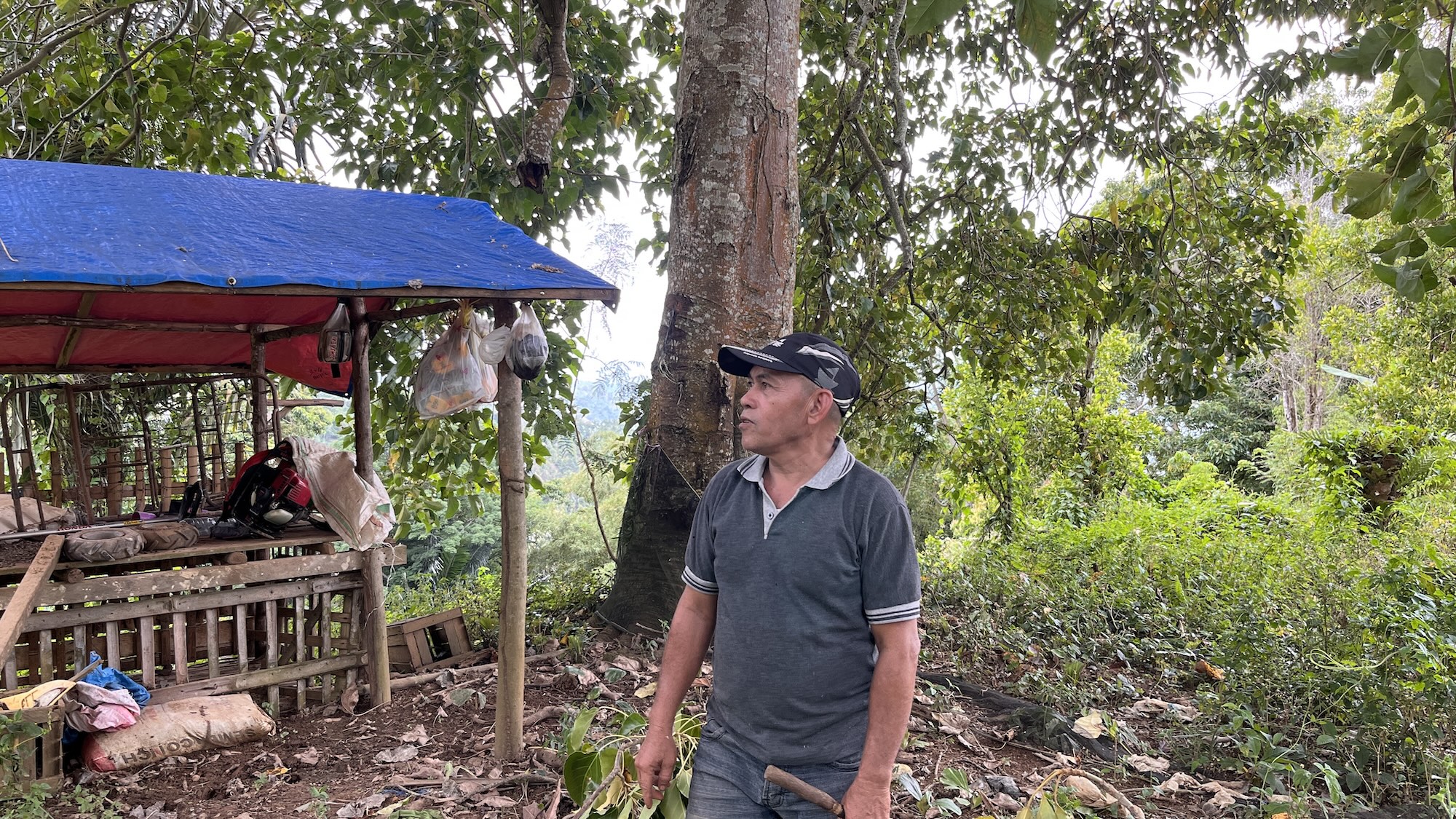
He sees hybrid corn monocropping as a debt trap because, even though the seeds and fertilisers are subsidised, the additional cost of labour for clearing, spraying, planting, harvesting, husking, shelling, and transporting corn eats up the profits leaving less than 1 million IDR a month in net income.
He estimates his monthly household expenses to be around 5.5 million IDR (£230), of which around 175,000 a week is spent on rice, and the remaining on other foods such as fish, electricity vouchers, petrol, and school allowances for his children.
To provide enough income to cover the cost of living he relies on different parts of his farming system for different purposes.
The banana trees supply a steady, low-risk harvest every week or two.
Candlenut provides a financial safety net as it can be harvested continuously but can also be stored for sale at an opportune time to provide a quick source of cash.
Nutmeg is an understory crop which he grows beneath his other trees and is a low-effort, high-reward cash crop which he describes as “money falling from the sky”.
He breeds and fattens chickens for sale to generate a steady income, selling up to 100 chickens every two months to generate around 3 million IDR per month.
Cattle are kept as long-term savings which can also be used for emergency income. He purchases thin adult cows to fatten on elephant grass which he grows on his own land and within three months they can be sold for a profit.
His goats are also fed on home grown elephant grass and they provide manure for use as fertiliser for his crops and can be sold for use in the Islamic Aqiqah (birth celebration).
On the other hand, cloves are increasingly troublesome because they only fruit every two years and are vulnerable to erratic rainfall and the labour required for harvesting is expensive.
His langsat trees are also vulnerable to changing weather and haven’t fruited for several years due to excessive rain.
The cloves, langsat and his few durian trees are therefore treated as supplementary sources of income or for sharing with friends and family but are also valuable for reducing soil erosion.
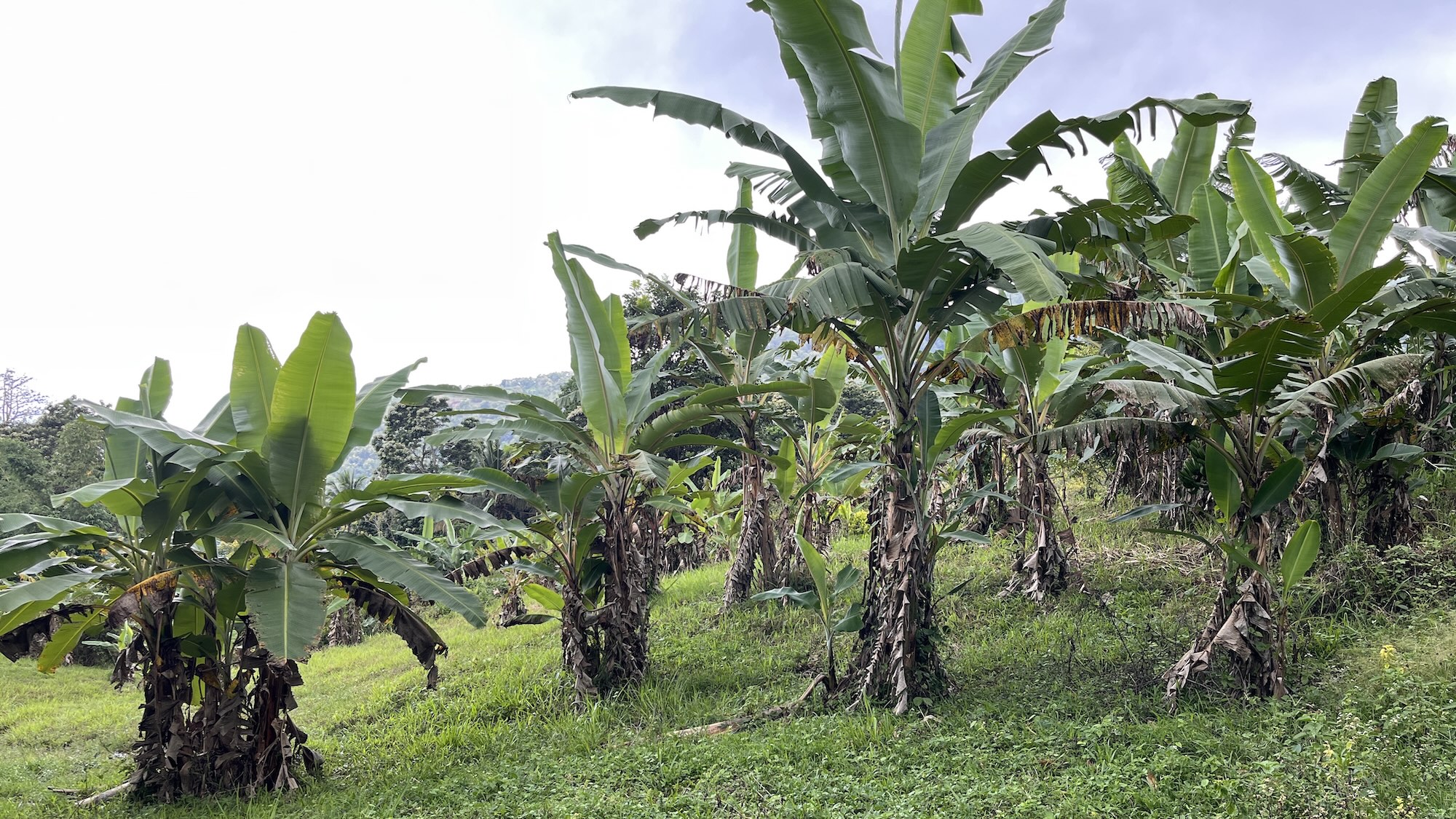
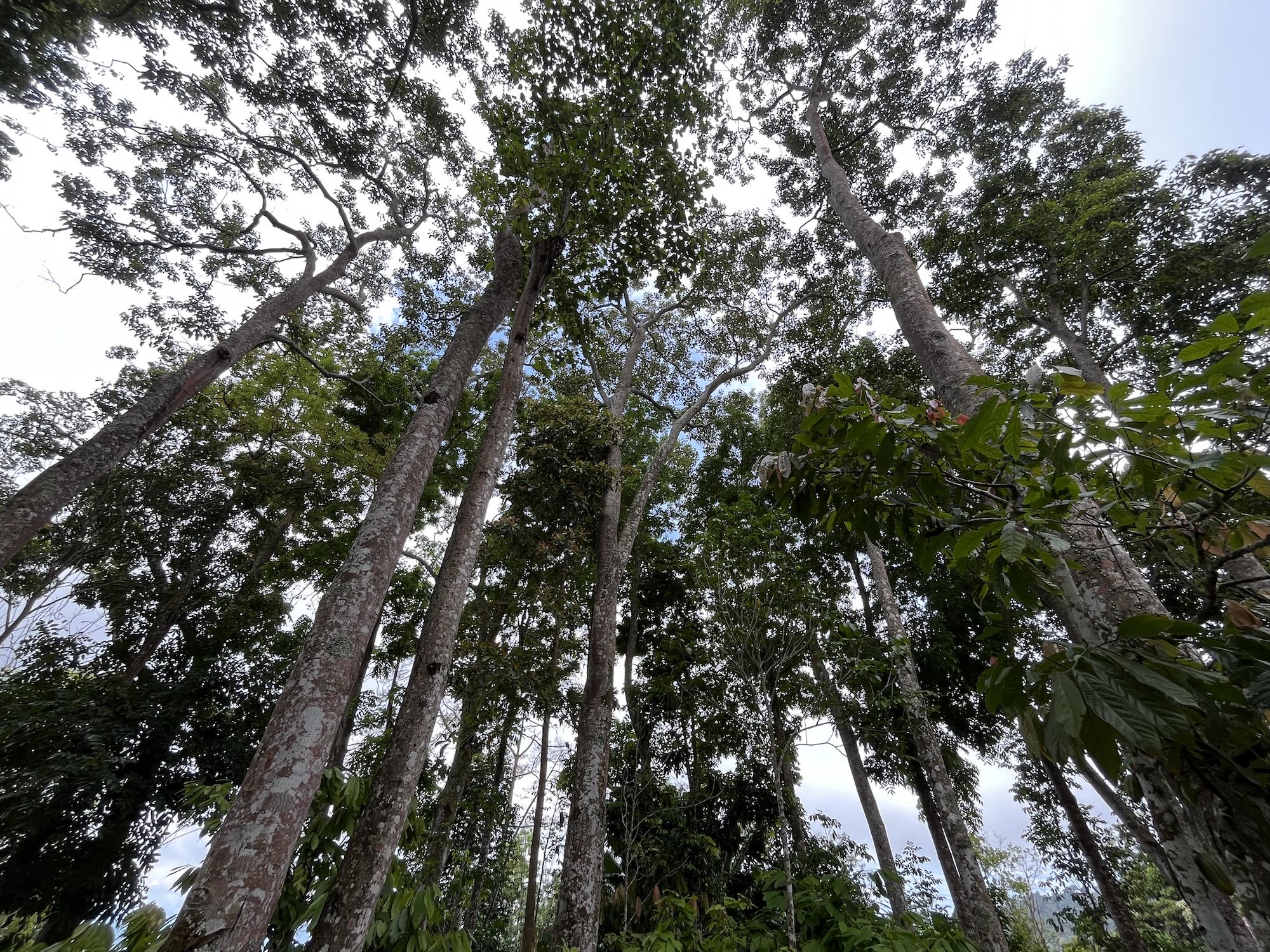
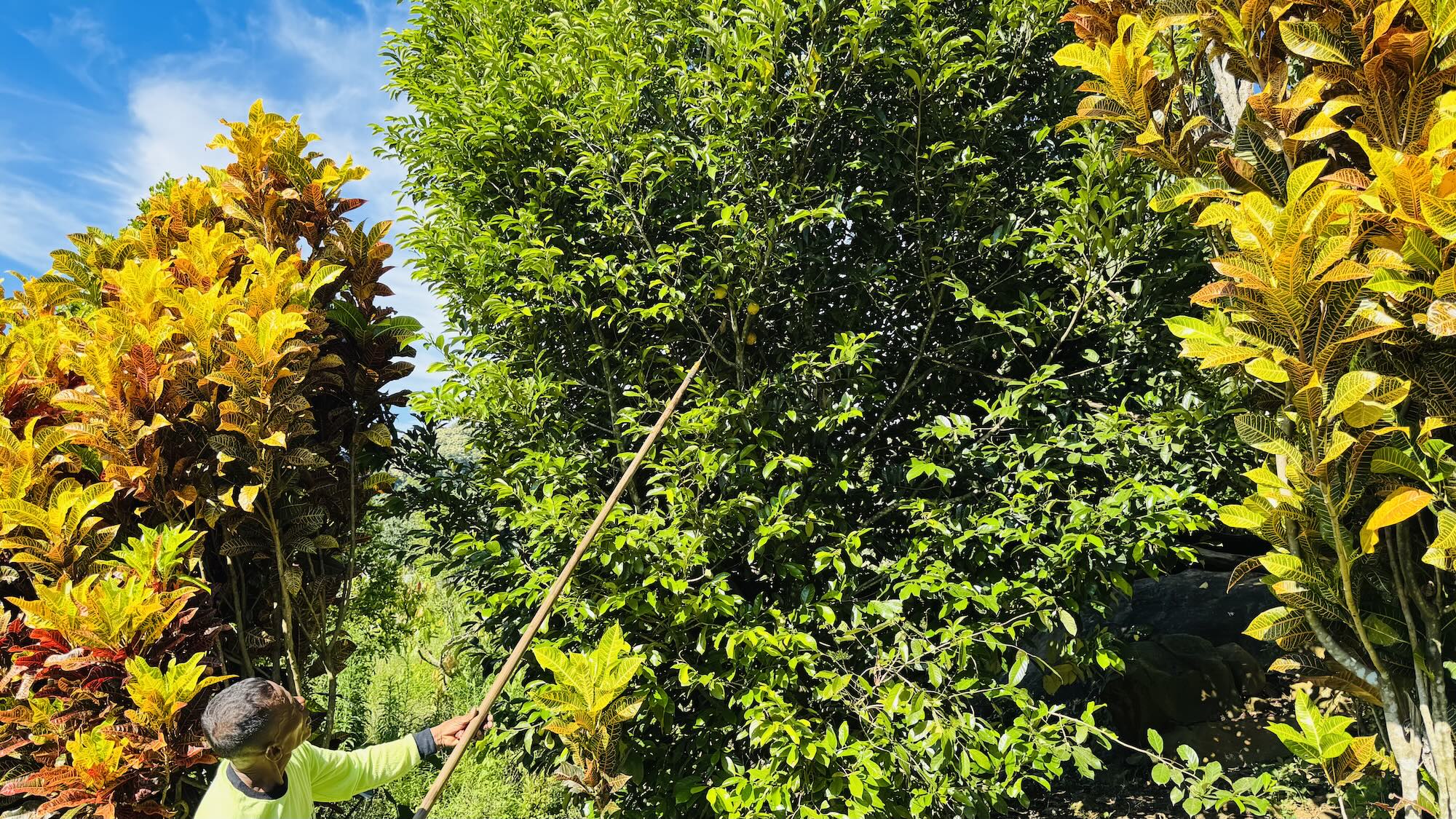
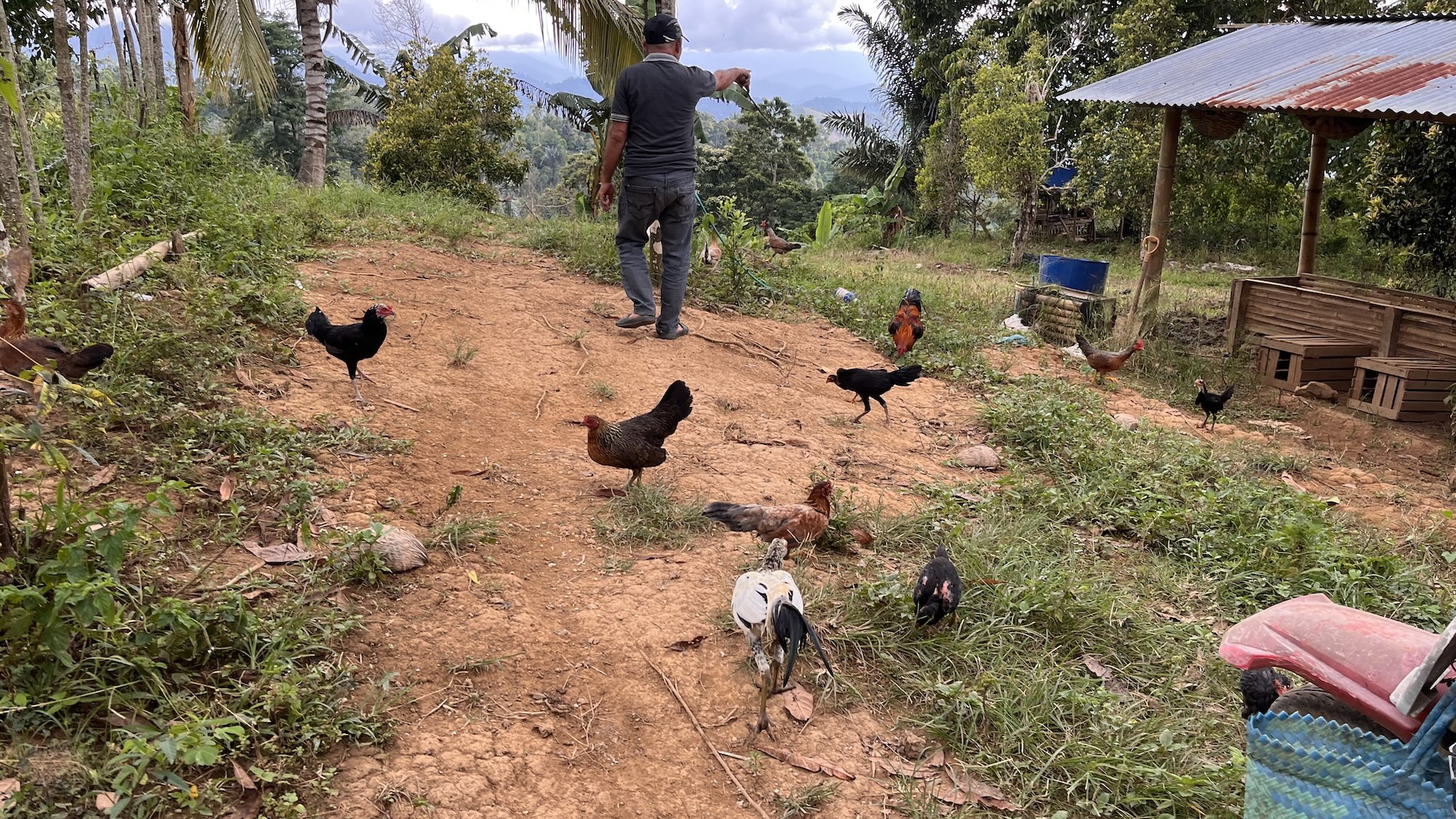
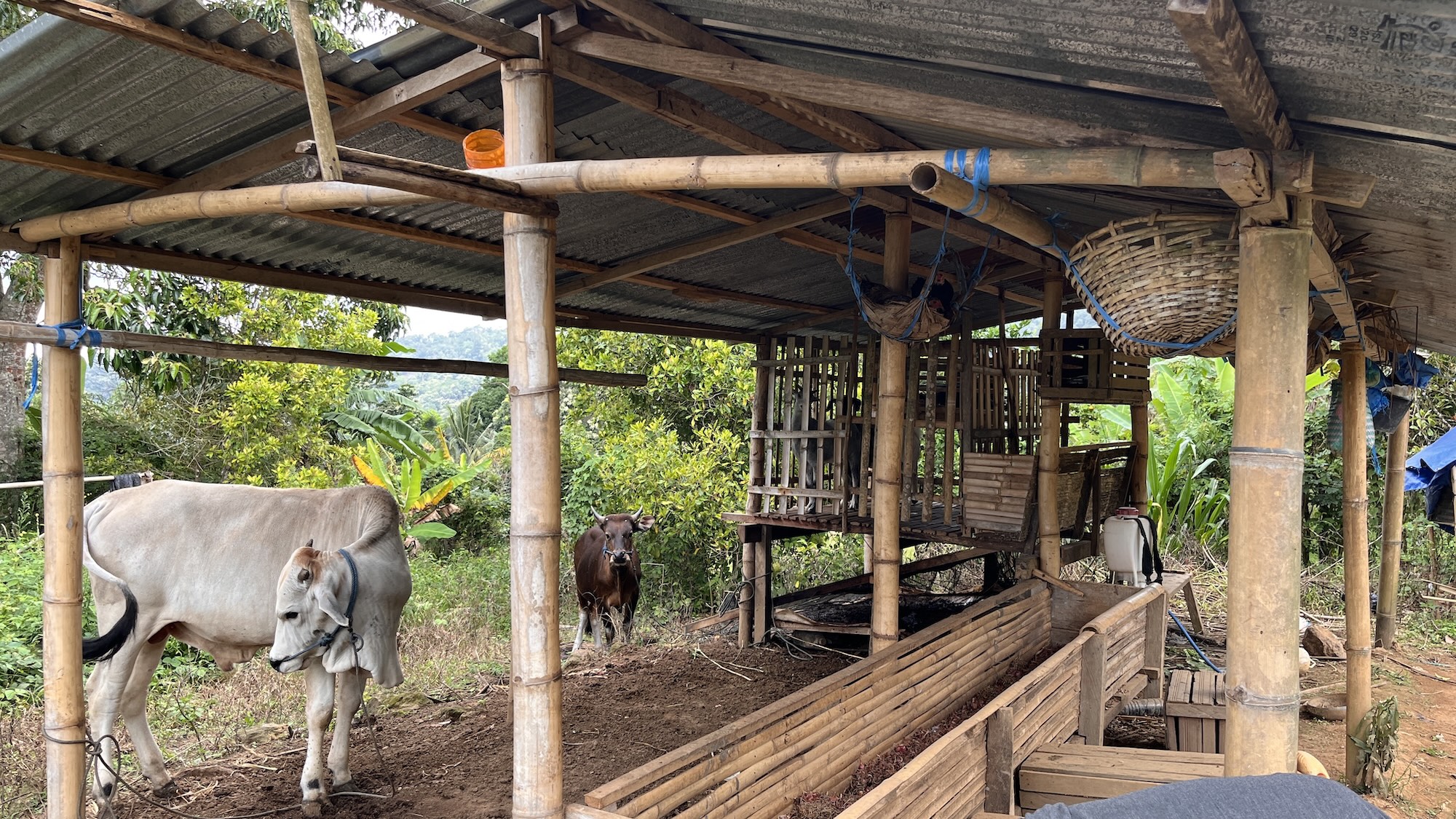
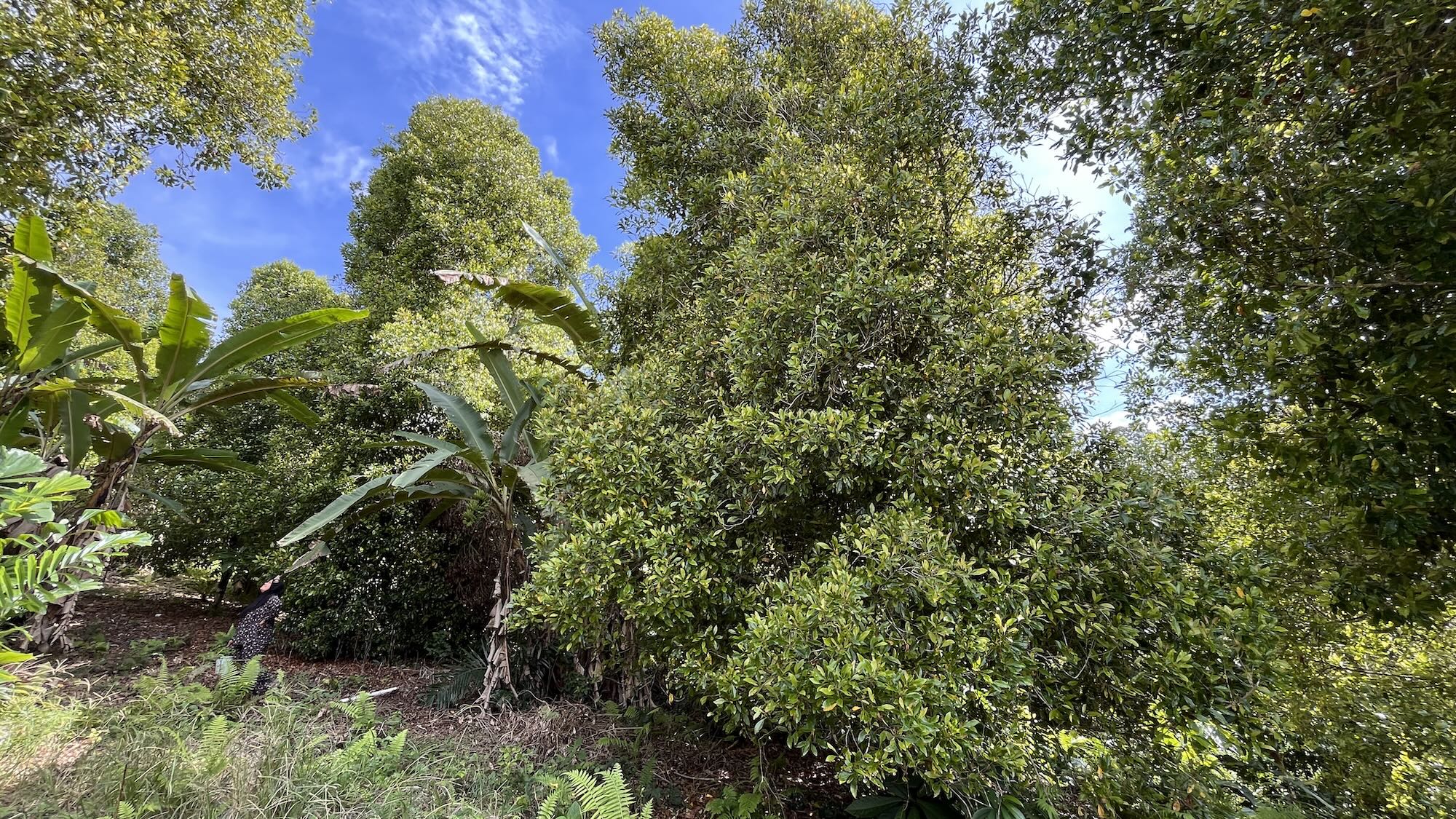
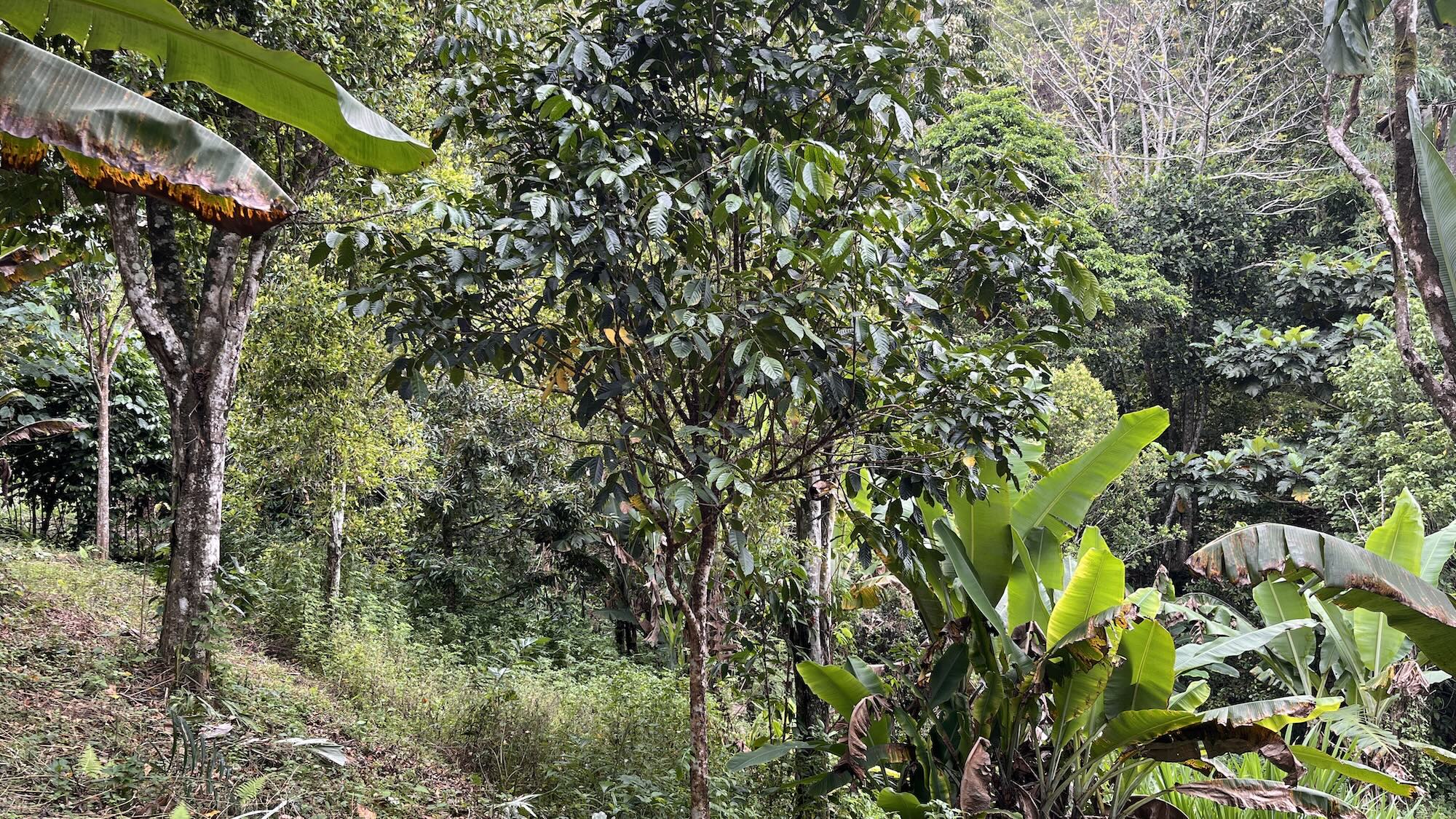
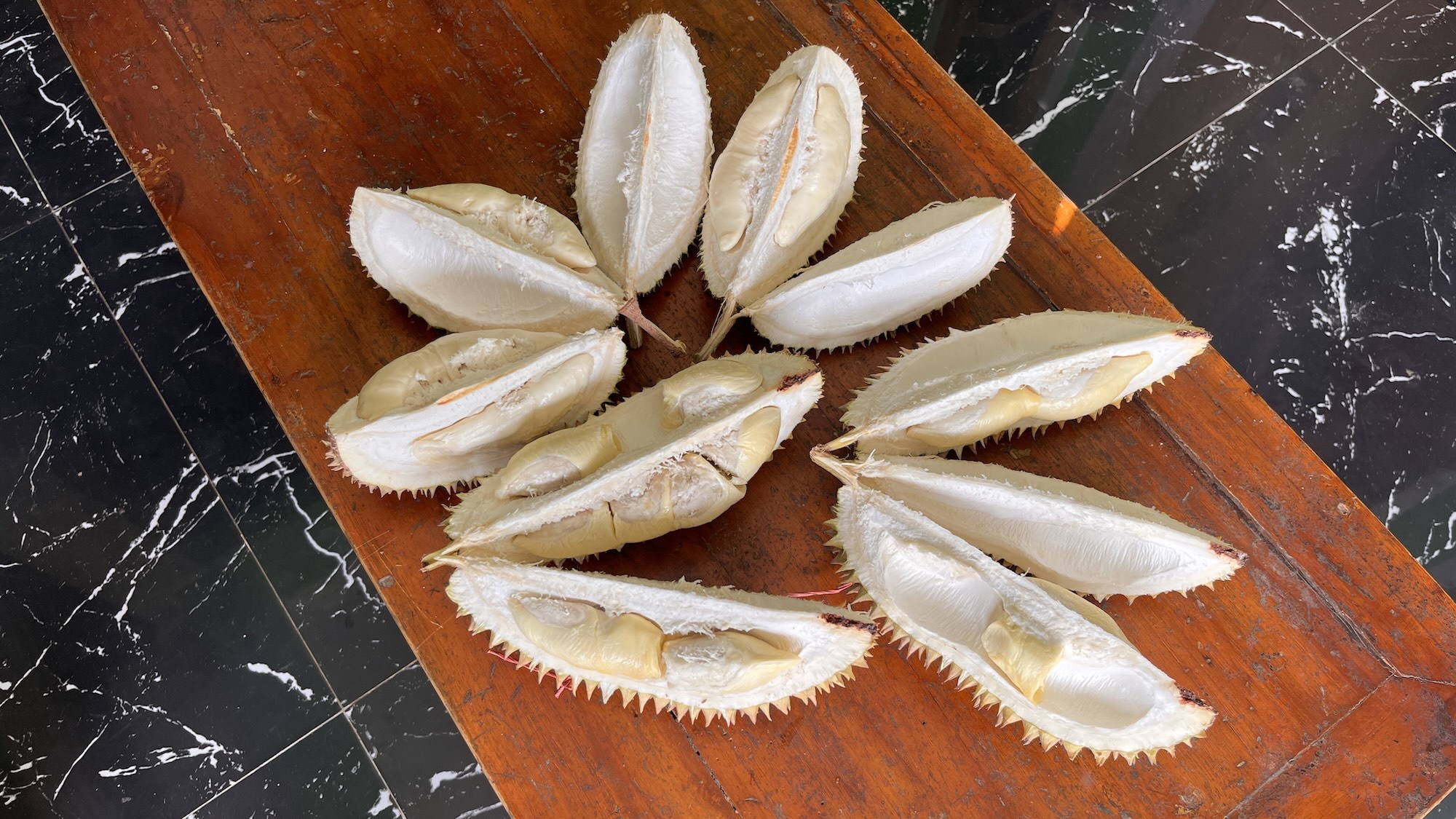
Even though corn cultivation provides quick returns and despite the fact that some of his tree crops have begun to be impacted by climate change, he still prefers the mixed agroforestry system because it provides a more stable and resilient livelihood.
While agroforestry provides a good solution for smallholders, it can also be implemented on a larger scale as another farmer demonstrated.
Clove plantation
Farmer A2_14 has lived in the village since 1977 and has managed to build up a large clove estate and mixed agroforestry system by raising capital to purchase land through seasonal artisanal gold mining in Marisa, over 150 km away.
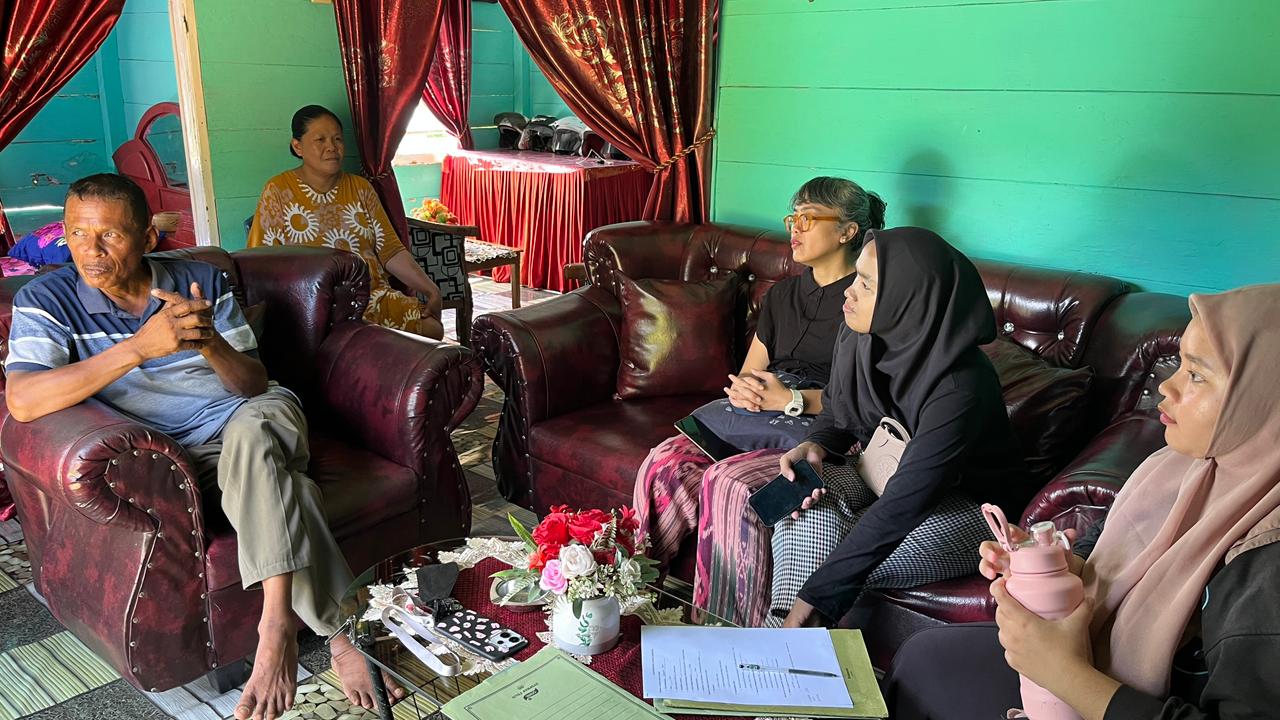
His 20 hectare plantation in the upper hills is planted with around 2,000 clove trees and corn is grown in between the trees as a supplementary cash crop while he waits for the trees to mature and start bearing fruit.
His 5 hectare plot in the lower village is a diverse agroforestry system with planted with candlenut, cocoa, coconut and fruit trees including durian, langsat, duku and mango. Corn is also grown here as an intercrop between the younger trees.
Rather than using hybrid corn seeds which he says are too expensive and unsuited to the humid upland climate, he breeds his own seeds, treating them himself and storing them for the next season’s planting.
He also prefers his own local varieties because they are more suitable for making the traditional beras milu (corn rice) for household consumption, while hybrid varieties are for animal consumption.
For corn cultivation he uses herbicides and fertilisers and hires wage labour for the corn planting and harvests, while the trees also require some fertilising and targeted application of pesticide (especially to protect the clove trees from stem-boring caterpillars).
In addition to his agricultural and gold mining income he also acts as a local buyer of agricultural products from his neighbours including cloves and candlenut for onward sale.
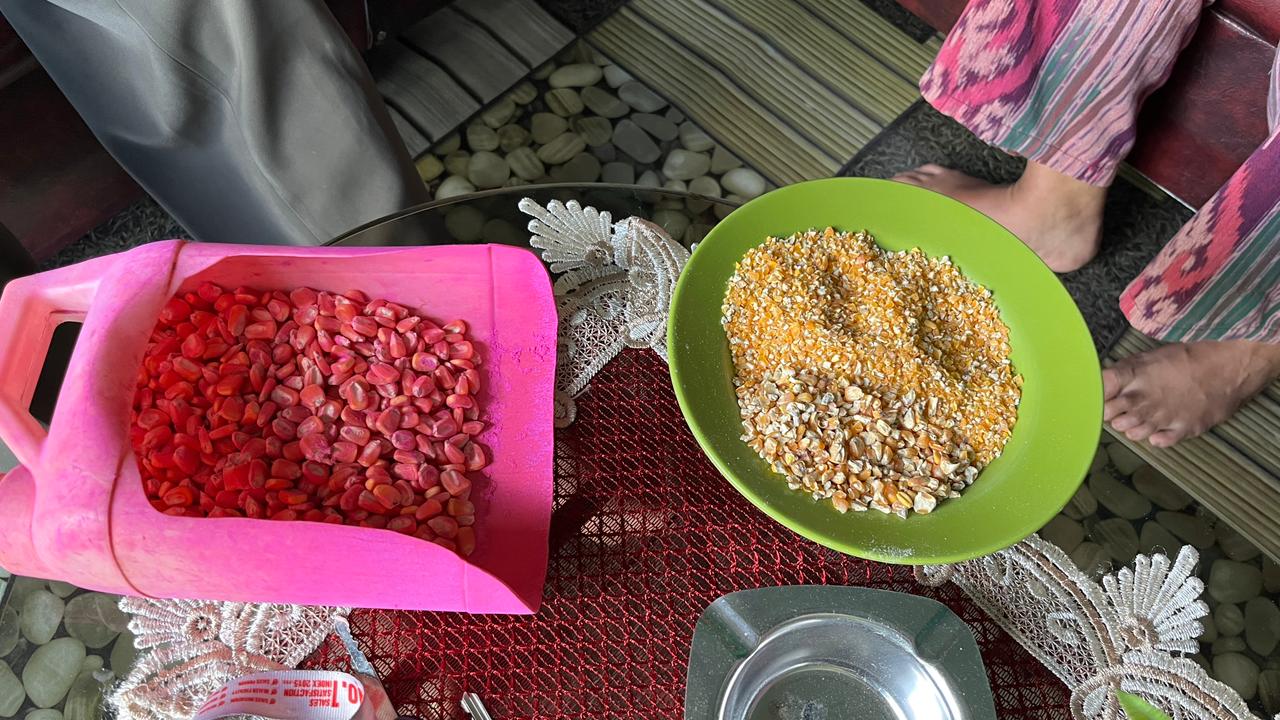
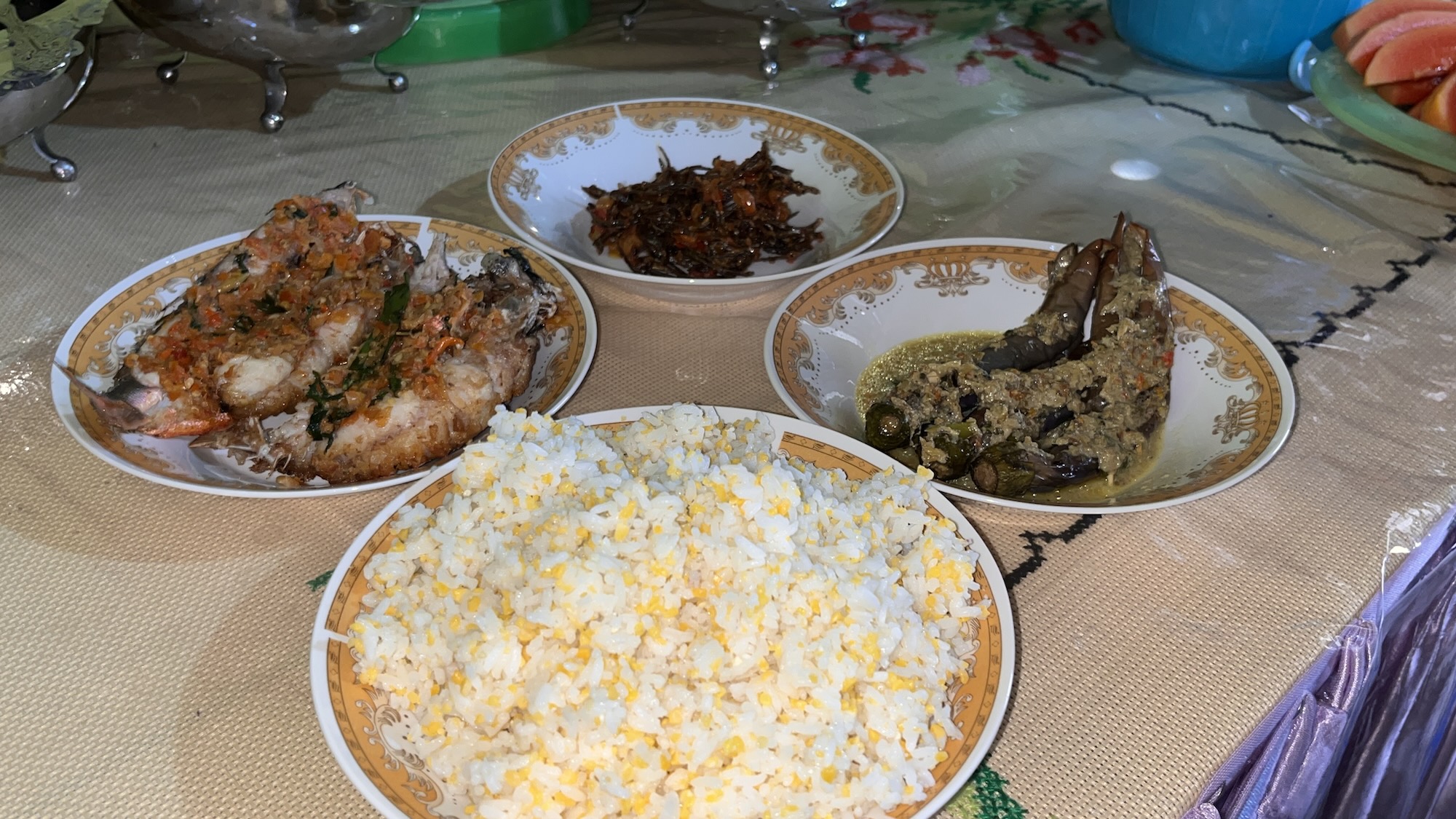
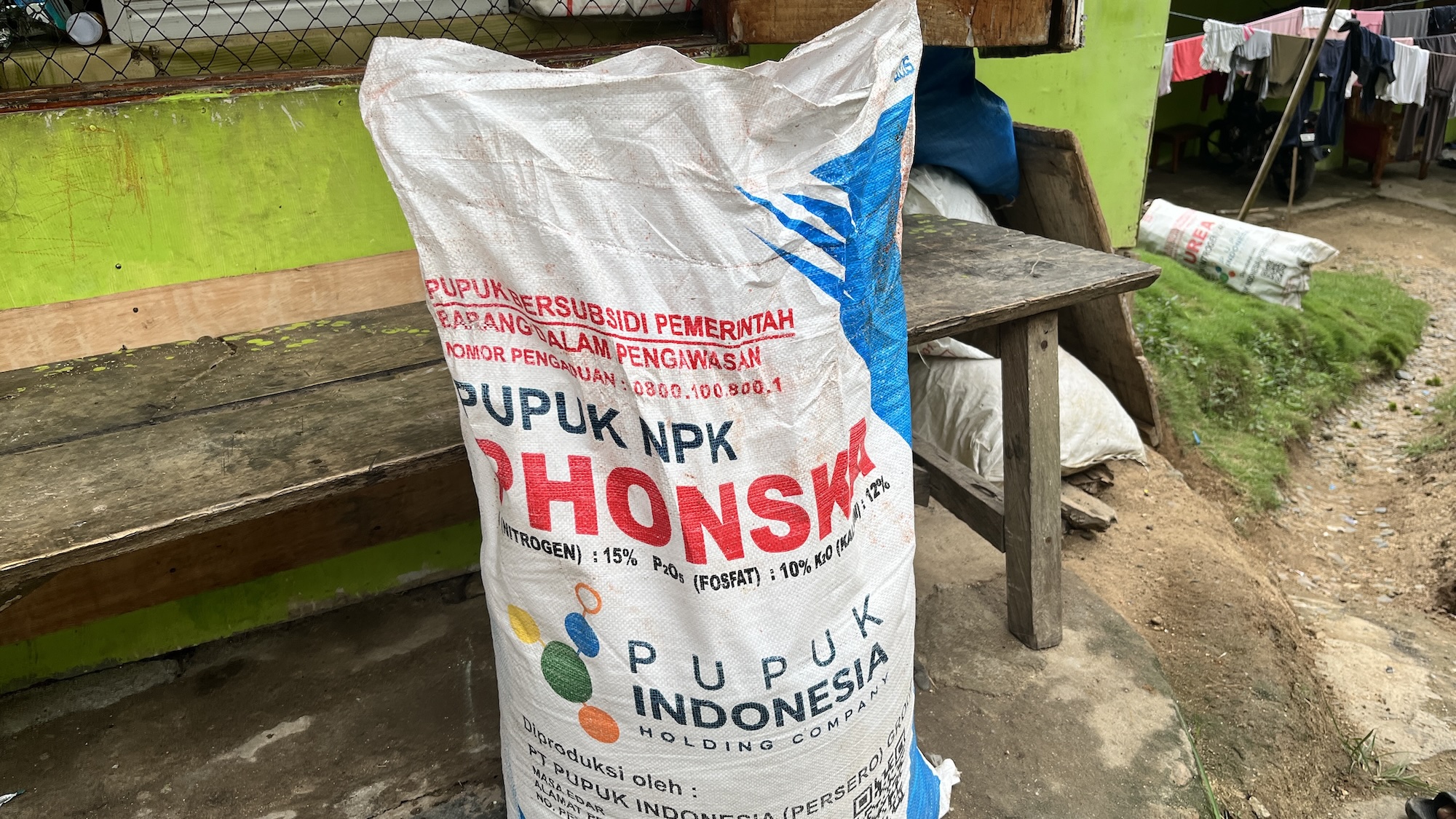
He describes his diverse livelihood as a combination of two strategies. His gold mining activity is “hunting money” (berburu uang), while his agroforestry plantation is “breeding money” (beternak uang) through long-term investments to generate passive income.
This strategy has provided for comfortable household spending and support for one of his three children to study accounting at the state university. It also allows him to live debt free, not needing to rely on bank credit to purchase inputs or pay wages.
Women farmers
While some farmers have made a success of agroforestry, others lack the necessary land and capital rely on a mixture of off-farm employment and horticulture to meet their needs. In many cases these are women whose husbands work away from home.
One household we interviewed (A2_2) were far more dependent upon mining for their livelihood while bananas and horticulture played a supporting role. The husband has been working as an artisanal gold miner in Marisa since 1993, returning home only once every week or two. His wife, as head of the local Women Farmers Group (KWT) manages a half-hectare plot cultivating tomatoes, beans, broccoli, greens and celery in addition to 200 banana trees provided by the Upland Program. She sells her vegetables and bananas to local stalls to generate a steady stream of daily cash.
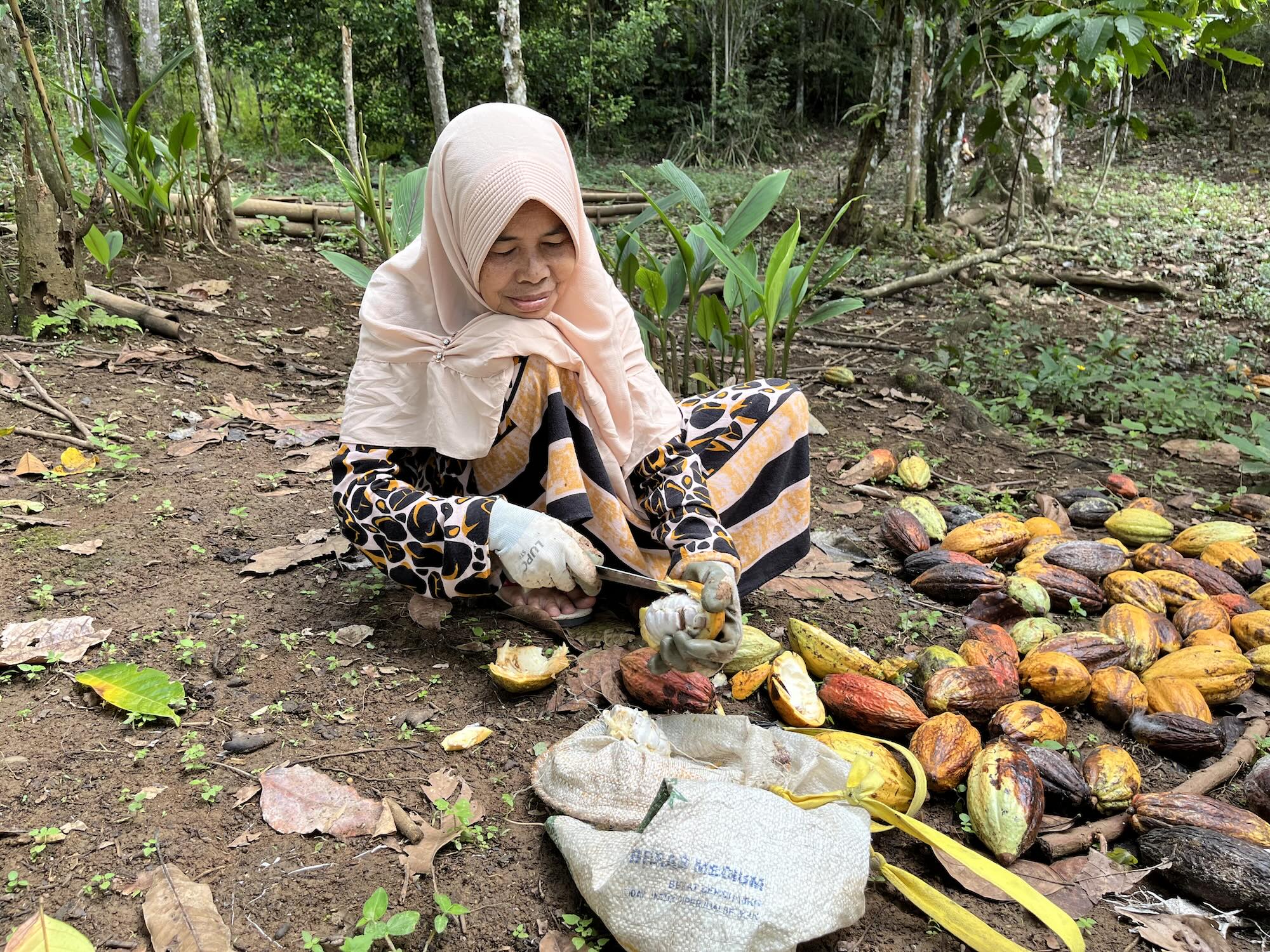
Another farmer we spoke to (A2_4) was a 67 year old woman who manages her household’s farmland alone while her husband worked away from home. For her, agroforestry is a lifeline, providing a steady source of passive income for minimal labour. On 3 hectares she cultivates a diverse canopy of trees planted in the 1980s including candlenut, cocoa, langsat, durian and cloves, along with chickens and chillies that she grows from her own seeds.
The cloves and langsat bear fruit every couple of years. But the candlenuts produce year round and drop to the ground when ready for harvest so she simply walks among the trees each day, collecting nuts until she has enough to sell to a local village collector (around 2-30 kg).
She harvests the cocoa weekly when it is in fruit and dries it in the sun, selling it when she has accumulated 5 kg or so.
Although she does grow corn, she only cultivates a small area of around 0.2 ha. However, because the huyula is no longer practised, she has no choice but to hire expensive wage-labour for every step of cultivation. Neither is she a member of an official farmers’ group so she has to purchase fertiliser quotas from her neighbours. This means she only has enough capital to fertilise the corn once so that her steep, degraded plot only yields around 500 kg of corn.
While she earns enough to live, she economises by limiting her trips to the market, purchasing only necessities and relying on her daughter who visits to run errands for her.
Agroforestry
Agroforestry in Dulamayo Selatan plays a multifunctional role in the landscape and in farmers’ livelihoods. It contributes to the resilience of people’s livelihoods against economic volatility and climate instability. It can provide women with a low-labour source of passive income. Entrepreneurial farmers can invest their capital earned elsewhere into agroforestry plantations which will yield steady long-term returns. By maintaining tree cover and adopting conservation agroforestry, soil erosion can be avoided and the risk of flooding and landslides can be reduced.
The return to agroforestry as part of a mixed agricultural livelihood strategy combining commercial corn, livestock and perennial tree crops represents an innovative response to the damaging effects of extensive corn monocropping. It offers an alternative future for farming in Gorontalo which could potentially provide stable agricultural livelihoods while limiting the negative impacts on biodiversity and contributing to greater climate resilience. The consequences of the business as usual scenario if monoculture corn remains the dominant strategy are only too clear just down the road in the village of Tupa.
Tupa
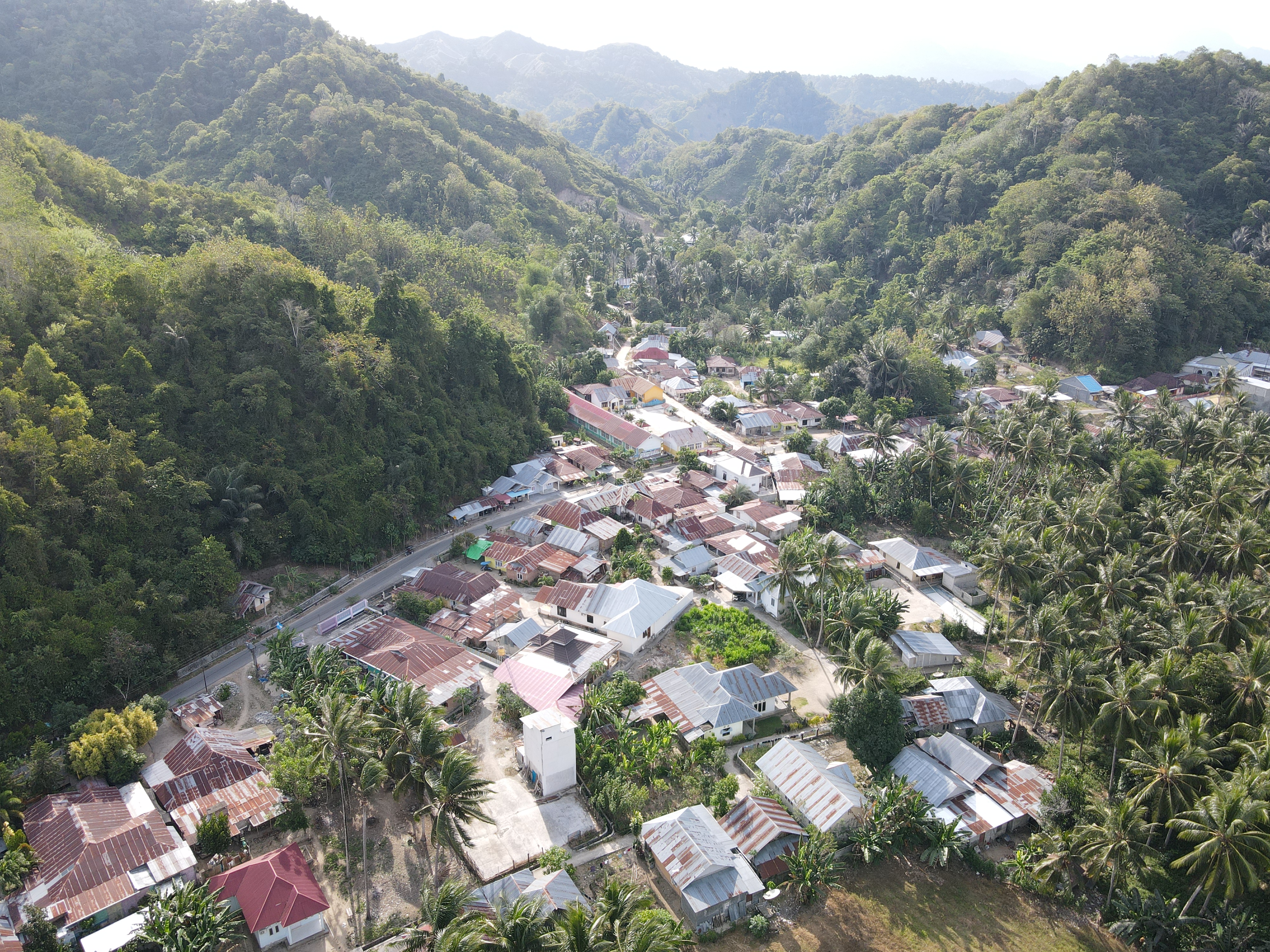
Tupa is a peri-urban village on the outskirts of Gorontalo city.area is mostly flat and monoculture corn dominates the landscape.villagers engaged in agriculture rely on a combination of off-farm employment and corn cultivation for their livelihoods. Many farmers work part-time driving motorbike taxis (ojek) and tricycle taxis (bentor) or in construction.
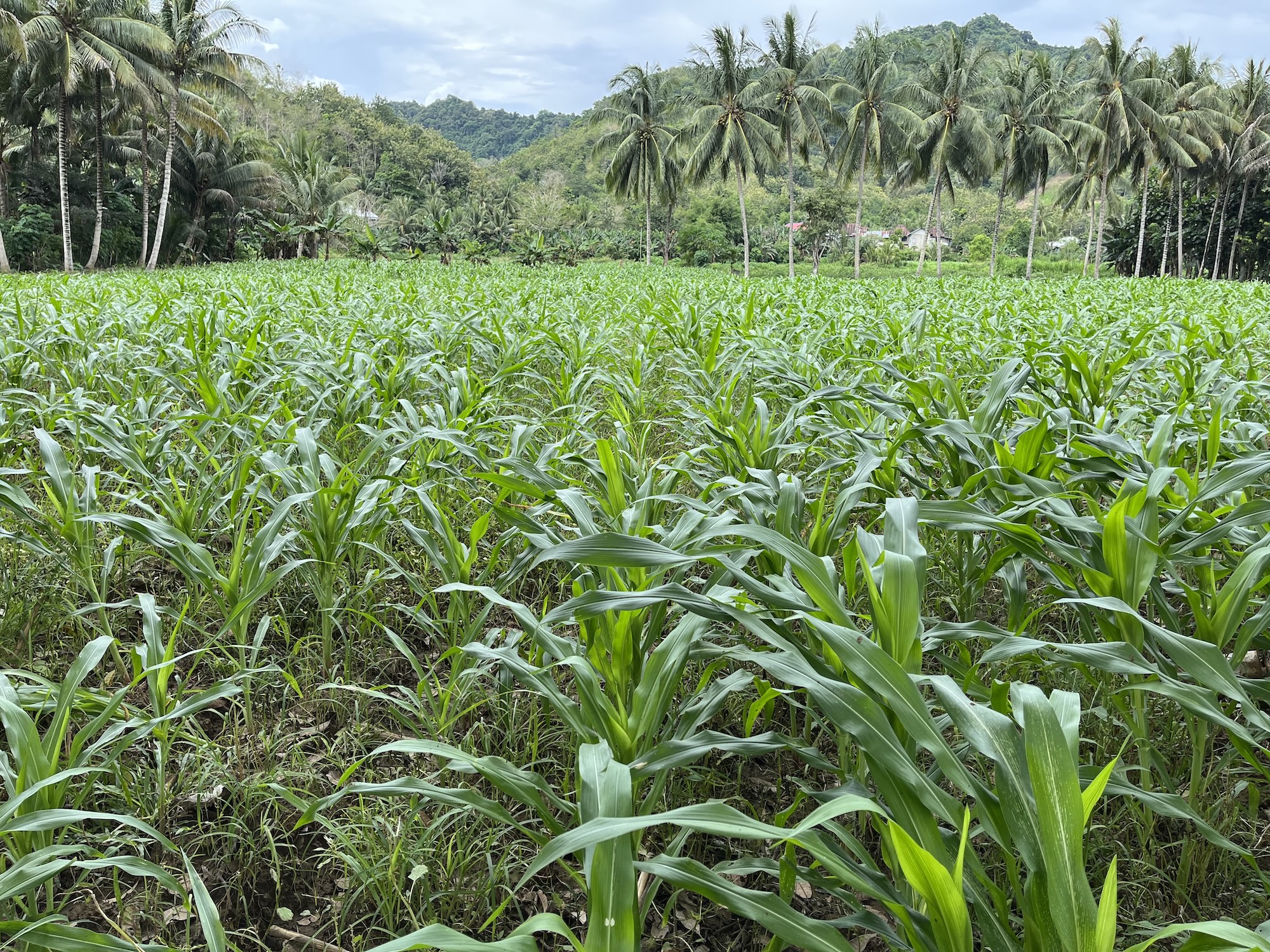
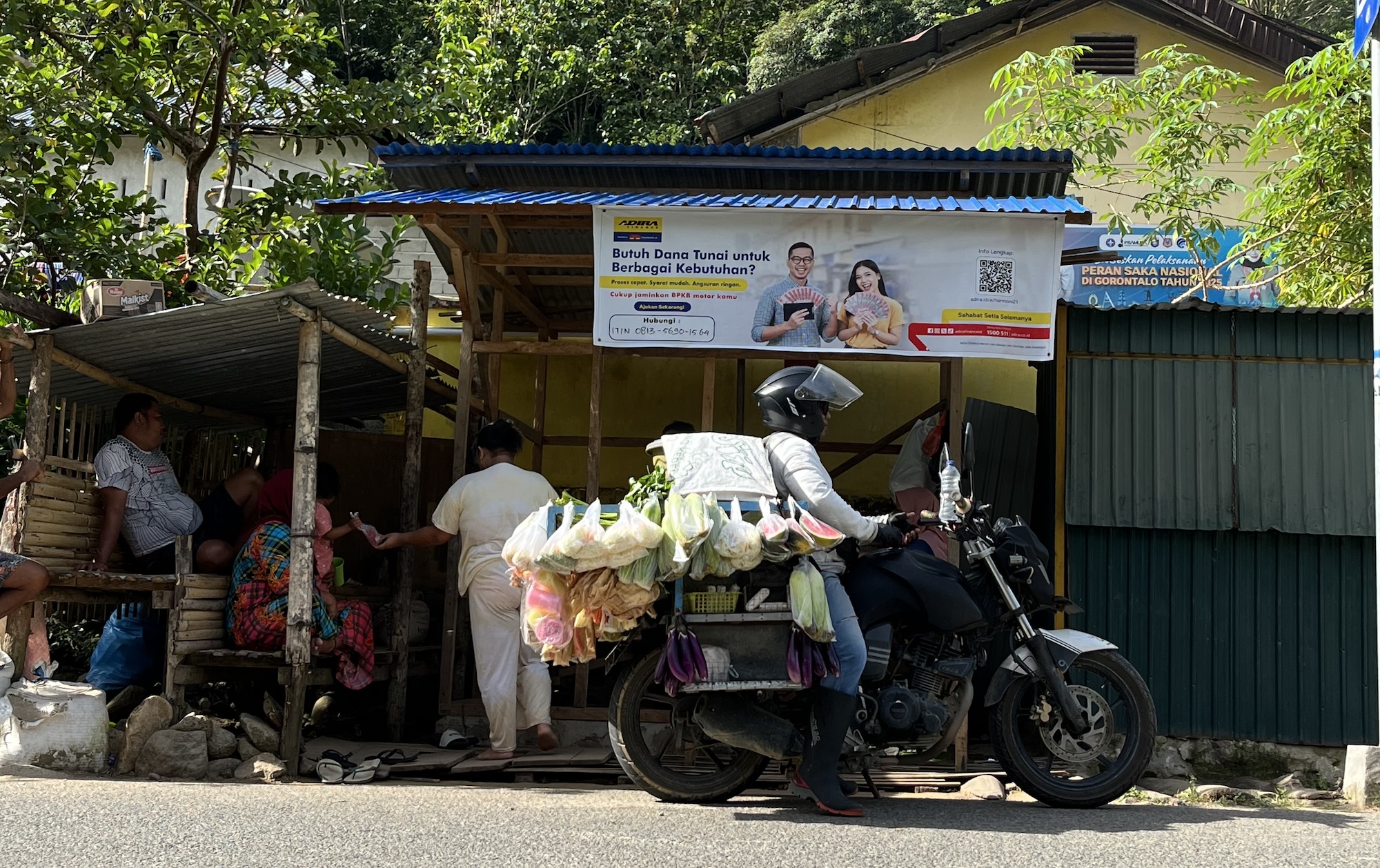
As input costs have risen and vulnerability to climate shocks, pests and crop disease have increased, over-reliance on corn cultivation has come to be seen as a precarious livelihood strategy. Some farmers are able to diversify into high-value agroforestry supplemented by off-farm work, while others are trapped in cycles of debt through their dependence on corn.
Quitting corn cultivation
Farmer C1_11 has lived his entire life in Tupa. Now 51, he has been farming since the 1980s. He owns 2 hectares of land which is located 2 or 3 kilometres from his home. In 2017 he began planting corn but, since 2022 he has shifted his focus away from corn due to high input costs and vulnerability to pests and disease.
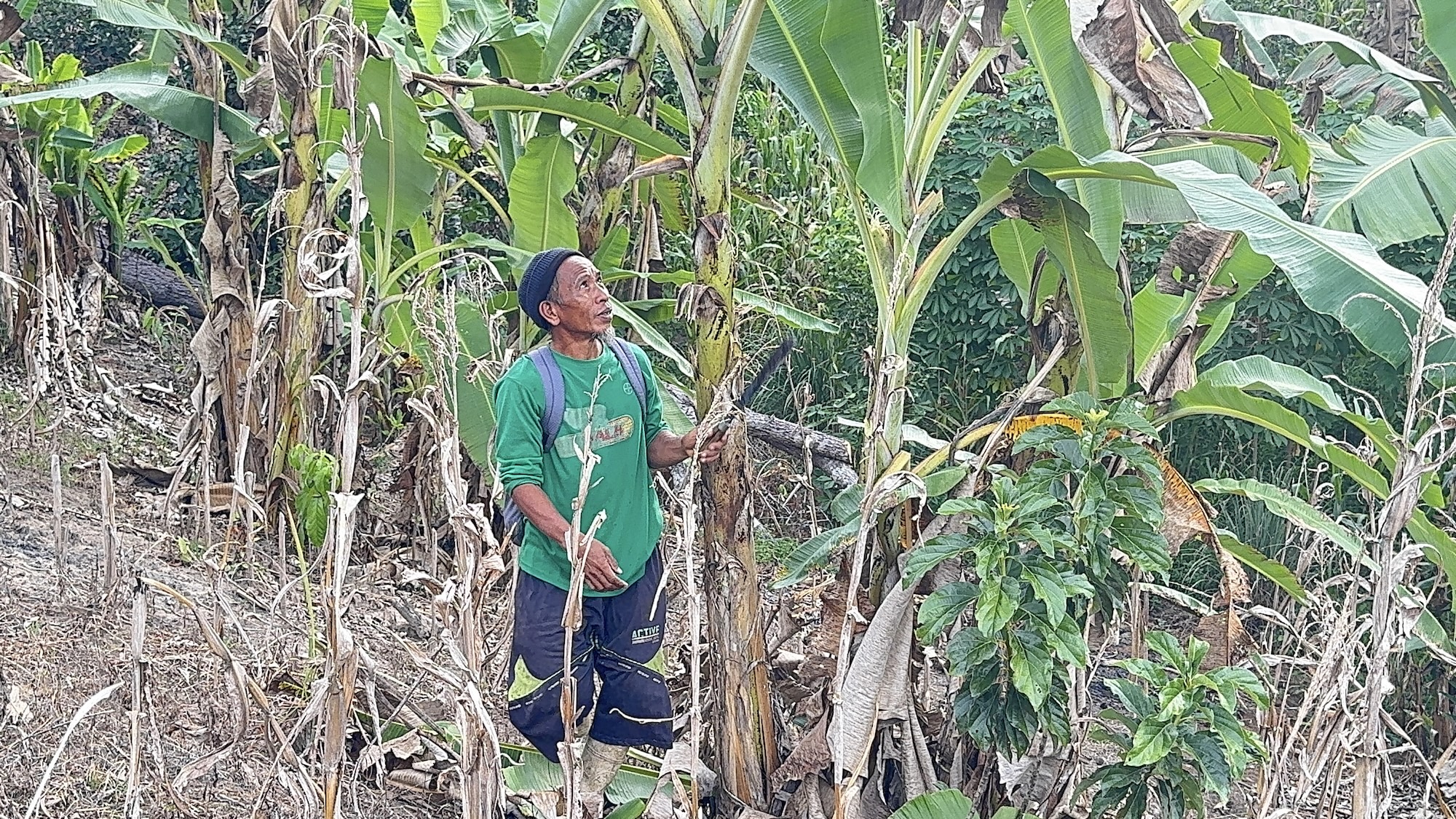
Instead he has planted high-value perennial fruit trees including avocados, rambutans, jackfruit, durian, and bananas.
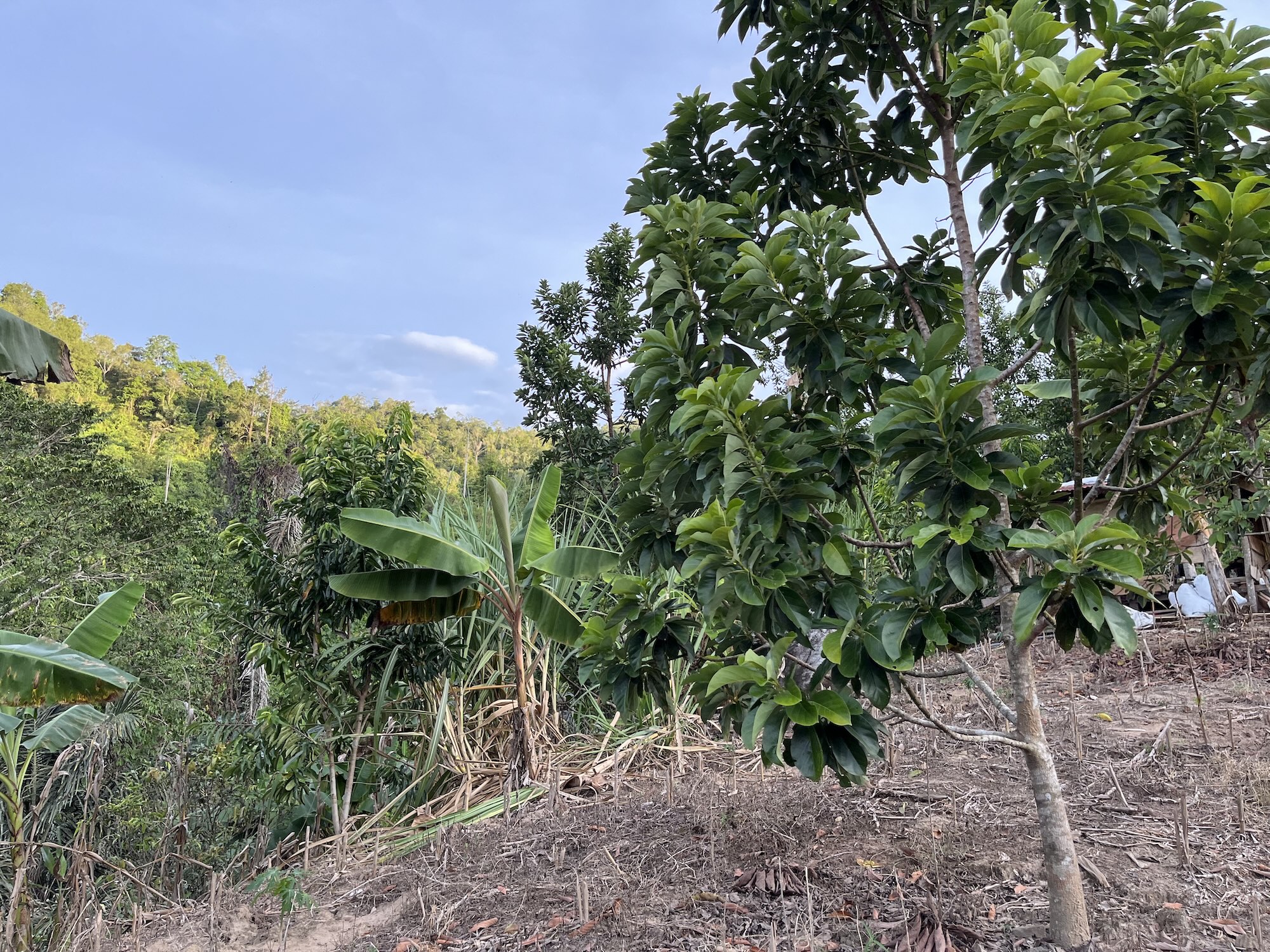
Corn is now a side-crop for him and he avoids hiring wage labour by relying on his wife and grown children for planting, fertilizing, and harvesting. His fruit trees are maturing and beginning to yield fruit which he sells locally. Already, the income from his fruit trees has been enough to finance building a new kitchen. While waiting for the remaining trees to mature he supplements the household income with sales of corn and part-time off-farm work in construction. In addition, his wife contributes to the household finances by peeling corn and selling homemade cakes door-to-door. They are fortunate to have been able to diversify away from corn are now beginning to reap the rewards. Not everyone is so lucky.
Vulnerable corn farmer
Corn takes 4 months from planting to harvest and he cannot rely on a profitable crop.
His income from coconut is also marginal, so as a safety net, he also grows eggplants to gain a weekly income.
In addition to growing crops he also owns 8 cows which he sees as his main form of capital.
In the past, he has sold cows to finance building his house.
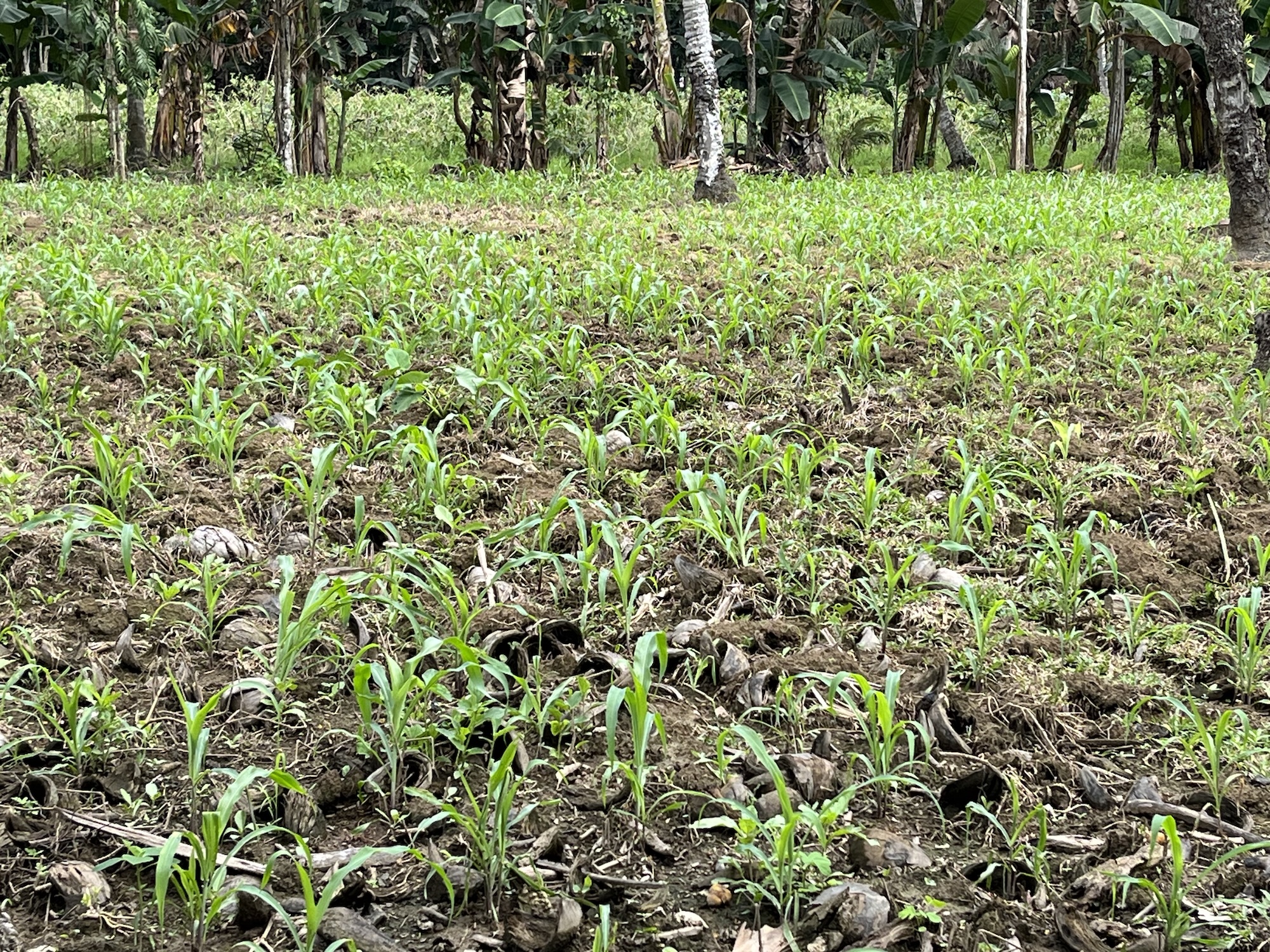
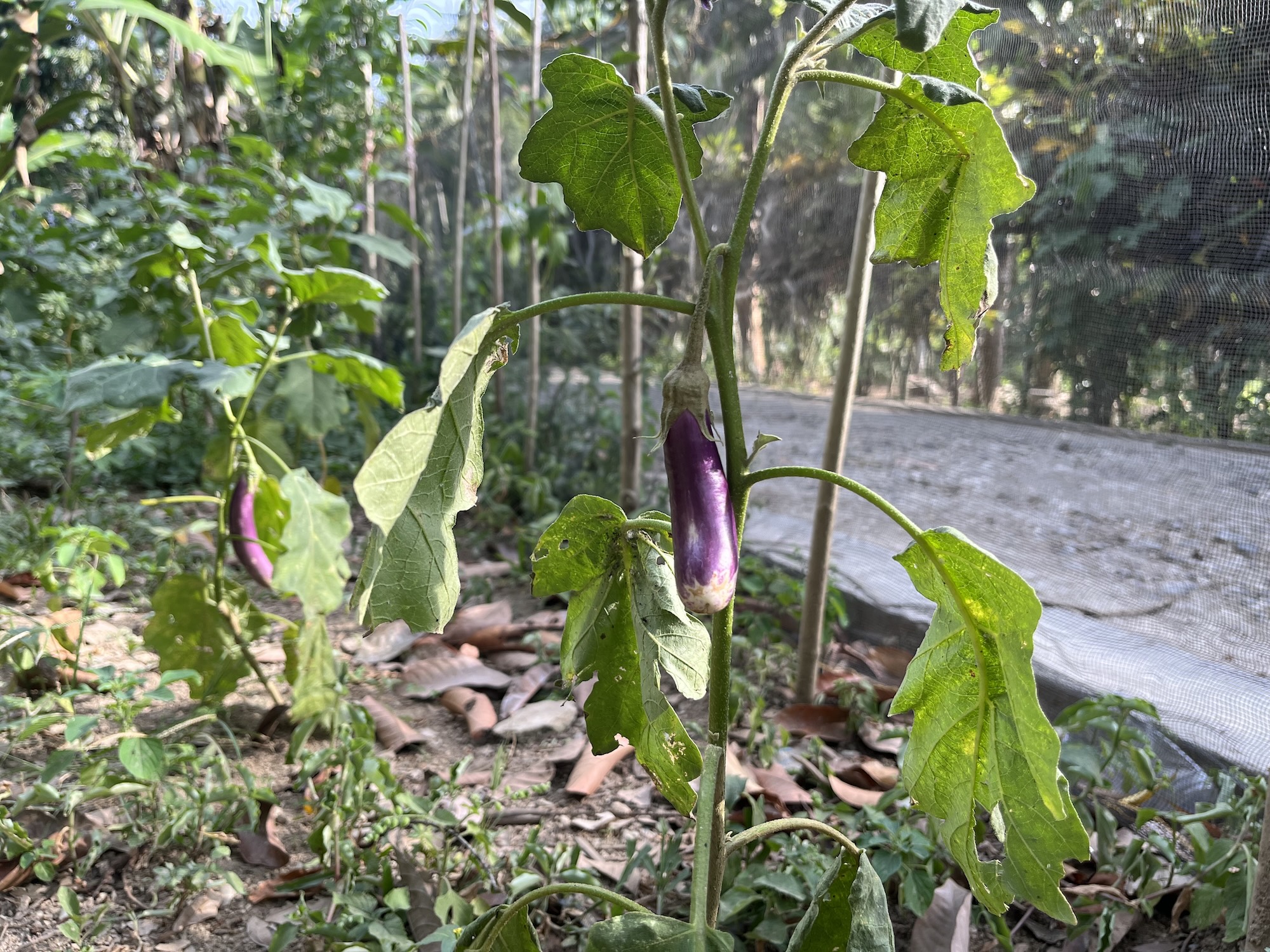
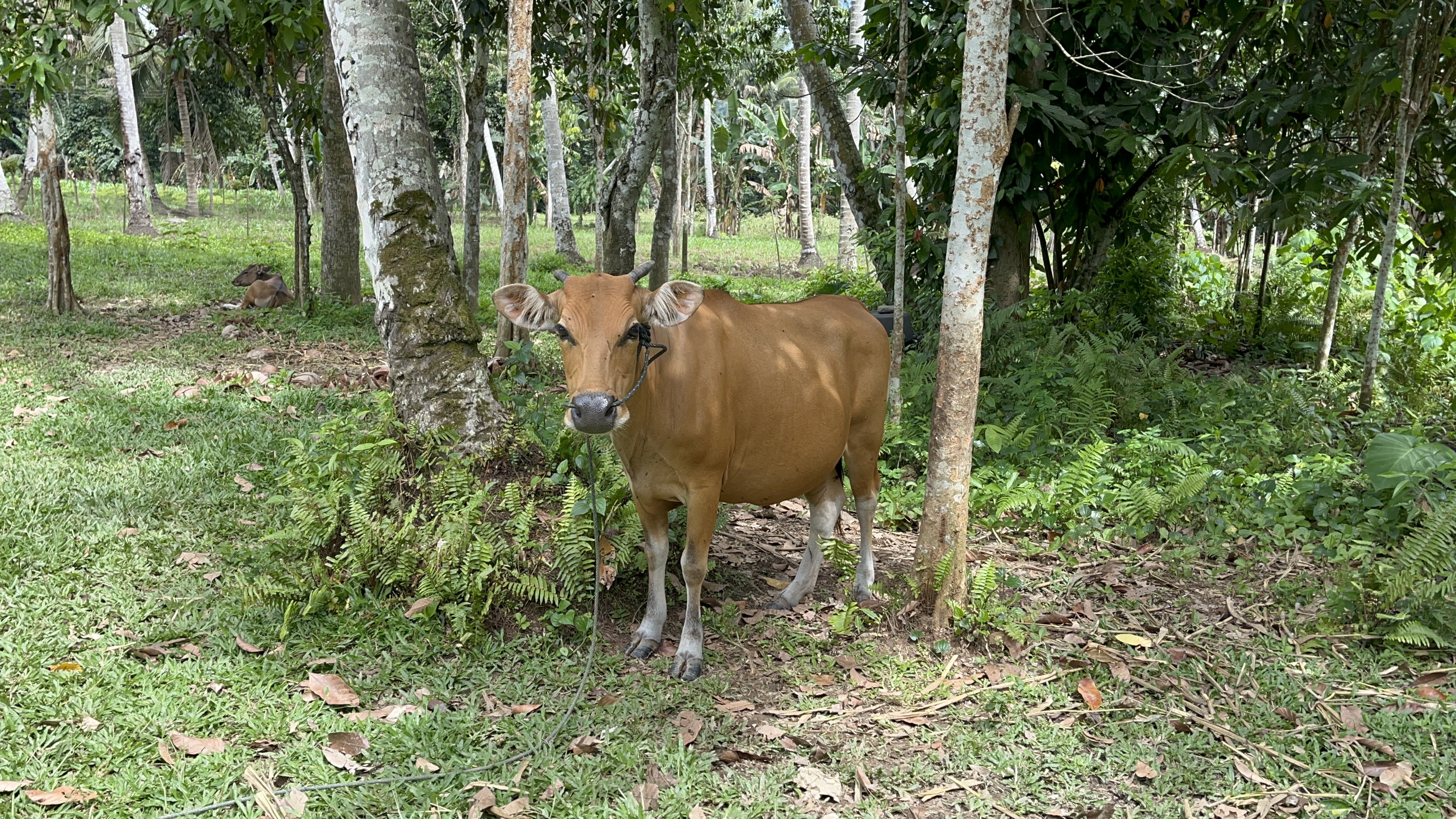
He notes that the climate in Tupa has become noticeably hotter and the soil less fertile so that increasing amounts of chemical fertilisers are required to maintain corn yields. His land is flat and close to the river so it frequently floods. In 2024 flooding destroying his entire corn crop. The river itself, which used to be clear and full of fish, is now murky and lifeless which he puts down to the effects of the dam excavations and the impacts of local gold mining.
The family purchases almost all their daily food, relying heavily on mobile vendors for fish (Rp 40,000 daily) and spices, though they forage some vegetables (ferns, banana hearts) from their land. They lack social safety nets; they do not receive RASKIN (rice assistance for poor families - beras miskin) and the farmer stopped paying his BPJS health insurance because he could no longer afford the Rp 50,000 monthly premium. For this household the ability to diversify away from corn is limited by a lack of capital.
Other farmers are also struggling to make corn work as a cash crop. C1_1 and C1_2 have suffered recent harvest failures and have had to take on off-farm labour to survive. C1_15 has endured six major crop failures due to floods and droughts and has taken on debt to pay for fertilizer inputs.
Widowed farm labourer
With no capital, no vehicle, and no savings, her livelihood severely deteriorated. To survive, she turned to agrarian wage labour, relying entirely on wealthier farmers to hire her for daily physical labour just to afford her daily food. With no land of her own she supplements the income from wage labour by cultivating corn on a small plot of borrowed land.
To reduce her living costs to fit within her small income she buys one litre of rice at a time and makes Rp 10,000 worth of small fish last three days.
For those no longer able to bear the physical and financial burden of cultivating corn, horticulture has become a lifeline.
Dispossessed corn farmer
C1_8 is a 64 year old widow whose land has been swallowed up by the government’s dam reservoir which was constructed in 2023.a commercial corn farmer, now she survives on what little land remains by intensively cultivating vegetables, fruits and peanuts following the traditional panggoba methods and by keeping a small flock of chickens. These she sells to her neighbours and other villages who order directly from her. She explains how the panggoba method enables her to grow a combination of different crops together, making the most efficient use of her small plot of land:
“People in the past looked at that, at the moon, at the dates… If it’s the 3rd, I plant things that bear fruit above. If it’s the 5th, in the middle, like corn. If it’s the 4th, it bears fruit below, like peanuts.”
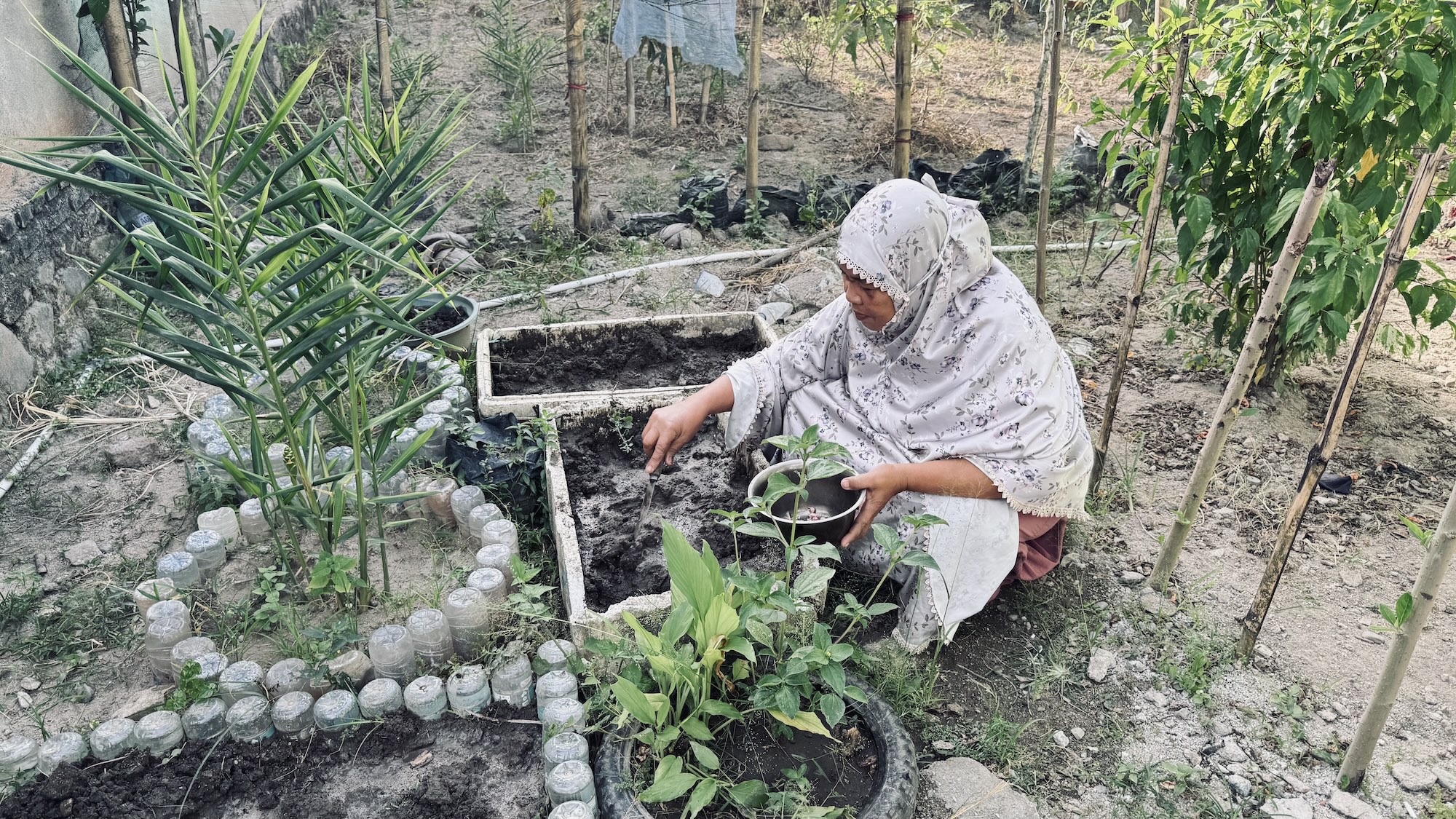
Panggoba
C1_8 is not alone in relying on the panggoba. Farmer C1_1 consults the system from memory to guide their planting schedule and C1_11 attribute his lack of crop-failure to his strict adherence to it. C1_10 and C1_6 consult village elders who are familiar with the panggoba and C1_15 goes to her cousin who complements the traditional calculations with a smartphone weather app to determine planting schedules.
The panggoba is a traditional calendar system based on the stars and lunar phases which is used to determine the most suitable dates for agricultural activities.
It dictates planting schedules based on a categorisation of where a crop bears its fruit.
There a three main categories:
- huta: root crops like peanuts, sweet potatoes.
- wuluta: middle crops like corn.
- hulungo: top or branch crops including vegetables and fruits such as mangoes eggplant, fruit trees.
Each is associated with specific dates for planting which creates a staggered planting schedule that produces a multi-storied mixed cropping system designed to maximize the yields of each crop.

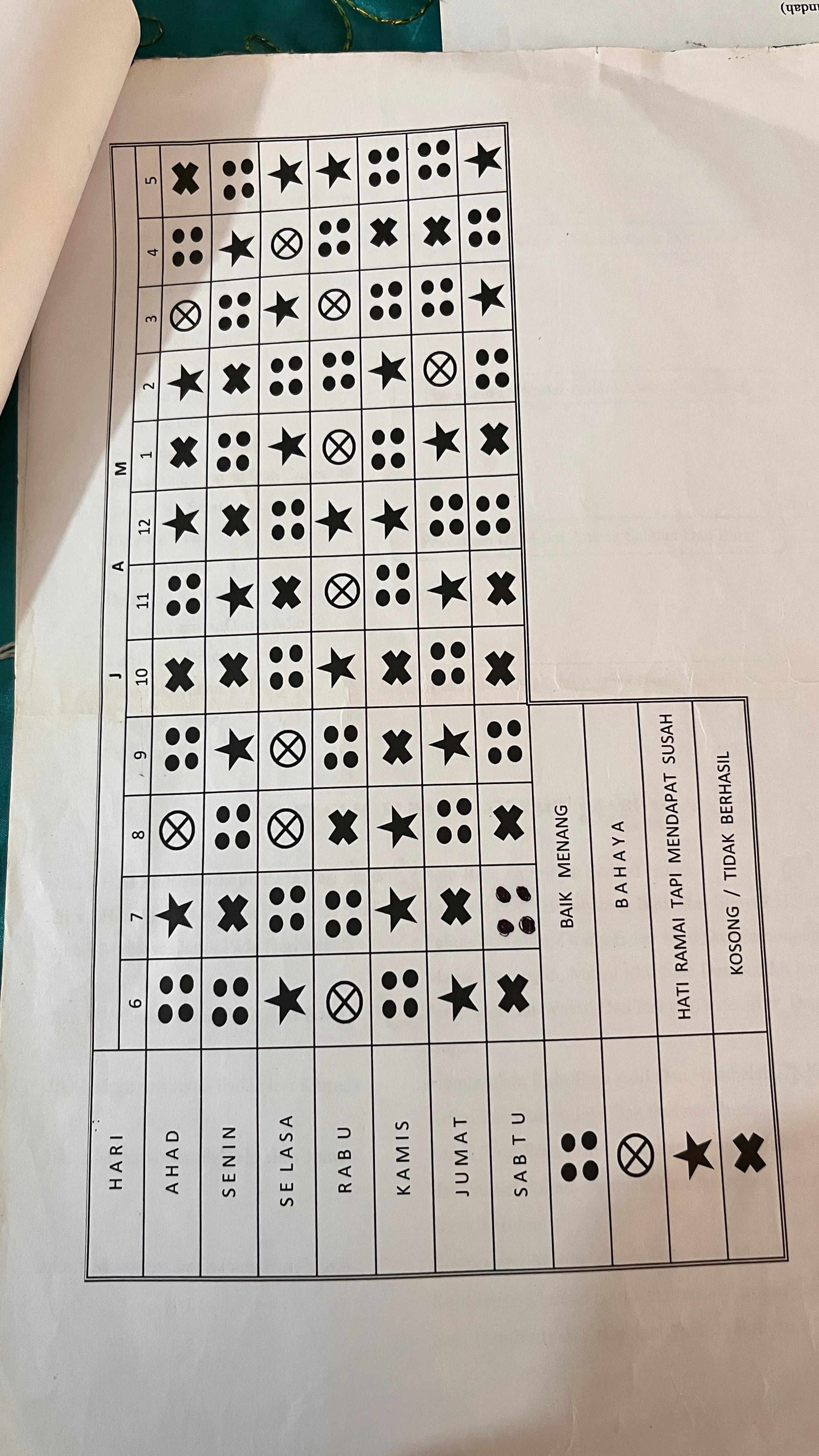
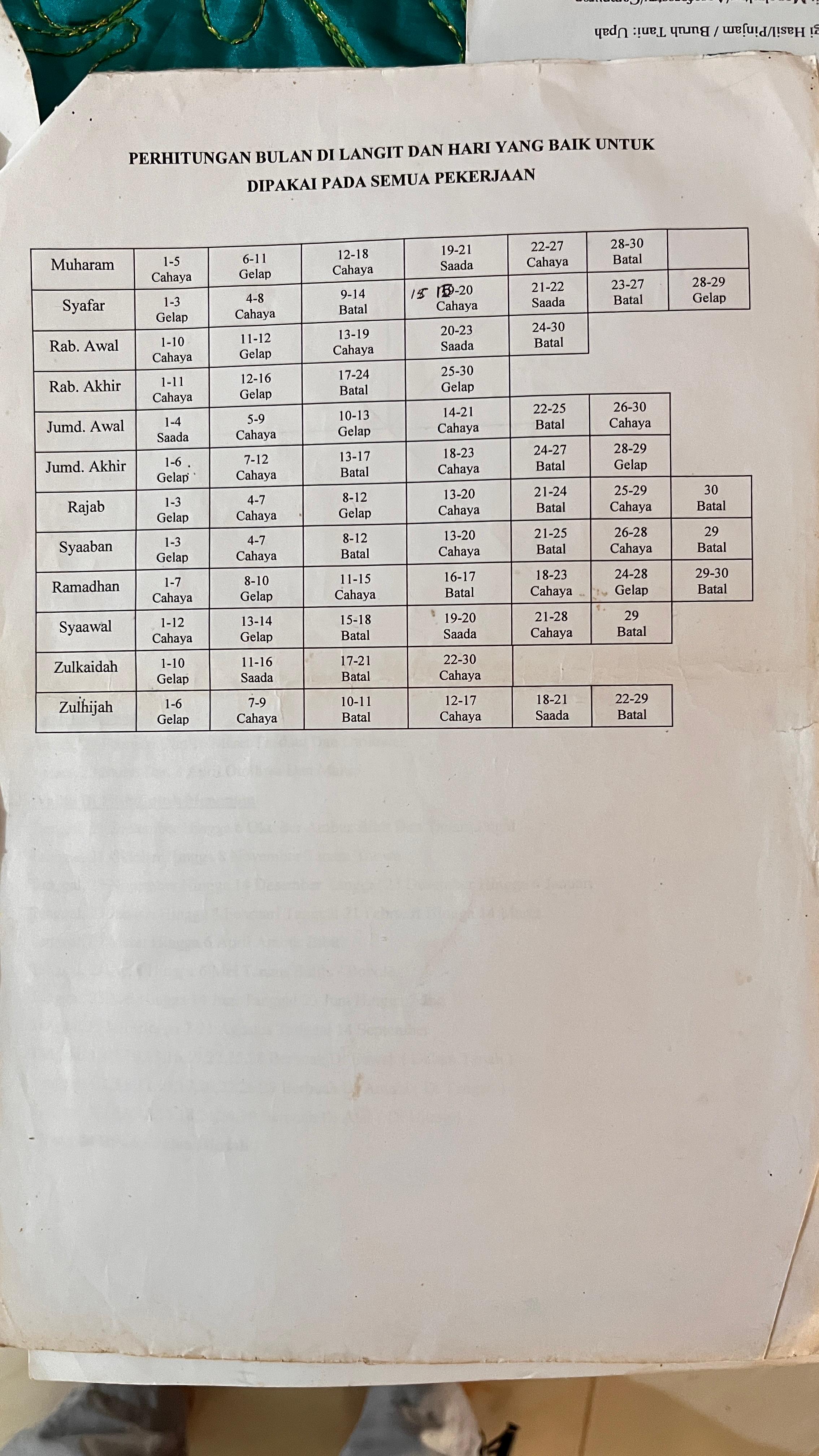
It seems that, while monoculture corn is becoming less stable and productive, the traditional practice of mixed cropping following the panggoba provides a sorely needed safety net, especially for those farmers who have limited land.
Plant biodiversity
In all three locations, wild and agricultural biodiversity are vital resources. Semi-wild plants provide a vital communal source of supplementary food, particularly for poorer farmers low on cash or waiting for maize harvests.
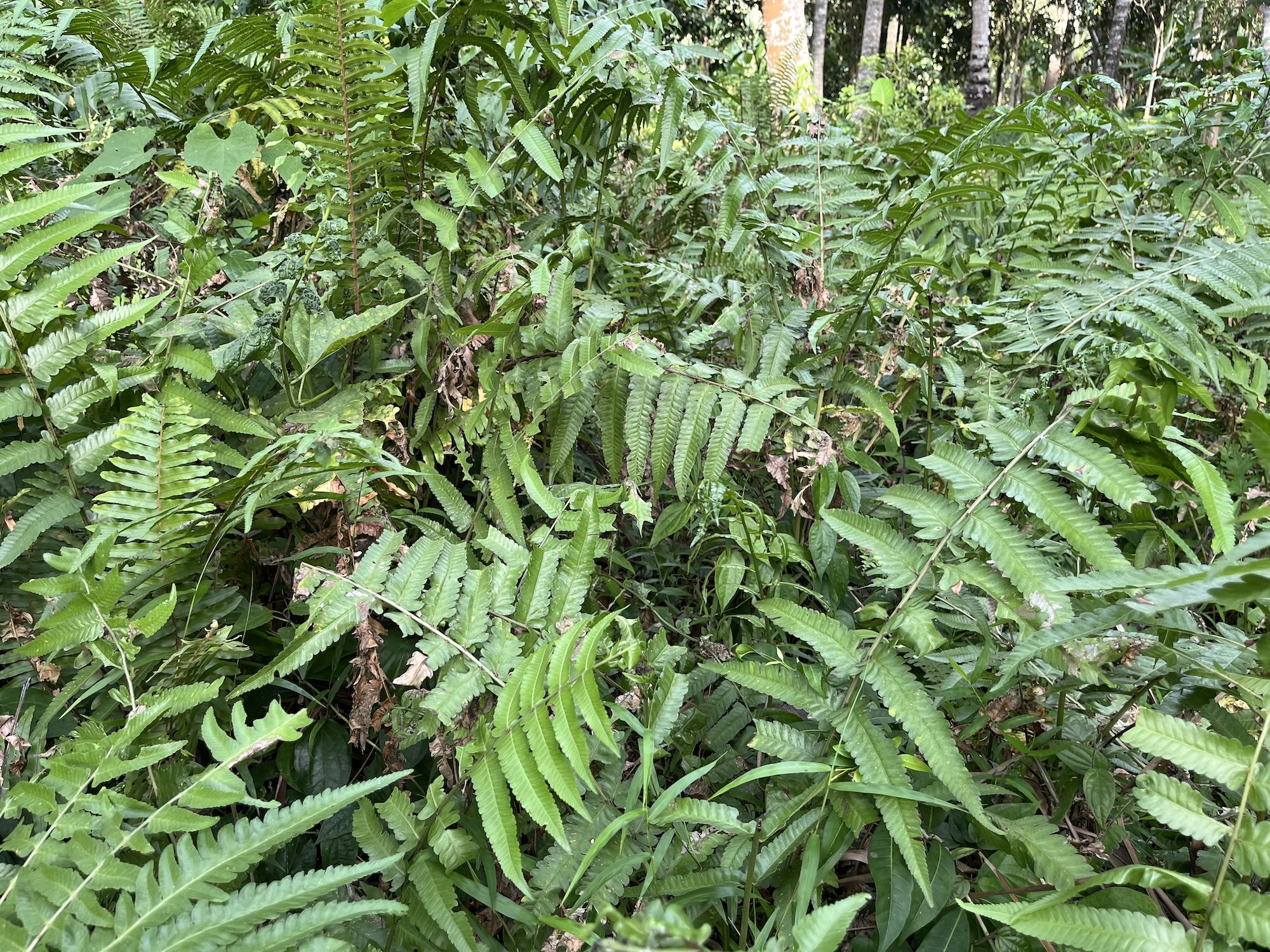
Sayur Paku (ferns) grow along the riverbanks and are gathered by some as a daily vegetable.
Other wild vegetables including water spinach (kangkung), Jantung pisang (banana blossoms) and Cassava leaves (daun ubi) grow wild near the river and ponds and can be gathered freely by anyone without needing permission.(10)
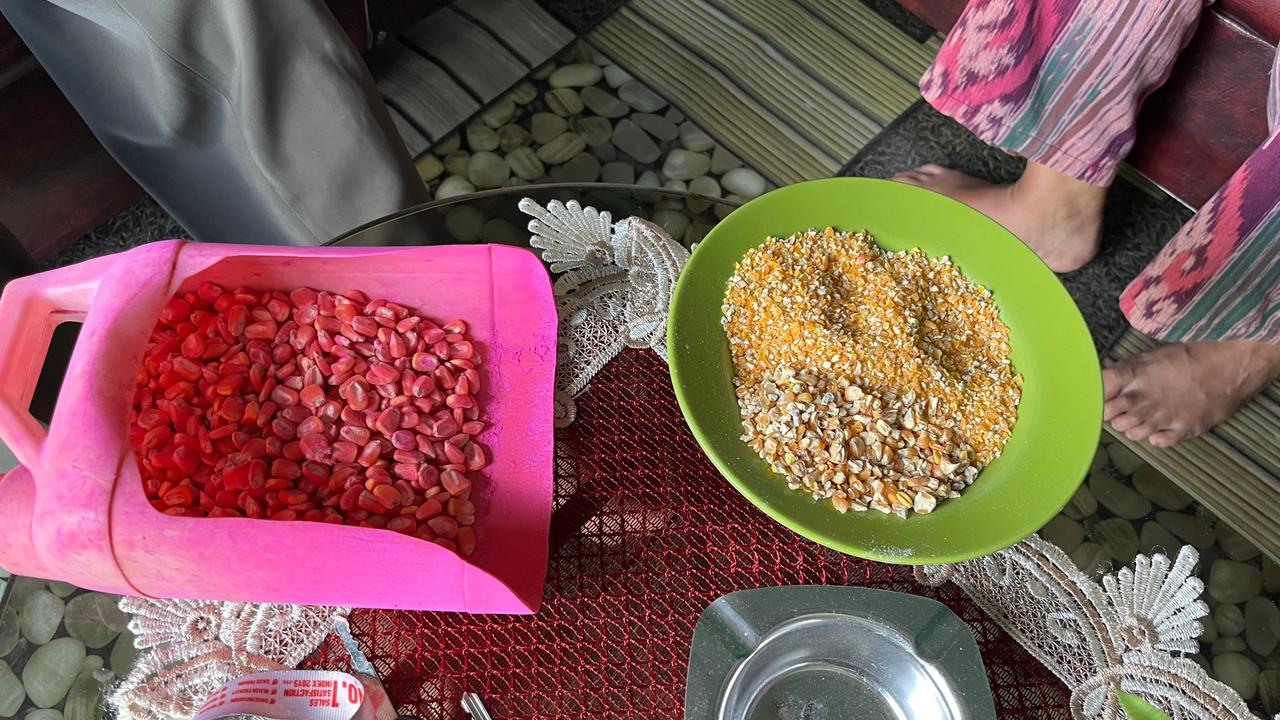
Local corn varieties are valued as food as they are sweeter, softer and produce less waste compared with the hybrid animal-feed varieties. They are also more resistant to pests and diseases, having been adapted through generations. Also, because native varieties produce fertile re-usable seed they save the farmer the cost of purchasing new hybrid seeds.
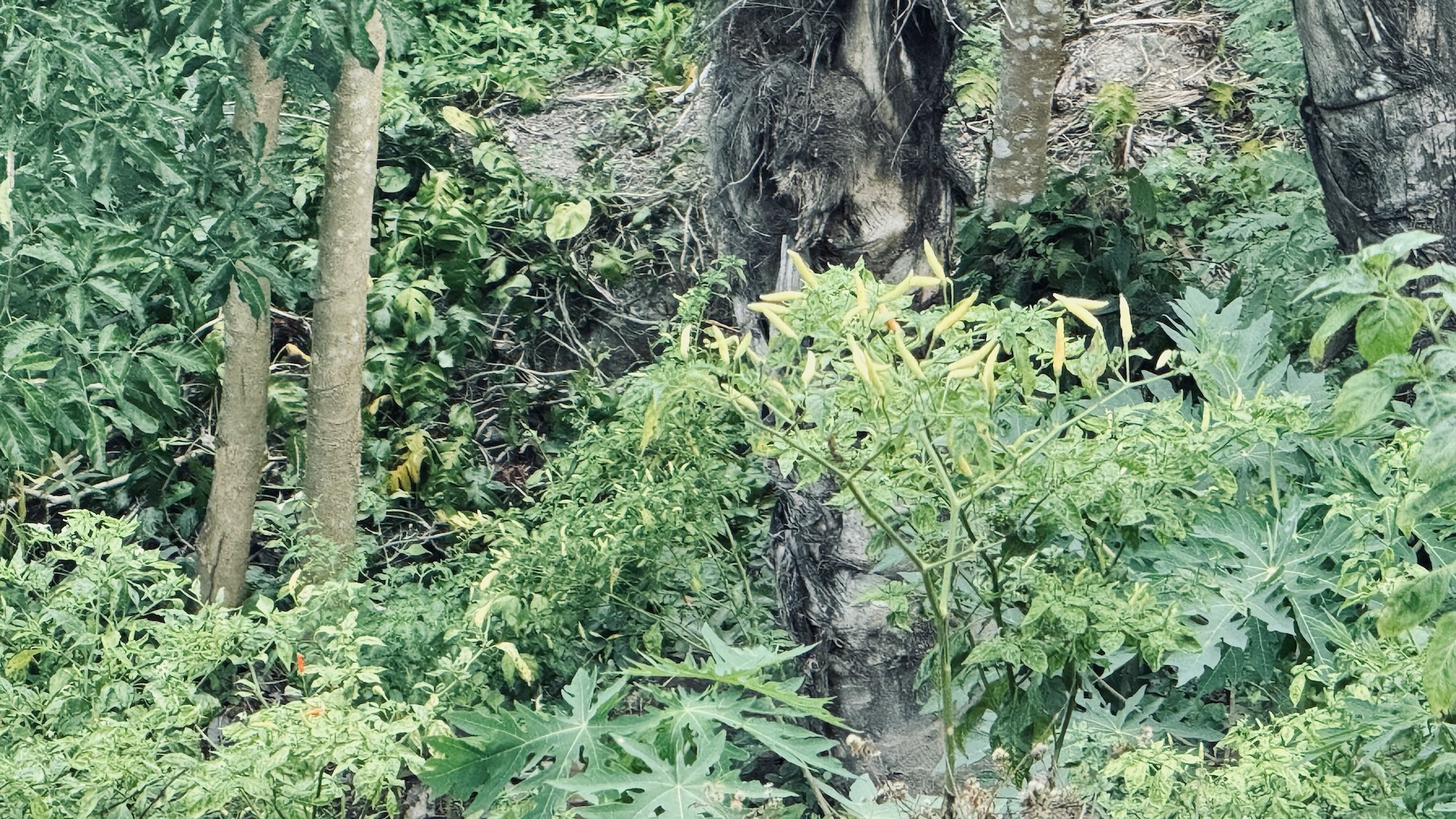
Local chili varieties are prized for their taste and their resistance against common crop diseases. These local genetic resources are important for local food security and resilience but are not considered in government policies which favour monoculture hybrid corn.
Add image
Conclusion
While each village described above faces different challenges, they also point to some potential solutions. In Modelidu, the Huyula system and the BUMDES (local village enterprise) demonstrates the power of mutual aid and collective organisation to support the poorest of farmers and enhance local food security. In Dulamayo Selatan, agroforestry and mixed livestock, corn and perennial tree cultivation have demonstrated a resilient alternative to monoculture corn. The traditional panggoba calendar system combined with modern technology is helping to plan for planting.
We have observed that the expansion of corn monoculture, within the context of existing agricultural policies and market incentives, has been accompanied by increasing environmental pressures, fluctuations in yields, and greater financial challenges for some farming households. At the same time, promising alternative practices are already emerging within local communities. With appropriate support, coordination, and learning across stakeholders, these existing initiatives could be strengthened, integrated into a more systematic approach, and adapted for wider application across multiple communities.3
Turning these seeds into a system means building partnerships around them. Where village institutions like BUMDES and women’s farmer groups (KWT) are active, they already do more than lend money on fairer terms than middlemen. They are the kind of institution that could aggregate produce from many smallholders to meet the demands of larger buyers, including new government programmes such as the Makan Bergizi Gratis free school meals scheme, which is already creating steady local demand for fresh produce in some of our study villages. And where customary systems continue to guide farmers’ planting decisions, formally recognising them within district and provincial planning would protect knowledge that is already delivering resilience on the ground.
Footnotes
This an informant code used to protect the identity of the interviewee.↩︎
It is one of the contact herbicide brands popular among farmers. It is often called “pembakar” (burner) because the effect of this herbicide on the sprayed grass makes it look like it has been burned. It is generally preferred by farmers because its effect is fast.↩︎
This is the work the LEAF Indonesia partnership is committed to taking forward. Alongside farmers, village institutions, government agencies, NGOs and conservation organisations, our next phase of work combines three things: practical experimentation on the ground, better tools for understanding the wider landscape, and ongoing dialogue with the people who shape land-use policy. At Universitas Negeri Gorontalo, researchers, students and farmers are working together through a Living Lab which develops and tests integrated farming systems, soil conservation methods and nature-based approaches to pest management. Just as important, it works on the livelihoods side of the equation: helping connect diversified crops, to markets and supply chains. Alongside this, the LEAF team is building LIMMMA — an open-source mapping and modelling platform that combines satellite imagery with community knowledge to explore what different land-use futures might look like: modelling the likely impacts of different land-use change scenarios, and assessing what different areas of land are actually suited to, whether that’s monoculture corn, agroforestry, conservation, or something else. The aim is to give researchers, communities and planners a shared, evidence-based starting point for weighing options before decisions are made — food production, livelihoods, biodiversity and climate resilience considered together, rather than one function of the landscape assumed and the others discovered as side effects afterwards. Realising this joined-up approach also depends on understanding how land-use decisions actually get made, and where the obstacles to joining them up lie. We seek to understand these governance processes directly; how decisions are made, whose interests are represented in them, and where the openings exist to coordinate across agricultural, biodiversity and climate policy rather than treating them as separate concerns. This means working with planning and environmental agencies, and with communities, not just to share evidence but to understand their processes from the inside.↩︎